
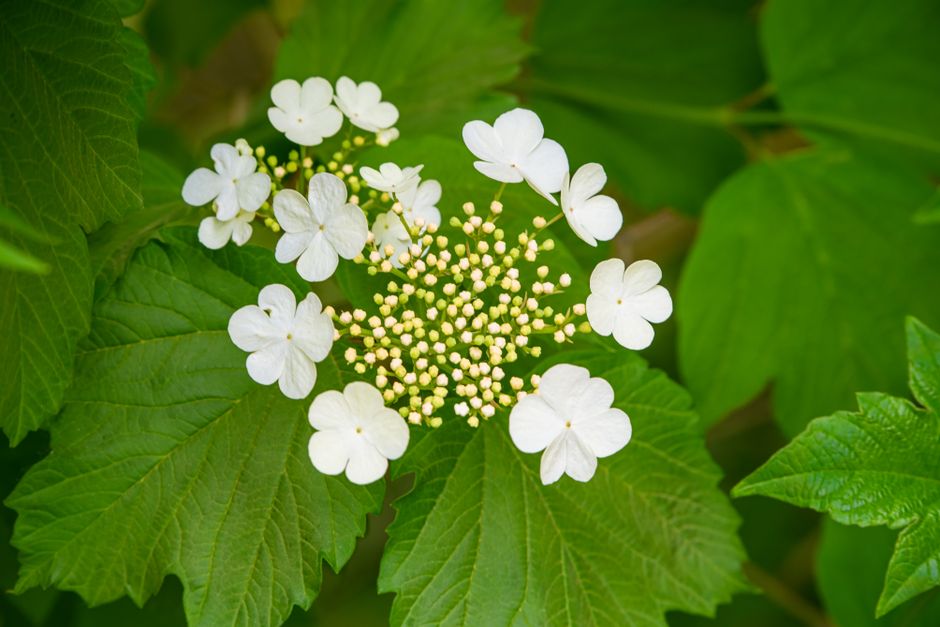
Arrowwood viburnum is a hardy native shrub that looks its best with a little pruning each year. The ideal time to prune is in late winter or early spring, just before new growth begins. At that point, you can shape the plant, remove dead wood, and control its size without harming the coming season’s flowers.
Why Timing Matters for Arrowwood Viburnum
Arrowwood viburnum blooms on old wood. That means the flower buds for this year formed during the previous growing season. If you prune too late in the spring, you cut off those buds and lose the white flower clusters that appear in late spring to early summer.
Pruning in late winter or very early spring avoids this problem. The shrub is still dormant, so cutting it then does not remove active growth or flower buds. The plant can put all its energy into the new growth that follows.
There is one exception. If you have a young plant that needs shaping, or if you simply missed the early window, you can prune right after flowering ends. This sacrifices fewer blooms and still gives the plant time to recover before fall.
What You Need Before You Start
Sharp tools make cleaner cuts and reduce stress on the plant. For most arrowwood viburnum pruning, you need three things:
- Hand pruners for stems up to about half an inch thick
- Loppers for branches up to about two inches thick
- A pruning saw for the oldest, thickest stems at the base
Clean the blades with rubbing alcohol before you start. This is especially important if you have pruned other plants recently. It reduces the chance of spreading disease between shrubs.
Make sure your tools are sharp. Dull blades crush stems instead of cutting them cleanly. Crushed tissue heals slower and invites pests and disease.
How to Prune Arrowwood Viburnum Step by Step
Start by removing anything that is clearly dead, damaged, or diseased. This is always the first pass, regardless of what other pruning you plan to do. Cut these stems back to healthy wood or all the way to the ground.
Next, remove crossing branches. Arrowwood viburnum naturally grows multiple stems from the base. Over time, some of these rub against each other. Bark damage from rubbing creates entry points for insects and disease. Take out the weaker of any two branches that cross.
Then look at the overall shape. The goal is a shrub with good airflow through the center. Remove some of the oldest, thickest stems at ground level. This is called renewal pruning. Cutting one-third of the oldest stems down to the base each year keeps the shrub vigorous and encourages new growth from the roots.
For size control, cut back the remaining stems to a bud that faces the direction you want growth to go. Make your cut at a slight angle, about a quarter inch above the bud. Do not leave a long stub above the bud. Stubs die back and can become entry points for disease.





Rejuvenation Pruning for Overgrown Shrubs
If your arrowwood viburnum has been neglected for years, it may look leggy, sparse at the bottom, and too tall. Renewal pruning alone may not be enough. In that case, you can use rejuvenation pruning.
Rejuvenation pruning means cutting the entire shrub down to six to twelve inches above the ground. Do this in late winter while the plant is fully dormant. It sounds drastic, but arrowwood viburnum tolerates it well. The shrub will send up many new shoots from the base during spring and summer.
You will lose the flowers for one season. The payoff is a fuller, healthier shrub within two years. Some gardeners prefer to spread this over two or three years, removing one-third of the oldest stems each year. That way, the shrub keeps some structure and blooms while it regenerates.
Both approaches work. The choice depends on how much patience you have and how badly the shrub needs resetting.
Pruning for Shape and Size
Arrowwood viburnum naturally grows as a rounded, multi-stemmed shrub. It can reach eight to ten feet tall and wide at maturity. If that size works for your landscape, you need very little pruning beyond the basics.
If you need to keep it smaller, resist the urge to shear it into a tight ball. Shearing removes the natural arching form and creates a dense outer shell with bare inner branches. Over time, sheared shrubs lose their lower leaves and look hollow.
Instead, selectively cut back individual stems to different heights. This preserves the natural shape while controlling overall size. Aim to remove no more than one-third of the plant’s total growth in a single year. Removing more than that stresses the shrub and can reduce flowering the next season.
Common Pruning Mistakes to Avoid
The most common mistake is pruning too late in spring. If you prune after the buds have swelled but before flowers open, you remove the flower buds. You end up with a green shrub and no blooms.
Another mistake is topping. Cutting all the stems at the same height creates an unnatural, flat-topped look. It also stimulates a flush of weak, upright shoots below each cut. These shoots are prone to breaking under snow or wind.
Leaving stubs is a third problem. When you cut a stem, cut back to a bud or to the ground. A stub has no bud to push new growth from. It dies back slowly and can rot into the healthy wood below.
Finally, do not prune in fall. Late-season pruning stimulates new growth that may not harden off before winter. That tender growth can be killed by cold temperatures, which stresses the plant and can reduce flowering the following spring.
What to Do With the Cuttings
Healthy pruned branches can go in your compost pile if you have one. Cut them into smaller pieces first so they break down faster. Do not compost branches that show signs of disease or pest infestation. Bag those and discard them with regular trash.
You can also use the pruned branches to propagate new plants. Arrowwood viburnum roots readily from softwood cuttings taken in early summer. The cuttings you take during late-winter pruning are dormant hardwood cuttings, which are harder to root but still possible with patience and the right conditions.
Aftercare Following Pruning
Arrowwood viburnum does not need much aftercare once you prune. The plant is tough and adaptable. It tolerates a wide range of soil types and is generally pest-resistant.
Water the shrub well after pruning if the soil is dry. This helps it recover from the stress of cutting. Otherwise, no fertilizer is needed. In fact, excess fertilizer can push out soft, fast growth that is more vulnerable to pests and winter damage.
A layer of mulch around the base helps retain soil moisture and suppress weeds. Keep the mulch a few inches away from the stems to prevent rot. Two to three inches of wood chips or shredded bark is plenty.
Frequently Asked Questions
Can I prune arrowwood viburnum in summer?
Yes, but only right after flowering ends. Pruning later than that removes next year’s flower buds and can leave tender new growth vulnerable to winter damage.
How much can I cut back an overgrown arrowwood viburnum?
You can cut the entire shrub down to six to twelve inches above the ground in late winter. This rejuvenation pruning is well tolerated, but you will lose flowers for one season.
Will arrowwood viburnum bloom after heavy pruning?
It will bloom the following year if you prune in late winter or immediately after flowering. Pruning late in spring removes the current season’s flower buds.
Does arrowwood viburnum need pruning every year?
No. It only needs annual pruning if you want to control size or maintain a specific shape. Otherwise, removing dead wood every two to three years is enough.
