
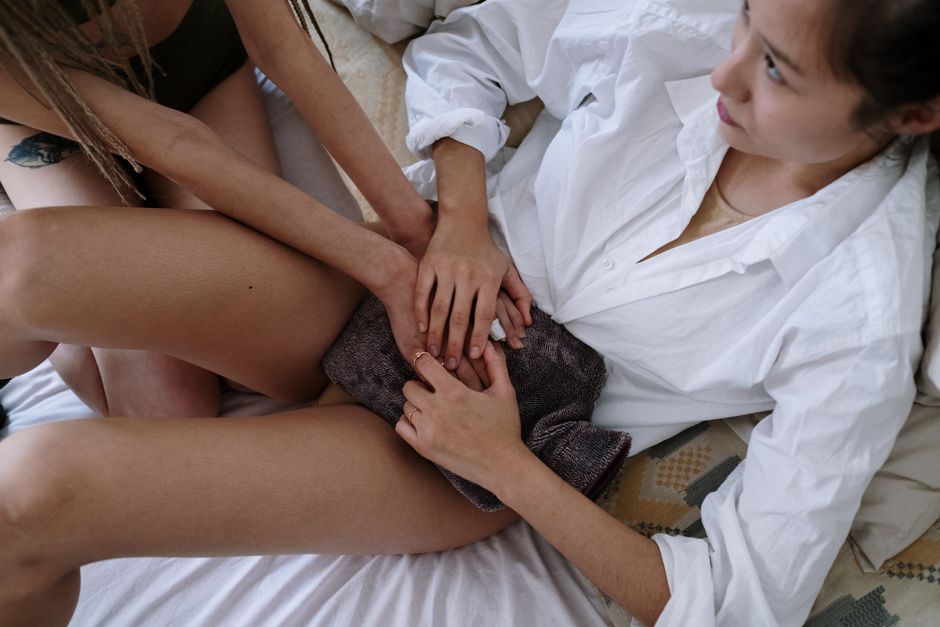
You can make a homemade heating pad for cramps in about five minutes using items you already own. The most common method is filling a clean cotton sock with uncooked white rice, tying off the open end, and microwaving it in short bursts until it reaches a comfortable warmth. A damp warm towel or a plastic bottle filled with hot water works just as well when you need something faster.
Heat is one of the oldest and most reliable ways to ease menstrual cramps. It relaxes the muscle tissue of the uterus and increases blood flow to the area, which is why so many people reach for a heating pad before anything else. The good news is you do not need to buy one.
How Do You Make a Rice Sock Heating Pad?
A rice sock is the most popular homemade heating pad because rice holds heat well and molds to the shape of your body. You need three things: a clean cotton sock, about one to two cups of uncooked white rice, and a microwave.
Pour the dry rice into the sock, leaving a few inches of empty fabric at the top so the rice can shift. Tie the open end in a tight knot, or sew it shut if you want a more permanent pad. When you are ready to use it, microwave the sock in 30-second intervals, checking the temperature against your inner wrist between each round.
White rice works better than instant or flavored rice because it contains less moisture and fewer additives that can burn. Long-grain or short-grain both work fine. Do not overfill the sock — a loosely packed pad drapes over your lower belly better than a stiff one.
One safety point people often miss: rice can scorch or catch fire if overheated. Never microwave a rice sock for more than two minutes at a stretch, and never leave it unattended while it heats. If you smell burning, throw it out and start over.
What Other Materials Can You Use to Make a Heating Pad?
Rice is not your only option. Several common pantry and household items hold heat well enough to ease cramps.
- Dried beans or lentils: Work almost identically to rice. They are heavier, which some people find more soothing on a sore abdomen.
- Flaxseed: Holds heat longer than rice and has a pleasant, slightly nutty smell when warmed. Use whole flaxseed, not ground.
- Cherry pits or buckwheat hulls: Common in store-bought pads. They mold well and release heat slowly.
- A damp towel: Wet a washcloth or hand towel, wring it out, and microwave it for 30 to 60 seconds. Moist heat can feel more penetrating than dry heat.
- A hot water bottle or plastic bottle: Fill with hot tap water, wrap in a towel, and place it against your lower belly. Never use boiling water in a plastic bottle.
- A tube sock filled with dry corn or oatmeal: Both hold heat and are often already in the kitchen.
Each of these has trade-offs. Rice and beans cool fairly quickly. Flaxseed and cherry pits stay warm longer but cost more. A damp towel is the fastest option but dries out and cools within minutes.
How Long Should You Apply Heat for Cramps?
Most people find relief with 15 to 20 minutes of heat at a time. You can repeat this several times a day as needed. There is no strict limit, but giving your skin breaks between sessions lowers the risk of irritation or burns.
A frequently cited study from 2001 found that continuous low-level heat applied to the lower abdomen reduced menstrual pain about as effectively as ibuprofen in the group studied. That is one study, and results do not always carry over to everyone, but it fits with what many people report anecdotally.
The key is comfort, not intensity. A pad that feels pleasantly warm will do more good than one that is hot enough to hurt. If your skin turns red or feels numb, remove the pad right away.
Heat tends to work best in the first day or two of a period, when cramps are usually strongest. If heat stops helping after that, or if the pain gets worse rather than better, that is worth mentioning to a doctor.





How Do You Use a Homemade Heating Pad Safely?
Burns from homemade heating pads are more common than people expect, especially with microwave versions. The rice inside can be much hotter than the fabric surface, so always test the pad on your inner wrist or forearm before pressing it against your belly.
Follow these habits to stay safe:
- Heat in short bursts — 30 seconds at a time — rather than one long stretch.
- Never sleep with a microwaved pad against bare skin. If you want heat overnight, use a lower setting or place a layer of clothing between the pad and your skin.
- Do not use a homemade heating pad on numb skin, broken skin, or areas with poor circulation.
- Skip heat entirely if you have a fever, an unexplained skin rash, or swelling in the area.
- Check the pad for scorch marks or a burnt smell before each use. Replace it if you notice either.
People with diabetes, neuropathy, or any condition that reduces sensation in the abdomen should be especially careful. They may not feel a burn developing. In those cases, a lower-temperature option or a professional-grade heating pad with a shutoff timer is a safer choice.
Does Heat Actually Help With Cramps?
Yes. Heat is one of the better-supported non-drug options for menstrual cramps. The mechanism is well understood: warmth relaxes the smooth muscle of the uterus and boosts local blood flow, which counteracts the cramping that causes the pain.
Menstrual cramps happen when the uterus contracts to shed its lining. Those contractions are driven by hormone-like compounds called prostaglandins, which also trigger inflammation and pain signals. Heat does not stop prostaglandin production, but it does seem to interrupt how those pain signals are transmitted and perceived.
Heat is not a cure. It manages symptoms while they last. For some people, heat alone is enough. For others, it works best alongside an over-the-counter pain reliever like ibuprofen or naproxen, which targets prostaglandin production more directly. If you are unsure whether a medication is right for you, a pharmacist or doctor can help.
If cramps are severe enough to interfere with work, school, or sleep on a regular basis, that is not something to push through. Heavy or disabling period pain can be a sign of conditions like endometriosis or fibroids, and those deserve a proper medical evaluation rather than a heating pad alone.
Are There Alternatives to Heat for Cramp Relief?
Heat is not the only option, and some people find other approaches work better for them.
Cold packs can help with certain types of pain, though for menstrual cramps, most people prefer heat. Gentle movement, such as walking or light stretching, often eases cramps by improving circulation. Some research suggests regular aerobic exercise may reduce the intensity of menstrual pain over time, though results vary between studies.
Over-the-counter NSAIDs like ibuprofen are among the most studied options and are often more effective than heat alone for moderate to severe cramps. Always follow the label directions and check with a doctor if you take other medications or have stomach, kidney, or heart conditions.
Relaxation techniques, including slow breathing and guided imagery, may help some people cope with pain, though the evidence for these is more mixed than for heat or NSAIDs. Dietary changes and supplements like magnesium or vitamin B1 have been studied, with some trials showing benefit and others not. The evidence is not strong enough to recommend them as a first-line approach.
Frequently Asked Questions
How long do you microwave a rice sock heating pad?
Start with 30 seconds and add more time in 30-second bursts until it feels warm but not hot. Never microwave a rice sock for more than two minutes at once, since the rice can scorch or catch fire.
Can you make a heating pad without a microwave?
Yes. A hot water bottle, a plastic bottle filled with hot tap water and wrapped in a towel, or a damp towel warmed under hot running water all work without a microwave.
Is it safe to sleep with a homemade heating pad on your stomach?
It is not recommended, because prolonged contact with a warm pad can cause burns even at temperatures that feel comfortable while you are awake. If you want heat overnight, use a lower-temperature option and place a layer of clothing between the pad and your skin.
What can I use instead of rice in a homemade heating pad?
Dried beans, lentils, whole flaxseed, cherry pits, buckwheat hulls, dry corn, and oatmeal all hold heat and can be used the same way. Flaxseed and cherry pits tend to stay warm longer than rice.
