
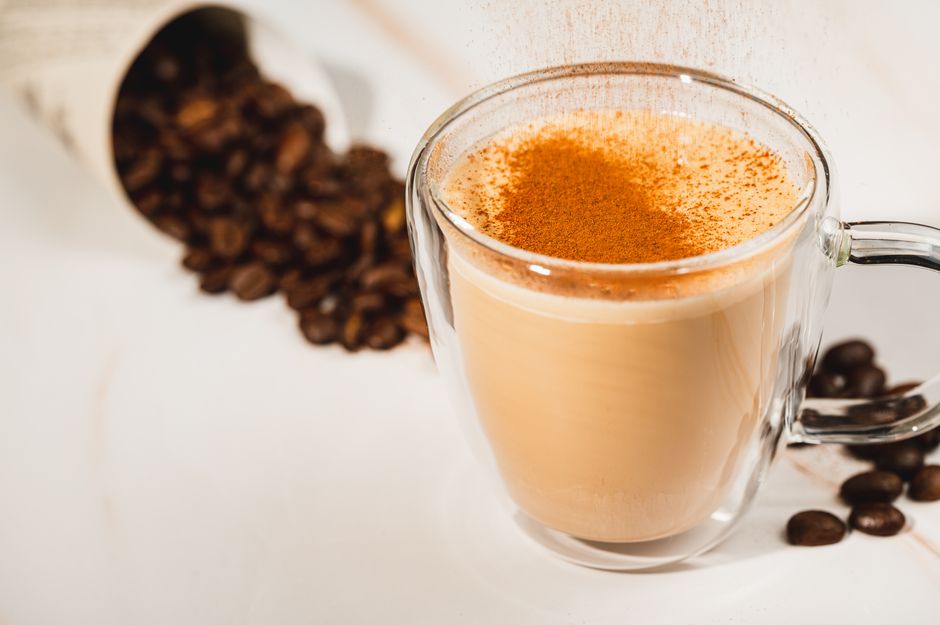
A cafe latte is espresso mixed with a larger amount of steamed milk, finished with a thin layer of milk foam. The name is Italian for “coffee with milk.” A traditional latte is built from one or two shots of espresso and roughly six to eight ounces of steamed milk, which makes it milder and creamier than a cappuccino or a plain shot of espresso.
That simple ratio is the whole idea. But the drink you order today has drifted a long way from the Italian original, and that drift matters if you are watching calories, caffeine, or sugar. Here is what is actually in the cup.
Whats A Cafe Latte Made Of?
Three things: espresso, steamed milk, and a small cap of milk foam. That is it. No whipped cream, no syrup, no flavoring unless you ask for it.
The espresso is brewed by forcing hot water through finely ground coffee under pressure. The steamed milk is heated with a wand that pushes steam into the milk, which creates tiny bubbles and a velvety texture. The foam on top is just milk that was stretched with more air.
The proportions are what separate a latte from its cousins:
- Latte: mostly steamed milk, one or two espresso shots, thin foam layer
- Cappuccino: equal parts espresso, steamed milk, and foam
- Flat white: similar to a latte but less foam and often a stronger coffee-to-milk ratio
- Macchiato: espresso with just a small spot of milk
The milk is the dominant ingredient by volume. That is why a latte tastes smooth and mild compared to espresso, which is concentrated and bitter.
How Much Caffeine Is in a Cafe Latte?
A single shot of espresso contains roughly 60 to 75 milligrams of caffeine. A latte made with one shot lands in that range. A latte made with two shots lands closer to 120 to 150 milligrams.
For reference, a standard 8-ounce brewed coffee contains about 95 milligrams of caffeine, according to USDA data. So a single-shot latte often has less caffeine than a cup of drip coffee, even though it tastes richer. This surprises people. Espresso is more concentrated per ounce, but a latte is mostly milk, so the total caffeine is modest.
If you order a large latte from a coffee shop, ask how many shots it contains. Many chains add a third shot to larger sizes, which pushes caffeine toward 200 milligrams or more. Caffeine sensitivity varies widely between people, and the FDA has noted that most healthy adults can consume up to 400 milligrams per day without generally harmful effects. That figure is a general guideline, not a personal target, and it does not apply to everyone.
How Many Calories Are in a Latte?
It depends almost entirely on the milk. The espresso contributes about 2 to 5 calories. Everything else comes from what you pour in.
Using USDA nutritional data for fluid milk, a rough picture for a 12-ounce latte looks like this:
| Milk type | Approx. calories (12 oz latte) | Approx. protein |
|---|---|---|
| Whole milk | ~220-240 | ~12 g |
| 2% reduced fat | ~180-200 | ~12 g |
| Skim milk | ~130-150 | ~12 g |
| Oat milk (unsweetened) | ~150-180 | ~4-6 g |
| Soy milk (unsweetened) | ~130-160 | ~10-12 g |
These are estimates. Actual numbers shift with the exact brand, the size of the drink, and how much foam replaces liquid milk. Flavored syrups add sugar and calories on top of this — a single pump of standard vanilla syrup typically adds around 20 calories and several grams of sugar.
One non-obvious point: the foam counts as milk. A latte that looks like it has less liquid may still contain the same amount of milk, just whipped with more air.





Is a Latte Healthier Than Regular Coffee?
Not inherently. It is a different drink with a different nutritional profile, and which one is “better” depends on what you are trying to get.
A latte gives you protein and calcium from the milk. Those are real nutritional contributions. A 12-ounce whole-milk latte provides roughly 12 grams of protein and a meaningful share of daily calcium. Plain black coffee provides almost none of either.
On the other hand, a latte carries calories and fat that black coffee does not. If you drink three lattes a day, that adds up quickly. Black coffee is nearly calorie-free.
There is a common claim that milk reduces the antioxidant benefit of coffee. The evidence here is mixed and mostly from laboratory and small studies. Some research suggests milk proteins can bind to certain coffee compounds, but it is not clear this changes any meaningful health outcome in people. It is not a reason to avoid lattes, and it is not a reason to prefer them either.
Does a Latte Have Lactose?
Yes, if it is made with cow’s milk. A 12-ounce latte made with regular milk contains roughly 12 to 18 grams of lactose, based on standard milk composition data.
That is enough to cause symptoms in people with lactose intolerance, which is common in adults, particularly those of East Asian, West African, Hispanic, and Native American descent. Symptoms include bloating, gas, and loose stools, usually within a few hours of drinking it.
People with a true milk allergy — an immune reaction to milk protein, not lactose — need to avoid cow’s milk entirely. That is a different condition from lactose intolerance and can be serious.
Plant milks solve the lactose issue but introduce their own differences. Oat milk is lower in protein than cow’s milk. Soy milk is closest to cow’s milk in protein content. Almond milk is low in both protein and calories. None of them are automatically “healthier” — they are simply different products.
What About the Foam and Temperature?
Properly steamed milk is heated to around 140 to 155°F. Above roughly 160°F, milk proteins begin to change and the milk takes on a scalded, slightly cooked flavor. That is why baristas stop steaming before the milk boils.
The foam is created by introducing air into the milk during steaming. More air means more foam. A latte uses relatively little air — just enough for a thin top layer. A cappuccino uses much more.
If you are reheating a latte at home, keep in mind that reheated milk tends to lose its texture and can taste flat. It is not a food safety problem if it was refrigerated promptly, but the drink will not be the same.
Does the Type of Espresso Matter?
It affects flavor more than anything else. The roast level, the grind, and the bean origin all change how the espresso tastes, and that flavor carries through the milk.
Darker roasts tend to taste bolder and more bitter. Lighter roasts tend to be more acidic and fruity. In a latte, the milk softens these differences, which is one reason lattes are popular with people who find straight espresso too intense.
Caffeine content varies somewhat with the bean and the brewing method, but the shot size is the bigger factor. A single shot is a single shot, regardless of roast.
Frequently Asked Questions
What exactly is a cafe latte?
A cafe latte is espresso combined with steamed milk and topped with a thin layer of foam. It typically uses one or two espresso shots and six to eight ounces of milk.
How much caffeine is in a cafe latte?
A single-shot latte contains roughly 60 to 75 milligrams of caffeine, and a double-shot latte around 120 to 150 milligrams. Larger sizes from coffee chains often contain more because they add extra shots.
Is a latte just coffee with milk?
Functionally, yes, but the ratios and the milk preparation are specific. The milk is steamed and textured rather than simply poured, which is what gives a latte its smooth consistency.
Is a latte fattening?
A latte’s calorie content depends almost entirely on the milk and any added syrups. A skim-milk latte is relatively low in calories, while a whole-milk latte with flavored syrup can carry several hundred.
