
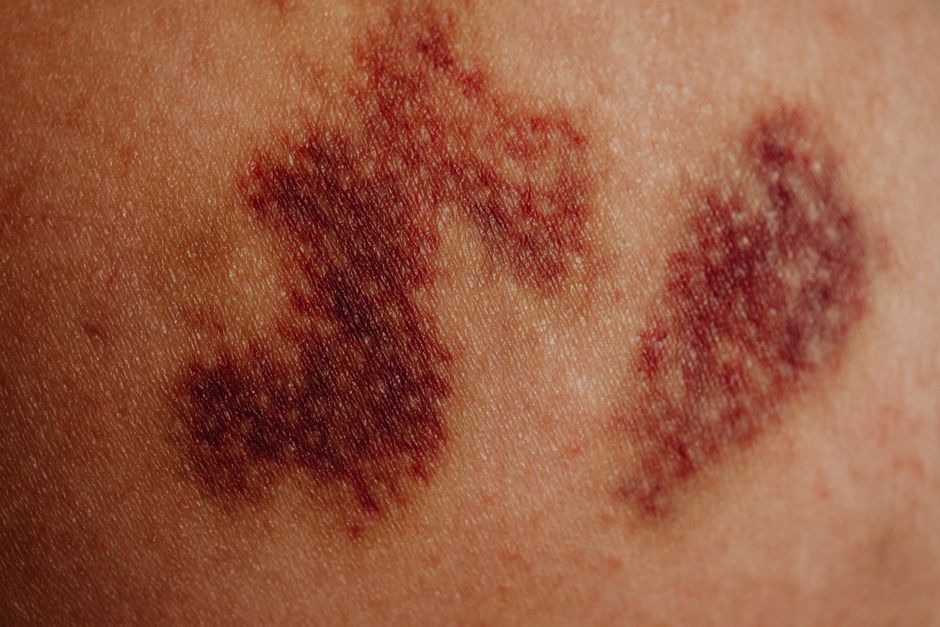
A bruise forms when small blood vessels under your skin break and leak blood into the surrounding tissue. That trapped blood is what creates the familiar black-and-blue mark. The body clears this blood naturally, but the process takes time. To make a bruise go away faster, apply ice in the first 48 hours, then switch to gentle heat. Elevating the injured area and taking over-the-counter pain relievers can also help. Most bruises fade within one to two weeks, but the timeline depends on the severity of the injury and your individual healing rate.
What Happens Inside Your Body When You Get a Bruise?
A bruise is a collection of blood beneath the skin. When you bump into something hard, the impact can rupture tiny capillaries near the surface. Blood leaks out and pools in the tissue. Your immune system responds by sending white blood cells to clean up the area.
The color changes you see are actually the breakdown of hemoglobin, the protein in red blood cells. Fresh bruises often look red or purple because the blood is rich in oxygen. As the hemoglobin breaks down, the bruise shifts to blue, then green, then yellow-brown. That yellow color near the end means your body is almost done clearing the waste products.
What Will Make a Bruise Go Away Faster?
Ice is the most effective first step. Apply a cold pack within the first 48 hours after the injury. Cold narrows the blood vessels, which limits how much blood leaks into the tissue. A smaller pool of blood means a smaller bruise.
Do not apply ice directly to the skin. Wrap it in a thin cloth or towel first. Keep it on for 15 to 20 minutes at a time, with at least 20 minutes between sessions. You can repeat this several times a day for the first two days.
After 48 hours, switch to heat. A warm compress or heating pad increases blood flow to the area. This helps your body reabsorb the pooled blood more quickly. Use heat for 15 to 20 minutes a few times daily.
Elevation matters too. If the bruise is on an arm or leg, raise it above heart level when possible. Gravity helps fluid drain away from the injured site, which reduces swelling and discomfort.
Do Arnica and Other Topical Creams Actually Work?
Arnica is a plant-based ointment commonly sold for bruising. Some research suggests arnica gel may reduce bruise size and pain, but the evidence is not strong. Studies are small, and results vary. The cream appears safe for most people when used on unbroken skin, but it has not been rigorously proven to speed healing.
Other topical products contain vitamin K, which plays a role in blood clotting. A few small studies have found that vitamin K cream may help fade bruises, particularly after cosmetic procedures. But again, the research base is limited. Using these creams is unlikely to cause harm, but do not expect dramatic results.
Never apply any cream to broken skin or an open wound. If the skin over the bruise is cut or scraped, stick to gentle cleansing and let the wound heal on its own.




Can Certain Foods or Supplements Speed Up Bruise Healing?
Your body needs the right nutrients to repair tissue and clear blood. Vitamin C helps produce collagen, which strengthens blood vessel walls. Vitamin K is required for normal blood clotting. Both are important for general skin health, but no food has been proven to make a bruise vanish faster once it has formed.
Some people take bromelain, an enzyme found in pineapple, hoping it will reduce bruising. A few studies suggest it may have anti-inflammatory properties, but clinical evidence for bruise treatment specifically is weak. The same applies to quercetin and other flavonoid supplements marketed for bruising.
If you bruise frequently, look at your overall diet rather than chasing a single supplement. A balanced intake of fruits, vegetables, and protein gives your body the raw materials it needs to heal. No supplement replaces the basics.
When Should You See a Doctor About a Bruise?
Most bruises are harmless and heal without medical attention. But some situations require a closer look. See a doctor if a bruise does not improve after two weeks, if it grows larger instead of smaller, or if it appears without any known injury.
Seek urgent care if the bruise is accompanied by severe pain, swelling that continues to worsen, or if you cannot move the injured limb. These symptoms can indicate a fracture, a deep muscle injury, or a condition called compartment syndrome, which requires immediate treatment.
Bruising that happens easily and frequently may signal an underlying issue. Blood clotting disorders, low platelet counts, or medications that thin the blood can all cause excessive bruising. If you notice tiny red or purple spots on your skin that do not fade when pressed, or if you have unexplained bruises in multiple places, mention it to your doctor.
Why Do Some People Bruise More Easily Than Others?
Age is a major factor. As you get older, your skin becomes thinner and the fat layer beneath it shrinks. This leaves blood vessels with less cushioning, so even minor bumps can cause them to break. Blood vessel walls also weaken with age, making them more fragile.
Medications play a significant role. Blood thinners like warfarin, apixaban, and aspirin increase bleeding risk. Even over-the-counter drugs such as ibuprofen and naproxen can make bruising more likely because they interfere with platelet function. If you take any of these, do not stop without talking to your doctor.
Genetics matter as well. Some people naturally have more fragile capillaries or lower levels of clotting factors. This is usually harmless, but if you have always bruised easily and have family members with the same pattern, it is worth mentioning during a routine checkup.
Are There Any Home Remedies You Should Avoid?
Some popular remedies are ineffective, and a few are genuinely risky. Rubbing raw meat on a bruise is an old folk remedy with no scientific basis. It introduces bacteria to the skin and does nothing to speed healing.
Massaging a bruise vigorously can actually make it worse. Pressing on the area may break more blood vessels and spread the blood further into surrounding tissue. Gentle pressure is fine, but do not knead the bruise.
Applying heat too early is another common mistake. Heat increases blood flow. If you use it within the first 48 hours, you may encourage more bleeding rather than limiting it. Wait until the swelling has stabilized before reaching for a warm compress.
Some people apply toothpaste or vinegar to bruises. Neither has any demonstrated effect on healing. These substances can irritate the skin, especially if left on for long periods.
How Long Does a Bruise Normally Take to Heal?
A minor bruise from a small bump typically fades within one week. A deeper bruise from a significant impact may take two weeks or longer. Bruises on the legs often heal more slowly than those on the arms because blood must work against gravity to circulate in the lower limbs.
The color progression is a helpful sign that healing is on track. A bruise that moves from purple to green to yellow is following the normal breakdown process. If a bruise stays the same color for more than a week or becomes increasingly painful, that is a reason to seek medical advice.
There is no way to make a bruise disappear instantly. The blood has already leaked into your tissue, and your body needs time to clear it. The strategies described here can shorten that window modestly, but patience remains the most important part of the process.
Frequently Asked Questions
Does ice really help a bruise go away faster?
Yes, ice applied within the first 48 hours limits blood flow to the injured area, which reduces the amount of blood that pools under the skin. A smaller pool of blood means a smaller bruise that heals faster.
Can heat help a bruise heal?
Heat helps only after the first 48 hours have passed. Once the bleeding has stopped, warmth increases circulation and helps your body reabsorb the trapped blood more quickly.
Is arnica cream effective for bruises?
Some small studies suggest arnica gel may reduce bruise size and pain, but the evidence is limited and results vary. It is generally safe on unbroken skin, but it has not been proven to speed healing.
When should I worry about a bruise?
See a doctor if a bruise does not improve after two weeks, grows larger, or appears without any known injury. Seek urgent care if the bruise comes with severe pain, worsening swelling, or an inability to move the injured limb.
