
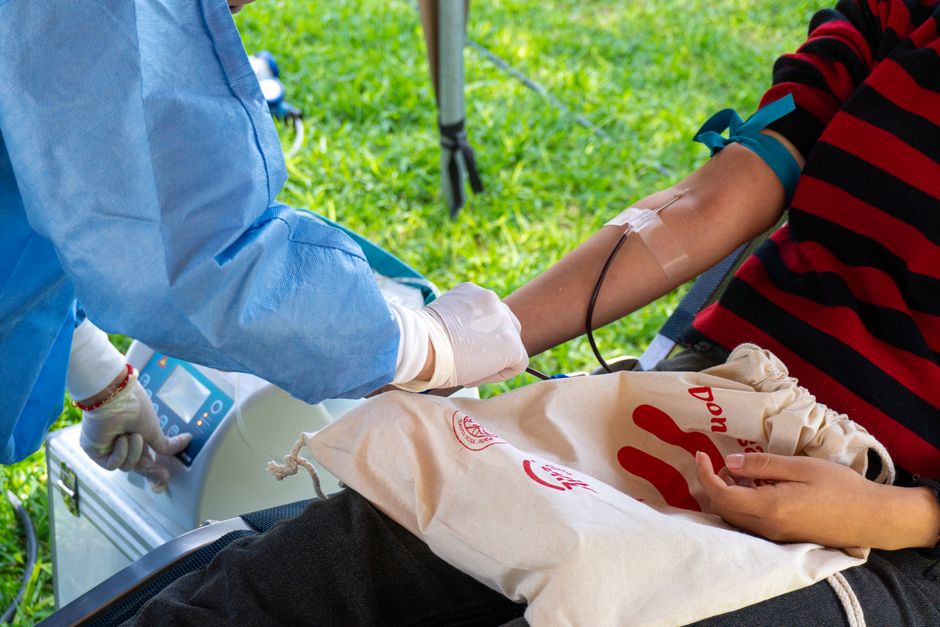
Donating plasma is a safe, routine procedure, but bruising at the needle site is a common side effect. A bruise forms when blood leaks from the vein into the surrounding tissue during or after the needle insertion. You can usually speed up healing with cold compresses in the first day and warm compresses after that, along with gentle pressure and time.
Why Do Bruises Happen After Plasma Donation?
A bruise is simply trapped blood under the skin. When the needle enters your arm, it passes through the skin and into a vein. Sometimes the needle nicks the vein wall, or blood seeps out around the needle before the vein seals itself.
Your body then breaks down that pooled blood. The red blood cells release hemoglobin, which changes color as it is processed. That is why a fresh bruise looks red or purple, then turns green or yellow before fading.
Some people bruise more easily than others. Smaller veins, deeper veins, or slight movement during the donation can increase the risk. Blood thinners and certain supplements also make bruising more likely.
What To Do In The First 24 Hours
The first day after donation is when you have the most control over bruise size. The goal is to slow blood flow to the area and keep the leak from spreading.
Apply a cold compress to the bruise for 10 to 15 minutes at a time. Do this every few hours during the first day. The cold narrows blood vessels, which reduces further bleeding into the tissue.
Use a cloth barrier between the ice pack and your skin. Never place ice directly on skin — it can cause frostbite. A bag of frozen peas wrapped in a towel works just as well as a commercial ice pack.
Keep your arm elevated when you can. Raising the arm above heart level reduces blood pressure in the area, which limits additional leakage. This is especially helpful in the first few hours after donation.
Avoid heavy lifting, vigorous exercise, or anything that increases blood flow to your arm for the rest of the day. This includes hot showers and saunas.
What To Do After 24 Hours
Once the bleeding has stopped, the goal shifts to helping your body reabsorb the trapped blood. This is where warmth helps.
Switch to a warm compress after the first day. Apply a warm, damp cloth to the bruise for 10 to 15 minutes, two to three times per day. The heat increases blood flow to the area, which helps your body clear the pooled blood faster.
Continue this for several days until the bruise fades. Most bruises from plasma donation resolve within one to two weeks. Larger bruises can take a little longer.
Gentle movement of your arm is fine at this point. Light stretching and normal daily activities help maintain circulation. Just avoid anything that strains the specific muscle near the bruise.




What Not To Do
Some common advice for bruises is wrong or even counterproductive.
Do not massage the bruise. Massaging can break up the clotted blood and push it further into surrounding tissue, making the bruise larger. Let the body handle the cleanup at its own pace.
Do not apply heat in the first 24 hours. Heat opens blood vessels and increases blood flow. In the early phase, that can make the bruise bigger.
Do not take aspirin or ibuprofen for bruise pain in the first day or two. These medications thin the blood and can prolong bleeding. Acetaminophen (Tylenol) is generally a safer choice if you need pain relief, but check with the donation center or your doctor first.
Do not use arnica or other topical bruise creams on an open needle site. If the needle site is still healing, keep it clean and dry. Once the skin is fully closed, some people use arnica, but clinical evidence for its effectiveness is limited.
When To Contact The Donation Center Or A Doctor
Most bruises are harmless and resolve on their own. But some signs warrant medical attention.
Contact a doctor if you notice any of the following:
- Severe pain that worsens instead of improving
- Numbness, tingling, or weakness in the arm or hand
- Coolness or paleness in the fingers
- Significant swelling beyond the bruise itself
- Fever or redness spreading from the site
- A bruise that keeps growing after the first day
These symptoms can indicate a hematoma pressing on a nerve, or a rare infection. They are uncommon, but they deserve prompt evaluation.
Also contact the plasma center if your bruise is unusually large or painful. They track donation reactions and can advise you on whether to return.
How To Reduce Bruising On Your Next Donation
You can lower your chances of bruising the next time you donate. Some of these steps are within your control; others depend on the phlebotomist.
Hydrate well before donating. Plasma is mostly water, and well-hydrated veins are fuller and easier to hit. The donation center will likely recommend drinking extra water in the 24 hours before your appointment.
Eat a protein-rich meal beforehand. This helps with the donation itself and supports recovery. It does not directly prevent bruising, but it helps your body handle the procedure.
Tell the phlebotomist if you have small or rolling veins. An experienced technician can adjust their approach. Some centers use a smaller needle or ultrasound guidance for difficult veins.
Keep your arm straight and still during the donation. Movement can cause the needle to shift and nick the vein.
Apply firm pressure after the needle is removed. Hold the gauze pad in place with your arm straight for at least five to ten minutes. Do not bend your elbow to hold the gauze in place — this is a common cause of bruising. Bending the arm can push blood out of the vein into the tissue.
If you take blood thinners or supplements that affect bleeding, tell the donation center in advance. Some medications disqualify you from donating, and the center needs to know for your safety.
Does Vitamin K Or Other Supplements Help?
You may see claims that vitamin K cream or oral supplements speed up bruise healing. The evidence here is limited.
Vitamin K plays a role in blood clotting, but that does not mean taking it after a bruise forms will help. Once the bruise is already there, the bleeding has stopped. The issue is reabsorption, not clotting.
Some small studies have looked at vitamin K cream for bruising after cosmetic procedures, with mixed results. No large human trials have confirmed that it works for donation bruises.
Bromelain, an enzyme found in pineapple, is sometimes promoted for bruising. Some research suggests it may have anti-inflammatory properties, but the evidence is not strong enough to recommend it specifically for this purpose.
Your best bet is the simple, well-established approach: cold early, heat later, and time.
Does Ice Actually Work Or Is It Just Comfort?
Ice is not just about comfort. Cold causes vasoconstriction — the narrowing of blood vessels. This reduces blood flow to the area and limits the amount of blood that escapes into the tissue.
This is why the timing matters. Ice in the first 24 hours can genuinely reduce bruise size. After that, the blood has already pooled and ice does little except numb any soreness.
So if you missed the first day, skip the ice and go straight to warmth. You have not lost much.
How Long Will The Bruise Last?
Most plasma donation bruises fade within 7 to 14 days. Small bruises may disappear in less than a week. Larger ones can take up to three weeks.
The color changes are normal and do not indicate a problem. A bruise that turns yellow or green is healing, not getting worse.
If a bruise lasts longer than three weeks without improvement, or if you notice a hard lump forming, have it checked by a doctor. A firm lump can indicate a hematoma that is not fully reabsorbing.
Frequently Asked Questions
Can I donate plasma again if I still have a bruise?
Most centers require the bruise to be healed or significantly faded before your next donation. Check with your specific center, as policies vary.
Does arnica help bruises from plasma donation?
Some people use arnica gel or cream, but clinical evidence for its effectiveness is limited. It is safe for most people once the needle site is fully closed.
Why is my arm bruised but not painful?
Bruises are often more noticeable than they are painful. The trapped blood causes discoloration but may not cause significant discomfort.
Is a hard lump under the bruise normal?
A small firm area can be normal as blood clots and reabsorbs. If the lump is large, painful, or growing, contact a doctor.
