
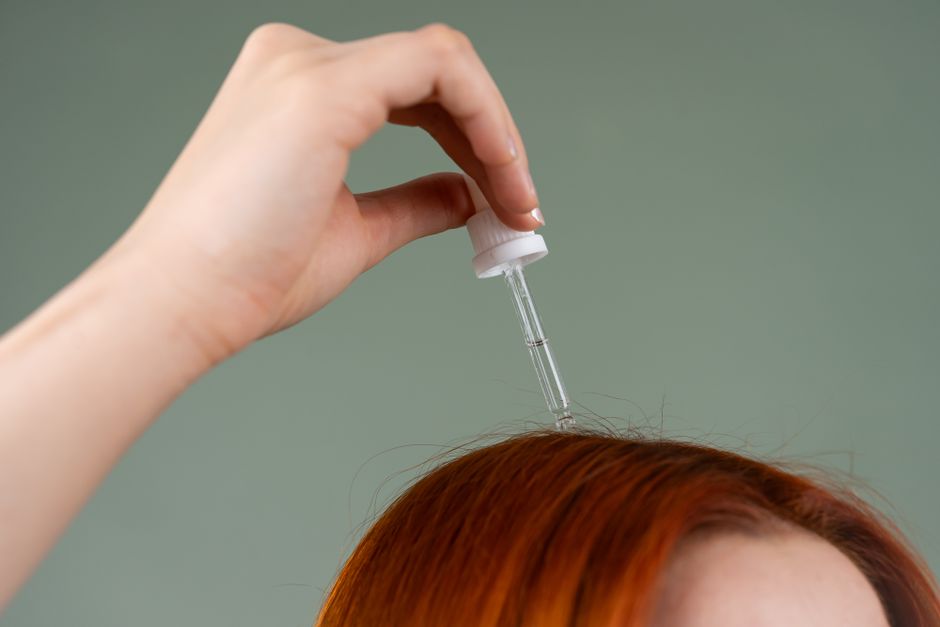
Hair grows about half an inch per month, and no product can change that rate. What you can do is remove the things slowing it down and treat the conditions that stop it. For most people, that means getting a real diagnosis first, because hair loss has several different causes and each one responds to a different approach.
What Will Help Grow Hair?
If your hair is thinning because of a medical condition, treating that condition is what helps. If it is thinning because of genetics, a small number of treatments have real evidence behind them. If it is breaking off from damage, the fix is gentler handling, not a supplement.
This is the part most hair content skips. There is no single answer to “what will help grow hair” because there is no single cause of hair loss. A person with an underactive thyroid, a person with iron deficiency, and a person with pattern baldness need three different plans. Using the wrong one wastes months.
So the honest first step is not buying something. It is figuring out which category you fall into.
Why Is My Hair Falling Out?
Hair shedding is normal. Losing 50 to 100 hairs a day is within the expected range for most people, according to the American Academy of Dermatology. The problem starts when you lose more than you replace.
Each hair follicle cycles through three phases. There is a growing phase that lasts years, a short transition phase, and a resting phase that ends with the hair falling out. At any given time, most of your hair is in the growing phase. When something disrupts that cycle, more hairs than usual shift into the resting phase at once. A few months later, they all fall out together.
That delay matters. People often blame a shampoo or a stressful week for shedding that actually started two to three months earlier. This pattern is common after childbirth, major surgery, severe illness, high fever, or rapid weight loss. It is called telogen effluvium, and it usually reverses on its own once the trigger resolves.
Other causes look similar but do not resolve on their own:
- Androgenetic alopecia — genetic pattern hair loss, the most common cause in both men and women
- Thyroid disorders — both an underactive and an overactive thyroid can cause shedding
- Iron deficiency — low iron stores are linked to hair loss, with or without anemia
- Alopecia areata — an autoimmune condition that causes smooth, round patches
- Traction alopecia — loss from tight hairstyles pulling on the roots
- Scalp conditions — infections, psoriasis, or scarring disorders
Notice that this list has almost nothing to do with shampoo. That is the point.
Which Treatments Actually Have Evidence?
Two medications have the strongest evidence for pattern hair loss, and both were originally approved for other purposes.
Minoxidil is a topical treatment applied directly to the scalp. It is available over the counter in the United States. It extends the growing phase of the hair cycle and widens the follicle. It works best on the crown of the head and is less effective at the hairline. You have to keep using it. Hair gained from minoxidil is generally lost within months of stopping.
Finasteride is an oral prescription drug for men. It blocks the enzyme that converts testosterone into dihydrotestosterone, the hormone that shrinks hair follicles in genetically prone men. Clinical trials have consistently found it slows hair loss and regrows hair in a majority of men who take it. It is not approved for women of childbearing age, and it carries a risk of sexual side effects that a minority of men report.
A few other options have meaningful but more limited evidence:
- Low-level laser therapy — some studies show modest improvement in density, though results vary and the devices differ widely
- Platelet-rich plasma injections — evidence indicates possible benefit, but studies are small and protocols are not standardized
- Hair transplant surgery — moves hair follicles that are resistant to the hormone that causes pattern loss
- Spironolactone — an oral prescription sometimes used off-label for women with pattern hair loss
Here is the non-obvious part. Minoxidil and finasteride do not cure pattern baldness. They hold it back while you use them. That is not a flaw in the drugs — it reflects how the condition works. The genetic tendency never goes away.





Do Supplements and Biotin Help Hair Grow?
For most people, no. Biotin supplements are widely marketed for hair, skin, and nails, but there is little evidence they help anyone who is not already deficient.
Biotin deficiency is rare in people eating a typical diet, because the vitamin is present in many foods and gut bacteria also produce some. When deficiency does occur, it is usually linked to long-term raw egg white consumption, certain genetic disorders, or long-term use of some anticonvulsants. In those cases, correction helps. In everyone else, the supplement mostly produces expensive urine.
There is a real safety concern too. High-dose biotin can interfere with laboratory tests, including tests for thyroid function and cardiac troponin, a marker used to detect heart attacks. The FDA has issued a safety communication about this. If you take biotin and need blood work, tell your doctor.
Other supplements follow a similar pattern. Some small studies suggest possible benefit for certain compounds, but the trials are short, the groups are small, and the results have not been consistently reproduced. That is not the same as proof.
The one exception worth knowing: if blood tests show you are actually deficient in iron, vitamin D, or zinc, correcting that deficiency may help your hair. But that is treating a deficiency, not supplementing a healthy person.
What About Diet and Stress?
Severe calorie restriction and rapid weight loss are well-documented triggers for shedding. The body appears to prioritize other functions over hair growth when energy intake drops sharply. Crash diets, eating disorders, and bariatric surgery are all associated with increased hair loss.
Protein matters too. Hair is made mostly of a protein called keratin. Diets very low in protein have been linked to hair shedding and brittleness. For most adults eating a mixed diet, protein intake is not the problem. For people on restrictive diets, it can be.
Stress is trickier. Major physical or emotional stress can push hair into the resting phase, leading to shedding two to three months later. But the everyday stress of a busy week is not well established as a cause of significant hair loss. The evidence is stronger for major stressors — surgery, illness, bereavement, job loss — than for routine daily pressure.
What you do not need to worry about: shampoo choice, washing frequency, or whether you use a “hair growth” conditioner. These do not change how fast hair grows from the root.
Does Hair Damage Cause Hair Loss?
Breakage is not the same as loss, and the distinction matters for treatment.
Hair loss means the follicle stops producing hair or the hair falls out from the root. Breakage means the hair shaft snaps off partway down. Breakage can look like thinning, especially at the ends, but the follicle is fine and new hair will grow.
Breakage comes from chemical and physical damage. Bleach, relaxers, permanent color, and repeated heat styling all weaken the hair shaft. So does brushing wet hair aggressively, since hair stretches more when wet and is more prone to snapping.
If your hair is breaking, no oral supplement will fix it. The fix is mechanical:
- Space out chemical treatments
- Lower the heat on styling tools and use them less often
- Detangle gently, starting from the ends and working up
- Avoid tight braids, weaves, and ponytails that pull on the roots
- Trim split ends before they travel up the shaft
Traction alopecia deserves a specific warning. Hair loss from tight hairstyles can become permanent if the pulling continues long enough to scar the follicle. Catching it early and changing the style can allow regrowth. Waiting too long can mean the loss does not come back.
When Should You See a Doctor?
See a doctor if you notice sudden shedding, patchy loss, scalp pain, itching, scaling, or loss that continues for more than a few months. Those signs point to causes that need medical treatment, not a new shampoo.
A basic workup usually includes a history, a scalp exam, and blood tests. Doctors commonly check thyroid function, iron stores, and a complete blood count. In women, hormone testing may be added if there are signs of a hormonal imbalance. A dermatologist may also examine the scalp under magnification to look at the hair shafts and follicles directly.
Getting the diagnosis right is not a formality. Treating pattern baldness with iron pills does nothing. Treating an iron deficiency with minoxidil does nothing. The two problems look similar in the mirror and require completely different approaches.
One more thing worth saying plainly. Hair grows slowly. Any treatment that works takes months to show visible change, because you have to wait for follicles to move through their cycle. Anyone promising fast results is either selling something or misunderstanding the biology.
Frequently Asked Questions
What is the most effective treatment for hair regrowth?
For pattern hair loss, minoxidil and finasteride have the strongest evidence, though results vary by person and by cause. Neither works for hair loss caused by thyroid disease, iron deficiency, or breakage.
Does biotin actually help hair grow?
No evidence shows biotin helps hair grow in people who are not deficient, and deficiency is rare in typical diets. High-dose biotin can also interfere with certain lab tests, including thyroid and cardiac tests.
How long does it take to see hair regrowth?
Most treatments that work take at least three to six months to show visible change, because hair grows about half an inch per month. Stopping a working treatment usually means losing the gained hair within months.
Can stress cause permanent hair loss?
Stress-related shedding is usually temporary and reverses once the trigger passes, typically over several months. Permanent loss is more often linked to genetics, scarring conditions, or long-term traction from tight hairstyles.
