
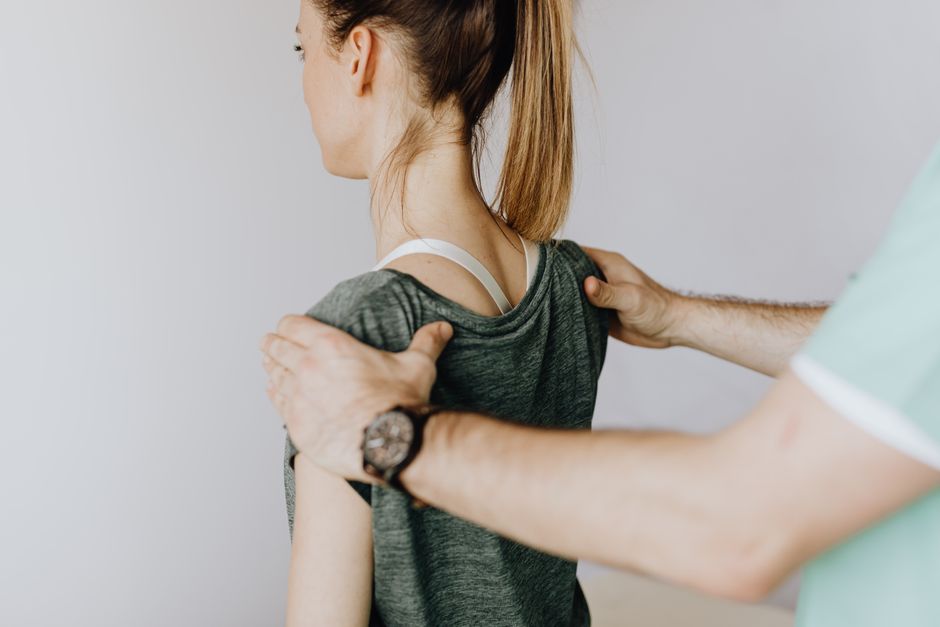
The clavicle, commonly known as the collarbone, is the only long bone in the human body that lies horizontally. It runs between the sternum (breastbone) and the acromion (part of the shoulder blade). The clavicle is classified as a long bone, but it has several unique features that set it apart from other long bones like the femur or humerus. Understanding its type, structure, and function helps explain why it is so often injured and how it heals.
What Type Of Bone Is The Clavicle?
The clavicle is a long bone. Bone classification is based on shape, not size. Long bones are longer than they are wide. They have a shaft (diaphysis) and two ends (epiphyses). The clavicle fits this description, so anatomists group it with other long bones. However, the clavicle is different from most long bones in three key ways:
- It has no medullary cavity. The medullary cavity is the hollow center inside most long bones that contains bone marrow. The clavicle is mostly dense, compact bone with little to no marrow space.
- It ossifies in two ways. Most long bones develop through endochondral ossification (cartilage turns to bone). The clavicle develops through both intramembranous and endochondral ossification. It is the first bone to begin forming in the womb, around 5 weeks of pregnancy.
- It is S-shaped. When viewed from above, the clavicle curves like an elongated “S.” The medial curve (toward the sternum) bends forward, and the lateral curve (toward the shoulder) bends backward. This shape helps distribute forces and protects underlying structures.
So while the clavicle is typed as a long bone, it is an unusual one. Some textbooks call it a “long bone with unusual features,” but classification systems still place it in the long bone category.
How Is The Clavicle Different From Other Long Bones?
The femur, humerus, and tibia are classic long bones. They have a distinct shaft, a medullary cavity filled with yellow or red marrow, and they rely on growth plates for lengthening during childhood. The clavicle is different.
No medullary cavity: The clavicle’s shaft is solid compact bone. That makes it stronger in some ways but also means it has less flexibility. When force is applied, it tends to break rather than bend.
Unique ossification: Most long bones form entirely from a cartilage model (endochondral ossification). The clavicle forms from both a cartilage model and a direct bone-forming membrane (intramembranous ossification). This dual origin may contribute to its unique shape and strength.
First to ossify, last to fuse: The clavicle is the first bone to ossify in the fetus and the last bone to fuse at its growth plates. The medial epiphysis (sternal end) does not fully fuse until around age 25. This late fusion makes the sternal end a useful site for estimating age in forensic anthropology.
No true growth plate in the same way: The clavicle’s growth occurs at both ends, but it does not have the same type of cartilaginous growth plate seen in the femur. This is one reason clavicle fractures in children heal quickly and often without surgery if the ends are aligned.
What Does The Clavicle Do In The Body?
The clavicle has three important jobs:
- It connects the arm to the body. The clavicle is the only bony connection between the upper limb and the axial skeleton (the trunk). The sternoclavicular joint attaches it to the sternum, and the acromioclavicular joint attaches it to the shoulder blade.
- It protects underlying nerves and blood vessels. The subclavian artery, subclavian vein, and the brachial plexus nerves pass under the clavicle. The bone acts like a protective arch over these vital structures.
- It provides attachment for muscles. Several muscles attach to the clavicle, including the deltoid, trapezius, pectoralis major, sternocleidomastoid, and subclavius. These muscles help move the shoulder and neck.
The clavicle also transmits forces from the arm to the axial skeleton. When you push or lift something, the force travels through the clavicle to the sternum and rib cage. This transfer of load makes the clavicle vulnerable to injury during falls or direct blows.




What Are Common Clavicle Injuries?
The most common clavicle injury is a fracture (broken collarbone). It accounts for about 5% of all adult fractures. In children, it is even more common, often resulting from a fall on an outstretched hand or a direct blow to the shoulder.
Fracture locations: Most clavicle fractures occur in the middle third of the bone (midshaft). The middle third is the thinnest and weakest part, and it lacks the protection of strong ligaments. Fractures of the outer (lateral) end or inner (medial) end are less common and often involve the adjacent joints.
Signs of a fracture: Pain, swelling, bruising, a visible bump, and difficulty lifting the arm. The shoulder may droop downward and forward because the clavicle no longer supports it.
Healing and treatment: Many clavicle fractures heal without surgery. Treatment usually involves wearing a sling for 4 to 6 weeks to immobilize the arm. Pain relievers and ice help reduce discomfort. Surgery (internal fixation with a plate and screws) may be recommended for fractures that are displaced, shortened, or at risk of not healing properly, or for athletes who need faster return to sport.
Nonunion and malunion: In about 5 to 10% of cases, the bone ends fail to heal (nonunion) or heal in a poor position (malunion). This is more common in older adults, smokers, and people with diabetes. Surgery is usually needed for nonunion.
Other clavicle problems: The acromioclavicular (AC) joint can be injured by direct impact, causing a shoulder separation. Osteoarthritis can affect the sternoclavicular or AC joints. Rarely, infections or tumors occur in the clavicle.
How Can You Keep Your Clavicle Healthy?
Because the clavicle is a bone, its health depends on overall bone health. The same habits that protect your spine and hips also protect your collarbone.
- Get enough calcium and vitamin D. Adults need about 1,000 mg of calcium per day (1,200 mg for women over 50 and men over 70). Vitamin D helps absorb calcium. Good sources include dairy products, leafy greens, fortified foods, and sunlight.
- Do weight-bearing exercise. Activities like walking, jogging, climbing stairs, and lifting weights stimulate bone remodeling and maintain bone density. The clavicle responds to force just like other bones.
- Avoid smoking and limit alcohol. Smoking reduces blood flow to bones and slows healing. Heavy alcohol use interferes with calcium absorption and bone formation.
- Prevent falls. Falls are the main cause of clavicle fractures, especially in older adults. Keep your home well lit, remove tripping hazards, and consider balance training or strength exercises.
If you have a health condition that weakens bones, such as osteoporosis, talk to your doctor about screening and treatment. A bone density test (DXA scan) measures bone strength at the hip and spine, but it does not usually include the clavicle. However, treatments for osteoporosis help all bones, including the clavicle.
Frequently Asked Questions
Is the clavicle a flat bone?
No, the clavicle is classified as a long bone, not a flat bone. Flat bones (like the skull, ribs, and sternum) are thin and curved, while the clavicle has a shaft and two ends.
Can the clavicle grow back after a fracture?
Yes, most clavicle fractures heal completely with proper immobilization. The bone forms new tissue (callus) that bridges the gap and later remodels into strong bone over months to a year.
Is the clavicle part of the axial or appendicular skeleton?
The clavicle is part of the appendicular skeleton. It belongs to the shoulder girdle, which connects the arms to the axial skeleton (the skull, spine, and rib cage).
What is the common name for the clavicle?
The common name is the collarbone. It gets that name because it lies horizontally just under the skin at the base of the neck, resembling a collar.
