
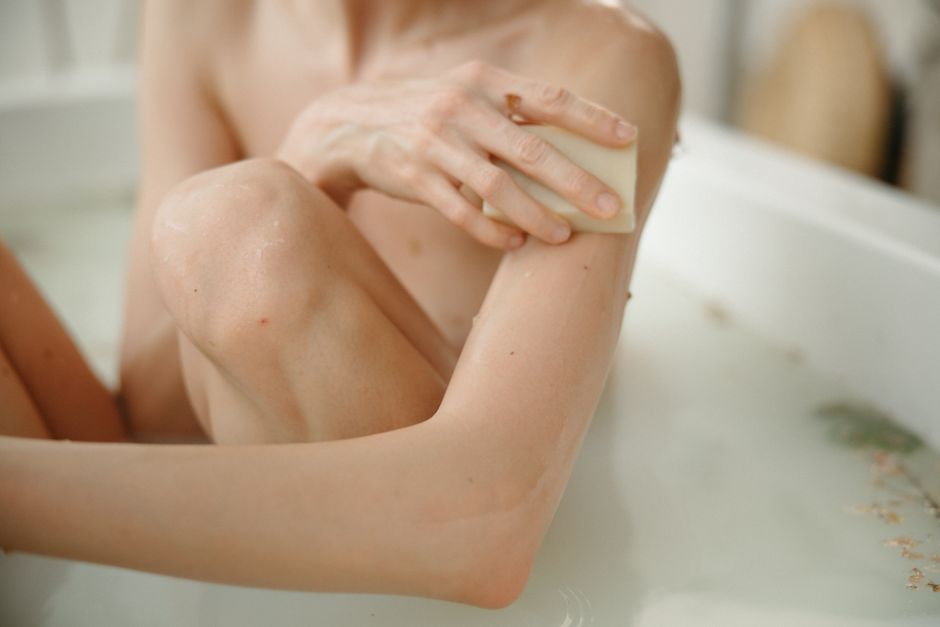
Soaking in a warm bath can feel soothing, but water alone often leaves skin feeling tight and dry once you get out. The most effective thing to add is a colloidal oatmeal product or a small amount of a simple oil like jojoba or sweet almond oil. These help slow water loss from the skin’s surface. Plain warm water without additives can actually pull moisture out of your skin rather than put it in.
The key is understanding that a bath additive works best by creating a barrier that holds water in, not by “feeding” your skin moisture from the outside. Once you know which ingredients do that and which ones just smell nice, the whole process gets simpler.
What To Put In Your Bath To Moisturize Skin?
The ingredients that genuinely help fall into a few established categories. Colloidal oatmeal is one of the best studied. It is made by grinding oats into a fine powder that suspends in water. Research published in the Journal of Drugs in Dermatology and other dermatology sources has found that colloidal oatmeal contains compounds called avenanthramides, which are associated with reduced itching and irritation. The FDA recognizes colloidal oatmeal as a skin protectant ingredient.
Oils are the second major category. Jojoba oil, sweet almond oil, and olive oil can be added directly to bathwater. Oil and water do not mix, so the oil disperses into tiny droplets that coat the skin as you soak. This creates a thin film that slows evaporation after you get out.
Here is a comparison of common bath additives and what the evidence actually supports:
| Additive | How It Works | Evidence Level |
|---|---|---|
| Colloidal oatmeal | Forms a protective barrier; contains anti-itch compounds | Well established |
| Jojoba or almond oil | Coats skin, slows water loss | Well established mechanism |
| Epsom salt | Dissolves in water; no proven skin moisturizing effect | Limited for moisture |
| Baking soda | May soothe itching; not a moisturizer | Limited |
| Fragrance oils | Add scent; can irritate sensitive skin | Not moisturizing |
| Milk or buttermilk | Contains lactic acid; mild exfoliant | Some evidence |
One clarification worth making: Epsom salt is widely marketed for baths, but its role is muscle soreness, not skin moisture. Magnesium sulfate does not penetrate intact skin in meaningful amounts, and no strong evidence shows it moisturizes. That does not mean it is useless — it just does not belong in a list of moisturizing additives.
Does Adding Oil To Bathwater Actually Moisturize Skin?
Yes, but not in the way most people assume. Oil does not add water to your skin. It traps the water that is already there.
Your skin has an outer layer called the stratum corneum. When it is healthy, it holds water in and keeps irritants out. Hot water and soap strip away lipids — fats — that help form this barrier. When those lipids are gone, water evaporates from your skin faster, and you feel dry and tight.
Oil added to a bath replaces some of that lost lipid barrier. As you soak, oil droplets cling to your skin. When you step out, that thin layer slows evaporation. This is the same principle behind applying lotion after a shower, but the oil gets a head start because you are already coated when you leave the water.
For this to work, you need enough oil to actually coat your skin. A few drops in a full tub will not do much. A common approach is one to two tablespoons of oil per bath, though there is no formal clinical guideline on the exact amount. More oil means more slip, which can make the tub slippery.
Which Oils Are Best For A Moisturizing Bath?
Not all oils behave the same way in water. Some are lighter and spread more easily. Others are heavier and leave more residue.
- Jojoba oil — technically a liquid wax. It closely resembles human sebum, the oil your skin produces naturally. It spreads well and tends not to clog pores.
- Sweet almond oil — lightweight, absorbs reasonably well, and is a common choice for people with sensitive skin. Avoid it if you have a tree nut allergy.
- Olive oil — heavier and greasier, but widely available. It leaves a noticeable film, which some people like and others do not.
- Coconut oil — solid at room temperature in cooler climates. It can be messy in a bath and may clog drains over time.
- Mineral oil — fragrance-free and unlikely to cause allergic reactions. It is the oil most often used in dermatology for barrier protection.
Fragrance-free oils are the safer choice if your skin is reactive. Fragrance is one of the most common causes of contact dermatitis from skincare products. If you have eczema or sensitive skin, skip anything with added scent.
One practical note: oil makes bathtubs dangerously slippery. Add it while the tub is filling so it disperses, and use a non-slip mat.




Is Colloidal Oatmeal Better Than Oil For Dry Skin?
They do different things, and the better choice depends on why your skin is dry.
Colloidal oatmeal is the stronger option if itching or irritation is part of the problem. Its avenanthramides have been shown to reduce inflammatory markers in skin. It also contains beta-glucans, which help form a protective film. The FDA lists colloidal oatmeal as a skin protectant, and it appears in many over-the-counter eczema products for that reason.
Oil is the better choice if your main issue is water loss and tightness without much itching. It is also simpler to use — you just pour it in.
You can combine them. A bath with colloidal oatmeal and a small amount of oil covers both the anti-itch and barrier-sealing angles. Just add the oatmeal first so it disperses, then the oil.
If you are using a commercial colloidal oatmeal bath packet, follow the package directions for the amount. If you are making your own, grind plain rolled oats in a blender until they form a fine powder, then add about one cup to a warm bath. No clinical guideline specifies an exact amount for homemade preparations — this is a common approach, not a standardized dose.
What Should You Avoid Putting In A Bath?
Several common additions either do not help or can make dry skin worse.
Bubble bath products and heavily fragranced bath bombs are the main culprits. They often contain surfactants — the same class of chemicals in dish soap — that strip oils from your skin. The bubbles are fun, but they work against moisture. If your skin is already dry, these are worth skipping.
Hot water itself is a problem. It feels good, but it removes skin lipids faster than warm water. Keeping the bath warm rather than hot makes a real difference. So does limiting soak time. Long soaks, even in warm water, eventually break down the skin barrier.
Baking soda is sometimes recommended for itchy skin. Some people find it soothing, but it is alkaline and can disrupt the skin’s natural acid mantle with prolonged use. The evidence for it as a moisturizer is weak. It is not harmful for occasional use, but it is not doing the job oil or oatmeal does.
Alcohol-based additives and strong essential oils should be avoided. Essential oils like cinnamon, clove, and citrus can cause chemical burns when added directly to bathwater. If you want scent, use a fragrance-free oil and add scent only if you know your skin tolerates it.
How Should You Bathe To Get The Most Moisture?
The timing and technique matter as much as what you put in the water.
Soak for a limited time in warm — not hot — water. When you get out, pat your skin dry rather than rubbing. Leave it slightly damp. Then apply a moisturizer within a few minutes while the skin is still holding water. This is the step most people skip, and it is the one that locks in everything the bath did.
A thick cream or ointment works better than a lotion for sealing in water. Lotions are mostly water and evaporate. Creams and ointments have more oil and hold moisture longer. This is well established in dermatology.
If you have eczema or another diagnosed skin condition, talk to your doctor before relying on bath additives alone. Baths can help manage symptoms, but they are not a treatment for the underlying condition. Some clinicians recommend diluted bleach baths for certain cases of eczema, but that is a medical treatment with specific instructions and should only be done under a doctor’s guidance.
Frequently Asked Questions
What is the best thing to put in a bath for dry skin?
Colloidal oatmeal and a fragrance-free oil like jojoba or mineral oil are the most effective options. Oatmeal helps with itching and irritation, while oil helps seal in moisture after you get out.
Does Epsom salt moisturize skin?
No. Epsom salt is used for muscle soreness, and no strong evidence shows it moisturizes skin. Magnesium sulfate does not penetrate intact skin in meaningful amounts.
Can I just use baby oil in my bath?
Yes. Mineral oil, which is the main ingredient in baby oil, is a well-established barrier ingredient and is unlikely to cause allergic reactions. Add it while the tub is filling and use a non-slip mat because it makes the tub slippery.
How often should I take a moisturizing bath?
There is no established guideline on frequency. For most people, a warm bath with oil or colloidal oatmeal a few times a week is reasonable. Daily long hot baths can strip skin lipids and make dryness worse.
