
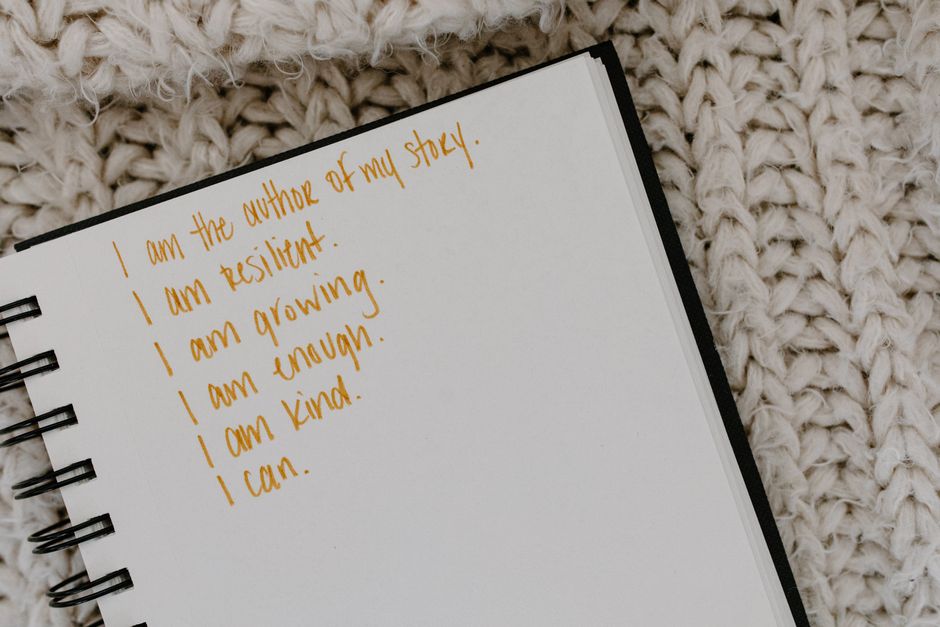
Journaling can help you sort out your thoughts, but staring at a blank page often makes it harder. The most effective mental health prompts focus on specific emotions, patterns, and moments rather than asking you to write a full life story. Prompts that work ask about what you noticed, what changed, what you need, and what you can control — not what you should feel or who you should be.
What To Journal About For Mental Health Prompts That Work?
The best prompts for mental health are specific, concrete, and non-judgmental. They guide you toward observation rather than self-criticism. A prompt like “What drained my energy today?” gives you a clear direction. A prompt like “Why am I so unhappy?” forces you into a spiral of vague self-blame.
Effective prompts target one of four areas: emotions you noticed, physical sensations, thought patterns, or actions you took. When you write about what actually happened — not what you think should have happened — you start to see patterns. Those patterns are where real insight lives.
Why Do Some Journaling Prompts Fail?
Many popular prompts fail because they ask for conclusions before you have the evidence. “What am I grateful for?” sounds helpful, but it skips straight to judgment. If you are having a rough day, that prompt can make you feel worse because you cannot find anything to write.
Prompts also fail when they are too broad. “How do I feel?” is almost useless. Most people answer “fine” or “stressed” and stop. A better prompt narrows the field: “What emotion was strongest this morning, and where did I feel it in my body?” That gives your brain a specific task.
Another common failure is writing for an imaginary audience. When you write as if someone will read it, you edit yourself. You soften the truth. Journaling works when you write only for yourself, even if that means writing messy, incomplete sentences.
Emotion-Based Prompts That Actually Help
Emotion-based prompts work best when they ask you to name one feeling at a time. Naming an emotion reduces its intensity. This is well established in psychology research — the simple act of labeling a feeling can calm the nervous system.
Try prompts like these:
- “What emotion did I feel most today, and what triggered it?”
- “When did I feel safe today? When did I not?”
- “What made me feel frustrated, and what was underneath that frustration?”
- “What emotion am I avoiding right now, and why might that be?”
The last one is harder. It asks you to look at what you are pushing away. That is where journaling gets uncomfortable, and that is often where it gets useful.
Do not force an emotion to be positive. If you felt angry, write about the anger. If you felt numb, write about the numbness. The goal is accuracy, not uplift.





Pattern Recognition Prompts For Long-Term Change
Journaling becomes more powerful when you use it to spot patterns over time. One entry tells you little. Twenty entries can show you a repeating cycle.
Pattern-focused prompts include:
- “What situation made me feel most anxious this week, and what did I do in response?”
- “What did I do this week that made me feel more grounded?”
- “What recurring thought keeps showing up when I am stressed?”
- “What boundary did I hold or fail to hold this week?”
These prompts work because they connect events to reactions. You start to see that your anxiety spikes on Sunday nights, or that you feel calmer after morning walks, or that a specific person consistently drains your energy. That information is actionable. You can do something with it.
Review your entries after a few weeks. Look for repeated words or situations. You may notice that you write about exhaustion every Tuesday, or that your mood dips after certain conversations. These patterns are not destiny, but they are data.
Physical Sensation Prompts That Connect Mind And Body
Mental health is not separate from the body. Anxiety often shows up as a tight chest, shallow breathing, or tension in the shoulders. Depression can feel like heaviness or sluggishness. Writing about physical sensations helps you notice these signals earlier.
Body-focused prompts:
- “Where in my body do I feel tension right now, and what does it feel like?”
- “When did I feel relaxed today, and what was I doing?”
- “What does my energy level feel like right now, from 1 to 10?”
- “What physical symptom showed up this week, and what was happening when it appeared?”
These prompts are especially useful for people who intellectualize their emotions. If you can explain your feelings logically but still feel awful, your body may be sending signals you are missing. Writing about sensation forces you to check in with yourself physically, not just mentally.
Prompt Structures For Difficult Days
Some days you cannot write much. That is fine. On difficult days, shorter prompts work better than long ones.
Use these when you are struggling:
- “One sentence about today.”
- “One word for how I feel, and one sentence about why.”
- “What is the hardest part of right now?”
- “What do I need that I am not getting?”
One sentence is enough. The act of writing even a single line can break the loop of rumination. It gives your brain a place to put the thought instead of carrying it around.
If even one sentence feels like too much, try a list. Write three things that happened today. No descriptions, no analysis. Just the facts. Lists count as journaling, and they can be surprisingly effective at calming a racing mind.
What To Avoid When Journaling For Mental Health
Some journaling habits can backfire. Ruminating on paper is one of them. If you write the same anxious thought over and over without gaining any distance from it, you are not processing — you are rehearsing.
To avoid this, add a forward-looking question to your entry. After you describe a problem, ask: “What is one small thing I could do about this?” You do not have to do it. Just writing the possibility changes the tone of the entry from stuck to moving.
Avoid turning journaling into a performance. You do not need beautiful handwriting, poetic language, or daily consistency to benefit. Research on expressive writing shows that even occasional journaling can help, and that writing in short bursts is enough. The benefits come from putting experiences into words, not from doing it perfectly.
Also be careful with gratitude journaling if you are depressed. Some studies suggest that forced gratitude can increase distress in people with clinical depression. If gratitude prompts make you feel worse, stop using them. There is no rule that says you must write about what you are thankful for.
How To Build A Journaling Habit That Lasts
Habit building matters more than prompt selection. A mediocre prompt used regularly beats a perfect prompt used once.
Pick a time of day and stick to it. Morning journaling helps some people set intentions. Evening journaling helps others process the day. There is no evidence that one time is better than the other. What matters is that you actually write.
Keep your journal somewhere visible. Put it on your nightstand or your desk. The friction of finding it matters more than you think. If you have to dig through a drawer to find your journal, you will skip it.
Start with two minutes. Set a timer if you need to. Two minutes of writing is enough to build the habit. You can extend the time later if you want to. The goal is not to write long entries — it is to write regularly.
Do not judge what comes out. Some entries will be boring. Some will be repetitive. Some will be whiny. That is all fine. The journal is not a product. It is a tool for thinking.
When Journaling Is Not Enough
Journaling is a helpful tool, but it is not a treatment for clinical depression, anxiety disorders, or trauma. If you are experiencing persistent sadness, panic attacks, intrusive thoughts, or difficulty functioning, journaling alone will not resolve those conditions.
Talk to a healthcare provider if your symptoms interfere with daily life. A therapist can help you use journaling as part of a broader treatment plan. Cognitive behavioral therapy, in particular, often includes written exercises that resemble journaling but are guided by a trained professional.
If you are in crisis, journaling is not the right tool. Contact a crisis line or go to an emergency room. Your safety matters more than any writing practice.
Frequently Asked Questions
How long should I journal each day for mental health benefits?
Five to ten minutes is enough for most people. Research on expressive writing shows benefits from sessions as short as 15 minutes done a few times per week, but even two minutes daily can help build the habit.
What is the best time of day to journal for mental health?
There is no proven best time — morning and evening both work. Choose the time you are most likely to actually write, and keep it consistent.
Can journaling make my anxiety worse?
Yes, if you use it to ruminate on the same worries without gaining perspective. Add a forward-looking question to each entry, and stop if journaling consistently leaves you feeling more distressed.
Do I need to journal every day for it to work?
No. Some studies suggest that writing a few times per week is enough to see benefits. Occasional journaling is better than none, and daily pressure can make the habit feel like a chore.
