
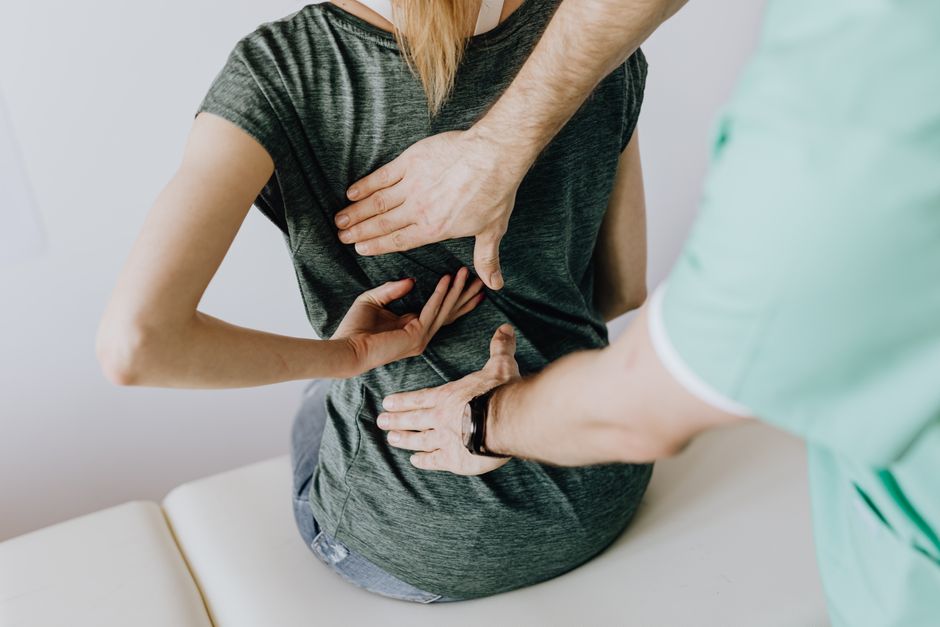
If your back hurts from scoliosis, the first thing to know is that pain is not inevitable. Most adults with scoliosis do not have chronic pain. But when pain does show up, it usually comes from the muscles and joints working harder to keep you upright. The most effective response is targeted physical therapy, not rest. Research published in the journal Spine found that exercise-based treatment reduces pain more effectively than medication or bracing for adult scoliosis. The goal is to strengthen the muscles that support your spine and improve how your body moves around the curve.
What Actually Causes Scoliosis Pain?
Scoliosis pain is rarely from the spine itself. The bones and discs in your back are not usually the source. The pain comes from the muscles on one side of your curve being overworked and tight, while the muscles on the other side are weak and stretched.
Think of it like a tent pole that is slightly bent. The ropes on one side have to pull harder to keep the tent up. Those tight ropes are your sore muscles. The loose ropes on the other side are the weak ones that need strengthening. This imbalance creates strain at the joints between your vertebrae, called facet joints, which can also become inflamed and painful.
For adults, the curve itself usually stops progressing after growth is complete. But the mechanical stress from the curve can increase over time. The American Association of Neurological Surgeons reports that about 60% of adults with scoliosis experience some back pain, though severe disabling pain is much less common. The key point is that the pain is treatable, even if the curve stays the same.
Does Physical Therapy Actually Work for Scoliosis Pain?
Yes, but not all physical therapy is the same. General back exercises are less effective than approaches specifically designed for scoliosis. The two most studied methods are the Schroth method and the Scientific Exercise Approach to Scoliosis, known as SEAS.
Research published in the European Journal of Physical and Rehabilitation Medicine found that Schroth-based exercises reduced pain by an average of 40% in adults with scoliosis over a 12-week period. The exercises focus on three things: elongating the spine, breathing into the concave side of the curve, and strengthening the weak muscles to counter-rotate the spine.
A 2020 review in the Journal of Clinical Medicine looked at multiple studies and concluded that scoliosis-specific exercise programs consistently improve pain and quality of life. The effect is modest but real. You are not going to straighten your curve with exercise. But you can significantly reduce how much it hurts day to day.
If you try physical therapy and see no improvement after 8 weeks, that is a sign to get a second opinion. Some therapists claim to treat scoliosis but only use generic back exercises. You want someone trained in scoliosis-specific approaches.
What Medications Help and What to Avoid
Over-the-counter anti-inflammatory drugs like ibuprofen and naproxen are the standard first step. They reduce inflammation in the facet joints and muscles. The National Institutes of Health notes that NSAIDs are effective for acute pain flares but should not be used daily for months without a doctor’s supervision. Long-term daily use increases the risk of stomach ulcers and kidney problems.
Acetaminophen is a less effective option for scoliosis pain because it does not reduce inflammation. It can help with mild pain but will not touch the muscle stiffness that drives most scoliosis discomfort.
Avoid muscle relaxants for anything beyond a few days. They are commonly prescribed but the evidence for their effectiveness in scoliosis is weak. A 2018 study in Pain Medicine found that muscle relaxants were no better than placebo for chronic back pain after four weeks. They also cause drowsiness and can lead to falls in older adults.
Opioids should never be used for routine scoliosis pain. The CDC has stated clearly that the risks of addiction and overdose outweigh any benefit for chronic non-cancer pain. If a doctor offers you opioids for scoliosis pain, ask for a referral to a pain specialist or a physical therapist instead.




What To Do When Your Back Hurts From Scoliosis: Practical Steps
| Approach | Does It Work? | Evidence Level |
|---|---|---|
| Schroth physical therapy | Reduces pain by about 40% | Strong – multiple studies |
| NSAIDs (ibuprofen, naproxen) | Good for acute flares | Strong for short-term use |
| Chiropractic adjustment | Some people report relief | Weak – no high-quality studies |
| Yoga or Pilates | May help with flexibility | Moderate for general back pain |
| Bracing in adults | Not effective for pain | Strong – does not change curve |
| Surgery | Only for severe curves over 50 degrees | Strong when indicated |
Here is a practical checklist for when pain hits:
- Take ibuprofen or naproxen with food for the first 48 hours of a flare
- Apply heat to tight muscles for 15 minutes, then ice to inflamed joints for 10 minutes
- Do gentle side-stretching toward the concave side of your curve
- Lie on your back with knees bent and feet flat to decompress the spine
- Avoid sitting in soft chairs or couches that let you slump
If the pain does not improve after three days of home care, see a physical therapist who specializes in scoliosis. Many people wait weeks or months before getting help, and that is usually unnecessary.
What About Surgery for Scoliosis Pain?
Surgery is rarely needed for scoliosis pain alone. The main reason adults get scoliosis surgery is when the curve is more than 50 degrees and continues to progress, or when it causes nerve compression that leads to leg pain, numbness, or weakness.
Spinal fusion is the standard surgery. The surgeon straightens the curve as much as possible and fuses the vertebrae together with rods and screws. It is a major operation with a recovery time of 6 to 12 months. The Scoliosis Research Society reports that fusion reduces pain in about 70% of adults who have it, but it does not eliminate pain completely for most people.
There is a newer procedure called vertebral body tethering, which uses a cord to pull the spine straighter without fusion. It is mostly used in children and adolescents whose bones are still growing. For adults, the evidence is limited. As of 2026, the FDA has not approved tethering for adult scoliosis, and most insurers do not cover it.
If you are considering surgery, get at least two opinions from surgeons who specialize in adult scoliosis. A general orthopedic surgeon may recommend fusion when a scoliosis specialist would recommend a more conservative approach.
Common Misconceptions About Scoliosis Pain
The biggest myth is that scoliosis always gets worse and always causes pain. That is false. The CDC estimates that 2-3% of Americans have scoliosis, and most of them live without significant pain. Progression after skeletal maturity is slow and unpredictable. Many curves stay stable for decades.
Another myth is that chiropractic adjustments can straighten the spine. No credible study has ever shown that spinal manipulation changes the curvature of scoliosis. Some people do report temporary pain relief from chiropractic care, but that is likely from muscle relaxation, not from any structural change. If a chiropractor claims they can reduce your curve, that is not supported by evidence.
There is also a widespread belief that lifting weights is dangerous for people with scoliosis. This is not true. Strength training is actually beneficial when done correctly. The key is to avoid heavy deadlifts and squats with a rounded back. Focus on unilateral exercises like single-arm rows and single-leg deadlifts that work both sides of the body independently. A 2019 study in Spine Deformity found that resistance training improved pain and function in adults with scoliosis without causing any harm.
Finally, many people think scoliosis pain means they need a brace. Bracing is effective for preventing curve progression in growing children. In adults, it does not change the curve and does not reliably reduce pain. Wearing a brace can actually weaken your core muscles over time, making the pain worse in the long run.
Frequently Asked Questions
Can scoliosis pain go away on its own?
Acute pain flares often resolve within a few days with rest and anti-inflammatory medication. Chronic pain usually requires active treatment like physical therapy to improve.
Is heat or ice better for scoliosis back pain?
Heat works better for muscle tightness and stiffness. Ice is better for inflammation and sharp pain. Many people use heat first and then ice afterward.
What sleeping position is best for scoliosis pain?
Sleeping on your back with a pillow under your knees reduces spinal pressure. Side sleeping with a pillow between your knees can also help by keeping your hips aligned.
When should I see a doctor for scoliosis pain?
See a doctor if the pain lasts more than a week despite home treatment, if you have numbness or weakness in your legs, or if you lose control of your bladder or bowels.
