
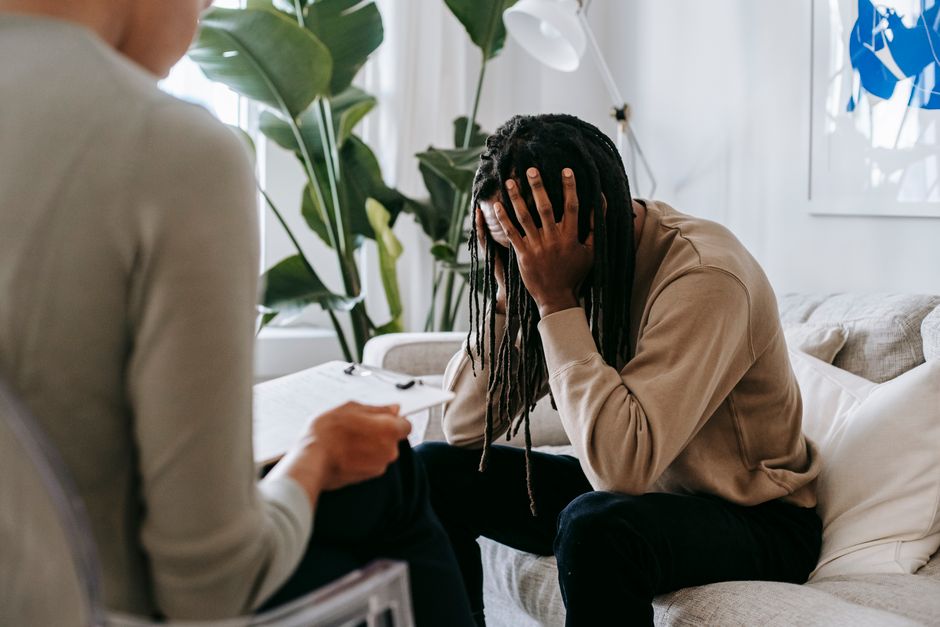
How Can You Tell If It Is an Anxiety Attack?
An anxiety attack is not a formal medical diagnosis. It is a term people use to describe a sudden wave of intense fear or discomfort. These episodes usually peak within 10 minutes, though the feeling can linger longer.
Physical symptoms often include a racing heart, chest tightness, shortness of breath, sweating, trembling, and dizziness. The person may also feel detached from reality or fear they are dying. These symptoms are real. They are not an overreaction or a sign of weakness.
Because the symptoms overlap with other conditions, it is important to recognize the difference between an anxiety attack and a medical emergency. Chest pain, especially with shortness of breath, can also signal a heart problem. If the person has never had these symptoms before, if they are older, or if they have heart disease, call 911. When in doubt, err on the side of emergency care.
What To Do When Someone Is Having An Anxiety Attack
The most effective response is calm, simple, and consistent. You do not need special training to help.
Start by moving the person to a quiet space if possible. Fewer stimuli help. Speak in a low, steady voice. Use short sentences. Ask them to focus on your voice rather than the chaos around them.
Breathing is the most direct tool you have. Rapid breathing during an anxiety attack can lower carbon dioxide levels in the blood, which worsens dizziness and tingling. Slowing the breath reverses this.
Guide them with a simple pattern. Ask them to breathe in through the nose for four counts, hold for a moment, and breathe out slowly through the mouth for six counts. Do the breathing with them. It is easier to follow someone else’s rhythm than to create your own when panicked.
Grounding techniques also work well. The 5-4-3-2-1 method is a common one. Ask them to name five things they can see, four things they can touch, three things they can hear, two things they can smell, and one thing they can taste. This pulls attention away from internal sensations and back to the external world.
Do not ask a lot of questions. Do not ask “why” they feel this way. They likely do not know. Instead, make simple statements: “You are safe.” “I am here.” “This will pass.”
What Not To Say or Do
Certain responses make anxiety attacks worse, even when they come from a good place.
Do not say “calm down.” It implies they have control over a reaction that feels automatic. It can increase shame and make the attack last longer.
Do not say “it’s all in your head.” The symptoms are physical. Dismissing them breaks trust.
Do not say “just breathe” without showing them how. A panicked person often cannot follow a vague instruction. Demonstrate the slow breathing yourself.
Do not grab them or force physical contact. Some people find touch soothing. Others find it overwhelming. Ask first: “Would it help if I held your hand?” Respect their answer.
Do not rush them. An anxiety attack takes time to resolve. Pressuring someone to “snap out of it” adds pressure and prolongs the episode.
Do not minimize what happened afterward. After the attack passes, do not say “that was scary for you” or “you handled that badly.” Instead, ask what they need now. Water, rest, or quiet can help.



When To Seek Professional Help
An occasional anxiety attack does not always require treatment. But repeated attacks can be a sign of an underlying condition such as panic disorder, generalized anxiety disorder, or another mental health condition.
Encourage professional support if the attacks happen regularly, if the person avoids situations because of fear, or if the attacks interfere with work, school, or relationships.
A primary care doctor is a reasonable first step. They can rule out medical causes for the symptoms, such as thyroid problems or heart rhythm issues. From there, a mental health professional can assess whether treatment is appropriate.
Cognitive behavioral therapy is one of the most studied treatments for anxiety disorders. It helps people identify and change thought patterns that fuel panic. Some research also supports the use of selective serotonin reuptake inhibitors, a class of antidepressants, for panic disorder. The choice of treatment depends on the individual and should be made with a qualified clinician.
If the person expresses thoughts of self-harm or suicide, take it seriously. Call 988, the Suicide and Crisis Lifeline, in the United States. Do not leave them alone if they are in immediate danger.
What Causes an Anxiety Attack?
Anxiety attacks happen when the brain’s threat detection system activates without a real danger present. The amygdala, a structure deep in the brain, signals the body to prepare for fight or flight. Adrenaline floods the system. Heart rate rises. Breathing quickens. Blood flows to the muscles.
This response is protective in real danger. It becomes a problem when it triggers in safe situations.
Several factors can raise the risk. Genetics play a role. A family history of anxiety disorders increases the likelihood. Chronic stress, major life changes, and trauma can also lower the threshold for an attack. Substance use, including caffeine and stimulants, can trigger symptoms in some people.
It is also worth noting that some medical conditions can mimic anxiety attacks. Low blood sugar, asthma, and certain heart conditions can produce similar symptoms. This is why a medical evaluation matters when symptoms are new or changing.
Can You Prevent an Anxiety Attack?
Prevention is not always possible. Anxiety attacks can happen without warning. But certain habits may reduce their frequency.
Regular physical activity is one of the most consistent lifestyle factors linked to lower anxiety. Exercise helps regulate stress hormones and improves mood. It does not need to be intense. Walking, swimming, or cycling several times a week can help.
Sleep also matters. Poor sleep raises emotional reactivity. Adults generally need 7 to 9 hours per night, though individual needs vary.
Caffeine and alcohol can worsen anxiety. Caffeine stimulates the nervous system. Alcohol, while initially calming, can cause rebound anxiety as it leaves the body. Reducing both may help.
Stress management techniques, such as mindfulness meditation, have some evidence for reducing anxiety symptoms. The evidence is not uniform, and results vary from person to person. Some people find them very helpful. Others do not.
There is no guarantee that any of these habits will prevent an attack. They are tools for overall mental health, not a cure.
What Is the Difference Between an Anxiety Attack and a Panic Attack?
The terms are often used interchangeably, but they are not the same.
A panic attack is a defined clinical term. The Diagnostic and Statistical Manual of Mental Disorders describes a panic attack as a sudden surge of intense fear or discomfort that peaks within minutes. It includes symptoms such as palpitations, sweating, trembling, shortness of breath, chest pain, nausea, dizziness, chills or heat sensations, and fear of losing control or dying.
An anxiety attack is not in the diagnostic manual. It is a lay term. It usually describes a period of intense anxiety that builds gradually, often in response to a specific stressor. It may not peak as sharply as a panic attack.
For practical purposes, the response is the same. Stay calm, help them breathe, and ground them in the present. The distinction matters mainly for diagnosis and treatment, which should be handled by a professional.
Frequently Asked Questions
How long does an anxiety attack last?
Most anxiety attacks peak within 10 minutes and resolve within 20 to 30 minutes. Some people feel lingering fatigue or tension for hours afterward.
Can you die from an anxiety attack?
No. An anxiety attack is not fatal, even though the symptoms can feel like a medical emergency. If chest pain or severe shortness of breath is present, seek medical evaluation to rule out other causes.
Should I call 911 during an anxiety attack?
Call 911 if the person has never had these symptoms before, has heart disease, or if symptoms do not improve within a few minutes. It is better to be evaluated and told it is anxiety than to miss a heart condition.
Does breathing really help during an anxiety attack?
Yes. Slow breathing helps reverse the physical effects of rapid breathing, which can worsen dizziness and tingling. It also gives the brain a calming signal.
What should I do after the anxiety attack is over?
Let the person rest and recover. Offer water and a quiet space. Do not analyze the episode immediately. Ask what they need and respect their answer.
