
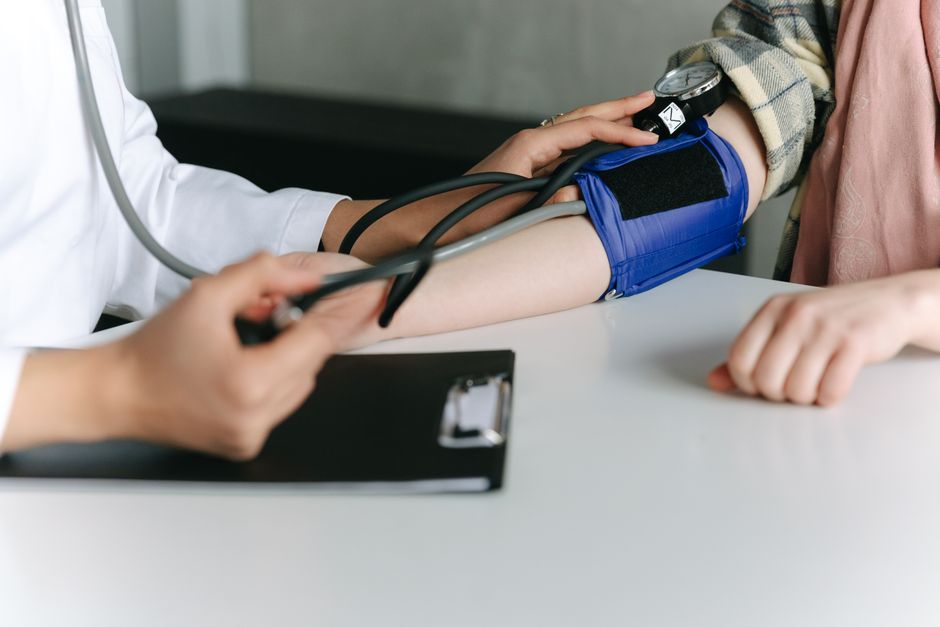
Taking your blood pressure at home is one of the best ways to track your heart health, but only if you do it correctly. The single most important thing to do before taking a reading is to sit quietly for five minutes in a chair with your feet flat on the floor and your back supported. You should also empty your bladder, avoid caffeine and smoking for 30 minutes prior, and keep your arm resting at heart level on a table. These steps are not optional — they are the difference between a useful number and a misleading one.
Why Does Preparation Matter So Much for Home Blood Pressure Readings?
Blood pressure is not a fixed number. It changes constantly based on what you are doing, feeling, or thinking. The American Heart Association states that a single reading taken without proper preparation can be 10 to 20 points higher than your true resting blood pressure.
That difference matters. A reading of 135/85 might look like mild hypertension, but with proper preparation it could be 120/80 — perfectly normal. Without the prep steps, you risk chasing a problem that does not exist, or worse, missing a real one because your readings are inconsistent.
The goal of home monitoring is to get a reliable baseline. You cannot get a baseline if your body is not at rest. Preparation removes the temporary spikes caused by standing, talking, or a full bladder. These are not part of your true blood pressure, but they will show up on the monitor if you skip the steps.
What Does the Research Say About What To Do Before Taking Blood Pressure At Home?
Research published in Hypertension, a journal of the American Heart Association, has confirmed that a five-minute seated rest period is the minimum needed for blood pressure to stabilize after moving around. Studies have found that people who skip this rest period often get readings that are 10-15 mmHg higher for systolic pressure.
The same research shows that arm position is one of the most commonly ignored factors. If your arm hangs down by your side, your reading can be falsely high by as much as 10 mmHg. If your arm is raised above heart level, the reading can be falsely low. A supported arm resting on a table at mid-chest height is the only correct position.
Another study from the Journal of Clinical Hypertension found that talking during the measurement can raise systolic pressure by 10-15 mmHg. Even a short conversation with a family member while the cuff inflates can ruin the accuracy. Silence is required.
What Are the Most Common Mistakes People Make Before a Reading?
Most people do not realize how many small actions affect their numbers. Here are the mistakes that show up most often in studies and clinical practice:
- Rushing straight to the cuff after walking, climbing stairs, or carrying groceries. Your body needs a full five minutes of quiet sitting.
- Sitting on an exam table or soft couch where your feet dangle or your back is unsupported. This raises pressure compared to sitting in a firm chair.
- Using the wrong cuff size. A cuff that is too small can add 10-40 mmHg to your reading. The bladder inside the cuff should wrap around 80% of your upper arm.
- Taking readings over clothing. A thin sleeve can still create a gap that affects accuracy. The cuff should go on bare skin.
- Checking pressure right after eating or drinking. Food digestion diverts blood flow and can temporarily lower or raise pressure depending on the meal.
These are not rare errors. A 2020 study in JAMA Internal Medicine found that nearly 70% of home blood pressure readings were taken with at least one major protocol violation. That means most people are getting numbers that do not reflect their true health.


How Do Caffeine, Smoking, and Exercise Affect Readings?
Caffeine is a stimulant. It causes blood vessels to narrow, which raises blood pressure temporarily. Research shows that 250 milligrams of caffeine (about two cups of coffee) can raise systolic pressure by 5-10 mmHg for up to three hours. The American Heart Association recommends avoiding caffeine for at least 30 minutes before a reading, but longer is better if you are a regular coffee drinker.
Nicotine has a similar effect. Smoking or vaping causes an immediate spike in blood pressure that can last 15 to 30 minutes. The nicotine itself is the problem, not the smoke. Even nicotine gum or patches can raise readings if used shortly before measurement.
Exercise is the most obvious factor, but people still underestimate it. Moderate exercise like a brisk walk can lower blood pressure for several hours afterward — this is called post-exercise hypotension. If you measure right after exercise, you might get a falsely low reading. If you measure during the recovery phase, the number can swing unpredictably. The standard advice is to wait at least 30 minutes after any physical activity.
Does Arm Position Really Change the Number That Much?
Yes, and the change is larger than most people expect. A study in Circulation found that having your arm in your lap instead of on a table at heart level can raise systolic pressure by an average of 6 mmHg. Having your arm hanging down unsupported can raise it by 10 mmHg or more.
The reason is gravity. When your arm is lower than your heart, gravity pulls blood down into the arm, increasing pressure in the artery where the cuff measures. When your arm is higher, gravity reduces that pressure. The correct position is with the cuff at the same height as the middle of your sternum (breastbone).
This is not a small detail. If your baseline systolic pressure is 125 mmHg, a 10 mmHg error from arm position could push you into the hypertension range. That mistake alone could lead to unnecessary medication or worry. Getting the arm right is one of the easiest fixes for better accuracy.
What To Do Before Taking Blood Pressure At Home: A Quick Comparison of Right vs. Wrong
Here is a simple table showing what the evidence says about each preparation step:
| Step | Correct | Common Mistake |
|---|---|---|
| Rest time | 5 minutes sitting quietly | 0-2 minutes or standing |
| Bladder | Empty within 5 minutes | Full bladder |
| Arm position | On table at heart level | Hanging down or in lap |
| Caffeine | None for 30+ minutes | Coffee within the hour |
| Cuff size | Wraps 80% of upper arm | Too small or too large |
| Clothing | Bare skin | Over a sleeve |
| Talking | Silent | Conversation during reading |
This table is based on guidelines from the American Heart Association and the European Society of Hypertension. Every row represents a factor that has been shown to change readings by a meaningful amount.
What About Timing — When Is the Best Time to Measure?
Blood pressure follows a natural daily rhythm. For most people, it is lowest during sleep and rises in the morning after waking. The American Heart Association recommends taking readings at the same times each day for consistency. The two best windows are morning before any medication or food, and evening before bed.
Morning readings should happen within an hour of waking, but after emptying your bladder and before breakfast. Do not take medication first if you are trying to measure your untreated baseline. If your doctor wants to see how well your medication works, take the reading at the time your doctor specifies — usually a few hours after the dose.
Evening readings should be taken after dinner but at least one hour after eating. The goal is to capture your pressure after the day’s activities have settled but before your body fully winds down for sleep. Consistency in timing matters more than picking the “perfect” time. If you measure at 7 AM every day, that pattern gives you useful trend data even if another time might give a slightly different number.
Frequently Asked Questions
Should I take my blood pressure before or after medication?
Take it before medication if you want to see your untreated baseline. Take it at the time your doctor recommends if they are checking how well the drug works.
How long should I rest before taking blood pressure?
Rest quietly for a full five minutes in a chair with your feet flat on the floor. Do not talk or look at your phone during this time.
Can I take blood pressure right after waking up?
You can, but empty your bladder first and sit for five minutes before the reading. Do not eat, drink, or take medication first.
Does crossing my legs affect blood pressure reading?
Yes. Crossing your legs can raise systolic pressure by 2-8 mmHg. Keep both feet flat on the floor during the measurement.
