
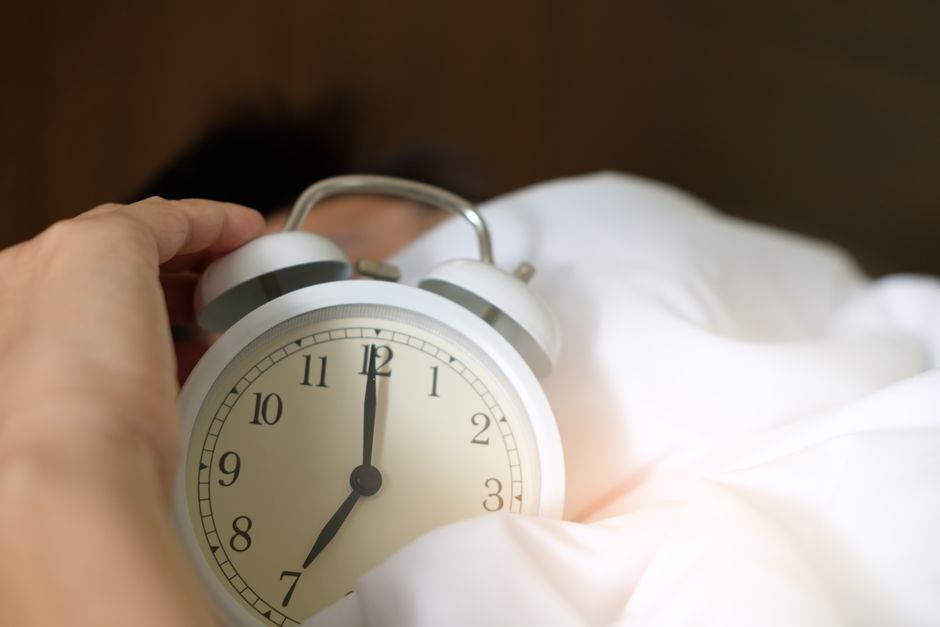
Most adults need between 7 and 9 hours of sleep each night to function at their best. If you need to wake up at 6:00 AM for work, that means going to bed between 9:00 PM and 11:00 PM. The exact time depends on your personal sleep needs, your chronotype (whether you are a natural morning person or night owl), and your consistent wake-up time. The single most important factor is picking a wake-up time and sticking to it every day, including weekends.
How Much Sleep Do You Actually Need?
Sleep needs change across your lifespan, but for adults aged 35 to 65, the target range is steady. Research consistently shows that sleeping less than 7 hours or more than 9 hours on a regular basis is linked to higher risks of health problems like obesity, diabetes, and heart disease.
Your individual need falls somewhere in that 7-to-9-hour window. Some people genuinely thrive on 7 hours. Others need the full 9. A simple way to find your number is to test it during a vacation when you have no alarm. Go to bed at the same time each night and see how many hours you sleep before waking naturally. That number is your baseline.
Sleep quality matters as much as quantity. Seven hours of broken, restless sleep is not the same as 7 hours of deep, uninterrupted sleep. If you wake up feeling unrefreshed despite spending enough time in bed, the issue may be sleep quality, not sleep duration.
Work Backwards From Your Wake-Up Time
The most reliable way to set a bedtime is to work backwards from your required wake-up time. If your alarm goes off at 6:30 AM and you need 8 hours of sleep, your bedtime is 10:30 PM. This calculation assumes you fall asleep quickly. If you typically take 20 to 30 minutes to drift off, factor that into your schedule.
Consistency is the key that makes this work. Your body’s internal clock, the circadian rhythm, runs on a roughly 24-hour cycle. It relies on regular cues, especially light and consistent sleep times, to stay synchronized. When you go to bed and wake up at the same times daily, your body learns when to release melatonin and when to raise your core temperature to wake you up.
Shifting your sleep schedule on weekends is the most common mistake. Staying up 2 hours later on Friday and sleeping in on Saturday resets your internal clock. By Sunday night, you are trying to fall asleep at a time your body does not recognize as bedtime. This is called social jetlag, and it can leave you feeling as tired as actual travel across time zones.
What Time Should I Go To Bed And Wake Up: A Sample Schedule
Here is a practical reference table based on common wake-up times and the recommended 7-to-9-hour sleep window. Find your wake-up time and aim for the corresponding bedtime range.
| Wake-Up Time | Bedtime for 7 Hours | Bedtime for 8 Hours | Bedtime for 9 Hours |
|---|---|---|---|
| 5:00 AM | 10:00 PM | 9:00 PM | 8:00 PM |
| 6:00 AM | 11:00 PM | 10:00 PM | 9:00 PM |
| 7:00 AM | 12:00 AM | 11:00 PM | 10:00 PM |
| 8:00 AM | 1:00 AM | 12:00 AM | 11:00 PM |
These are targets, not rigid rules. If you need 7.5 hours, adjust accordingly. The goal is to give yourself a full sleep opportunity within your natural schedule.





Your Chronotype Matters
Not everyone is wired to wake up early. Your chronotype is your natural preference for when to sleep and be active. Morning types, sometimes called larks, naturally wake early and feel sharpest in the morning. Evening types, or owls, feel most alert later in the day and struggle with early mornings.
Genetics plays a large role in determining your chronotype. This is not a lifestyle choice or a discipline issue. Forcing an owl into a lark schedule is possible but comes at a cost. Studies have shown that people who work against their natural chronotype often experience poorer sleep quality and higher fatigue.
That said, most jobs and family schedules require a fixed wake-up time. If you are an evening type who must wake at 6:00 AM, the strategy is not to fight your biology but to work with it. Use bright light exposure in the morning to shift your clock earlier. Dim lights in the evening. Keep your bedtime consistent even if you are not sleepy at first. Over weeks, your body can gradually adjust.
How Light Controls Your Sleep Timing
Light is the strongest signal your body uses to set its internal clock. In the morning, bright light suppresses melatonin and signals your brain that the day has started. In the evening, dim light allows melatonin to rise and prepares your body for sleep.
This is why screen use before bed is a problem. The blue light from phones, tablets, and computers can delay melatonin release. Some research suggests that using these devices in the hour before bed makes it harder to fall asleep and reduces sleep quality. The effect is stronger in some people than others, but minimizing screen exposure before bed is a reasonable step.
Morning light exposure is equally important. Getting outside within an hour of waking, even for 10 to 15 minutes, helps anchor your circadian rhythm. This is especially helpful if you struggle with falling asleep at night. Your wake-up light exposure directly influences your bedtime melatonin release roughly 14 to 16 hours later.
What If You Cannot Fall Asleep At Your Target Bedtime?
Lying in bed awake for more than 20 minutes is counterproductive. It trains your brain to associate the bed with wakefulness and frustration. The standard recommendation from sleep specialists is to get out of bed, go to another room, and do something calming in dim light until you feel sleepy. Return to bed only when drowsy.
Do not check the clock. Clock-watching feeds anxiety about how much sleep you are losing, which keeps you awake. Turn the clock away from view or leave your phone in another room.
If this happens regularly, your target bedtime may be too early for your body. Try moving your bedtime 30 minutes later. If you still cannot fall asleep within 20 to 30 minutes on most nights, talk to a doctor. Chronic difficulty falling asleep can be a sign of insomnia, which has effective treatments including cognitive behavioral therapy.
How To Shift Your Sleep Schedule Safely
Changing your sleep time takes patience. Do not try to move your bedtime by 2 hours overnight. Your body’s clock adjusts gradually, typically by about 1 to 1.5 hours per day at most. A slower shift of 15 to 30 minutes per day is more comfortable and more likely to stick.
Use light strategically during the transition. If you are moving your bedtime earlier, get bright light exposure as soon as you wake up. In the evening, dim your lights and avoid screens in the hour before your new bedtime. Some people find a low-dose melatonin supplement helpful during the adjustment period, but you should ask a doctor about timing and dose. Melatonin is not a sleep aid in the traditional sense; it is a timing signal that tells your brain it is night.
Keep your new schedule on weekends during the transition. One late night can undo several days of progress. Once the new schedule feels natural, you can allow some flexibility, but try to stay within an hour of your usual times.
Signs Your Sleep Schedule Is Working
You will know your schedule is right when you wake up feeling reasonably rested without an alarm. You should not feel a mid-afternoon crash that requires caffeine to survive. Your mood should be stable, and your focus should hold through the afternoon.
If you are waking up tired every day despite 8 hours in bed, something else is going on. It could be an undiagnosed sleep disorder like sleep apnea, which causes breathing pauses that fragment sleep without you realizing it. It could also be a medical issue like thyroid disease or anemia. Do not assume that feeling exhausted is normal. Talk to your doctor.
Feeling sleepy during the day despite adequate sleep time is a red flag. So is loud snoring, gasping during sleep, or waking with a dry mouth and headache. These symptoms warrant a medical evaluation, not just an earlier bedtime.
Frequently Asked Questions
What is the best time to go to bed?
The best bedtime is one that allows you to get 7 to 9 hours of sleep before your required wake-up time. Work backwards from when you must wake up and count back your personal sleep need.
Is it better to go to bed early and wake up early?
No, early is not inherently better than late. What matters is consistency and getting enough total sleep at times that align with your natural chronotype.
How many hours of sleep do adults need?
Most adults need between 7 and 9 hours per night. Some need slightly more or less, but regularly sleeping outside this range is linked to health risks.
Can I catch up on missed sleep on weekends?
You can partially recover from a sleep debt, but weekend catch-up does not fully undo the effects of chronic sleep loss. It also shifts your circadian rhythm, making Monday mornings harder.
