
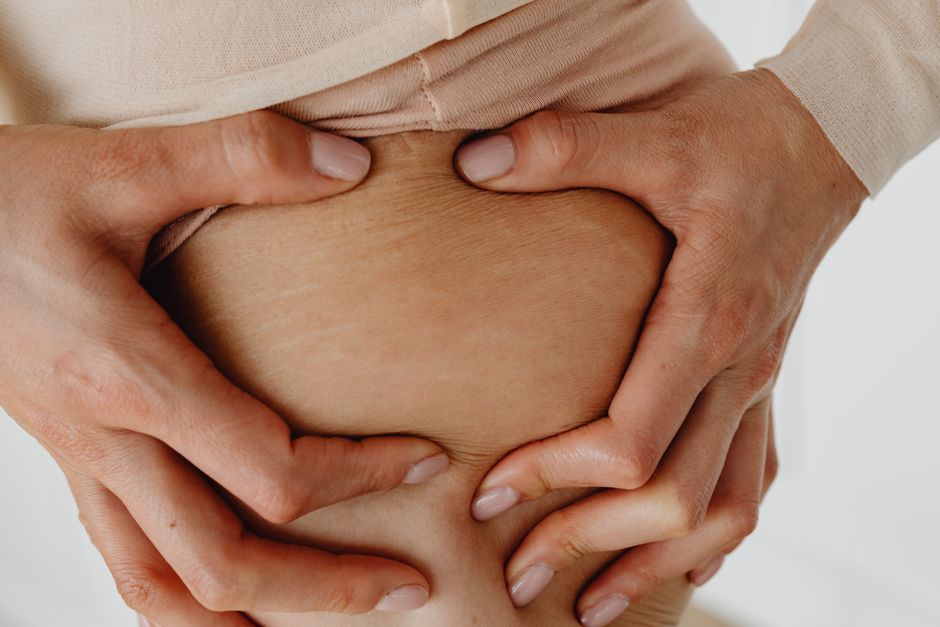
Stretch marks during pregnancy are common, but you can take steps to reduce their appearance. The most effective approach combines keeping skin hydrated, managing weight gain steadily, and using targeted creams early. While no method guarantees complete prevention, starting a consistent routine in your first trimester gives you the best chance of minimizing marks.
What Causes Stretch Marks During Pregnancy?
Stretch marks form when your skin stretches faster than it can keep up with. During pregnancy, your belly grows quickly, especially in the second and third trimesters. The middle layer of your skin, called the dermis, tears when it is pulled too far too fast.
Hormones also play a role. Pregnancy increases cortisol levels, which can weaken the elastic fibers in your skin. This makes tears more likely. Genetics matter too. If your mother had stretch marks, you are more likely to develop them.
Research published in the British Journal of Dermatology found that up to 90% of pregnant women develop stretch marks. They most often appear on the belly, breasts, thighs, and hips. The marks start as red or purple lines and fade to white or silver over time.
Does Moisturizing Actually Prevent Stretch Marks?
Keeping your skin moisturized is the most common advice you will hear. But the evidence is mixed. A large review in the Journal of the American Academy of Dermatology found that simple moisturizers like cocoa butter did not significantly reduce stretch marks compared to no treatment.
However, there is a difference between prevention and reduction. Moisturizers can improve skin elasticity and reduce itching, which may make existing marks less noticeable. The key is using products with ingredients that have some evidence behind them.
Centella asiatica, also called gotu kola, is one of the few ingredients with real research support. A study in the International Journal of Cosmetic Science found that creams containing this extract reduced the number and severity of stretch marks. Hyaluronic acid also shows promise because it helps skin hold moisture and may support collagen production.
What matters most is consistency. Applying cream once a week will not help. You need to moisturize at least once daily, starting in the first trimester. Even then, results vary from person to person.
How To Reduce Stretch Marks During Pregnancy With Diet
What you eat affects your skin’s ability to stretch without tearing. Your skin needs certain nutrients to stay strong and elastic. Getting enough of these during pregnancy may help reduce stretch marks.
Zinc is important for collagen production. Foods like lean beef, pumpkin seeds, and chickpeas are good sources. Vitamin C is also essential for collagen synthesis. Citrus fruits, bell peppers, and strawberries provide plenty.
Vitamin D may also play a role. A study in the Journal of Obstetrics and Gynaecology found that women with lower vitamin D levels had more severe stretch marks. Sunlight is the best source, but many pregnant women need a supplement. Ask your doctor to check your levels.
Hydration from the inside matters just as much as topical moisturizers. Drink water throughout the day. Your skin’s elasticity depends partly on how hydrated your body is overall. Aim for 8 to 10 cups of fluid daily, more if you exercise or live in a hot climate.





What Ingredients Should You Look For in Stretch Mark Creams?
Not all creams are equal. Many products make big claims but have little science behind them. You can save money and get better results by looking for specific ingredients.
Here is a breakdown of ingredients with the strongest evidence:
| Ingredient | What It Does | Evidence Level |
| Centella asiatica | Stimulates collagen production and improves skin elasticity | Strong – multiple studies support use |
| Hyaluronic acid | Helps skin retain moisture and supports repair | Moderate – some clinical studies show benefit |
| Vitamin E | Antioxidant that may reduce inflammation | Weak – mixed results in studies |
| Cocoa butter | Moisturizes skin surface only | Weak – no strong evidence for prevention |
| Retinoids | Boost collagen but are NOT safe during pregnancy | Strong for marks but avoid while pregnant |
Do not use products with retinoids while pregnant or breastfeeding. They can cause birth defects. Check labels carefully. Some anti-aging creams contain retinoids even if the bottle does not say so clearly.
Does Massage Help Reduce Stretch Marks?
Massaging the cream into your skin may be as important as the cream itself. A study in the Journal of Cosmetic Dermatology found that women who massaged their bellies for 10 minutes daily had fewer and less severe stretch marks than those who applied cream without massage.
The pressure from massage increases blood flow to the area. Better circulation brings oxygen and nutrients to the skin cells, which supports repair. Massage also helps the cream absorb deeper into the skin layers where it can actually do something.
Use gentle circular motions. Do not press hard enough to cause discomfort. Your belly is sensitive during pregnancy. Focus on areas where stretch marks are most likely to appear. Make it part of your daily routine, such as after showering when your skin is still slightly damp.
What Is the Role of Weight Management?
How much weight you gain and how fast matters. Rapid weight gain stretches the skin faster than it can adapt. The American College of Obstetricians and Gynecologists recommends specific weight gain ranges depending on your starting BMI.
For women at a normal weight before pregnancy, the recommendation is 25 to 35 pounds total. Underweight women should gain 28 to 40 pounds. Overweight women should gain 15 to 25 pounds. Obese women should gain 11 to 20 pounds.
Steady gain is the goal. Gaining most of the weight in the second and third trimesters is normal. But gaining a large amount in a short period increases your risk of stretch marks. Talk to your doctor about what a healthy gain looks like for you.
Exercise helps control weight gain and improves circulation. Walking, swimming, and prenatal yoga are safe for most pregnant women. Always check with your healthcare provider before starting any exercise routine.
Common Misconceptions About Stretch Mark Prevention
Many myths circulate about stretch marks. Knowing what is false can save you time, money, and frustration.
One common claim is that olive oil prevents stretch marks. Research does not support this. A study in the International Journal of Gynecology and Obstetrics found no difference between olive oil and a placebo cream. Olive oil can moisturize the skin surface, but it does not penetrate deeply enough to affect the dermis.
Another myth is that stretch marks only happen to women who gain too much weight. This is not true. Some women gain weight within the recommended range and still develop marks. Genetics and skin type play a larger role than total weight gain alone.
Some people believe that tanning can fade stretch marks. This is dangerous advice. Tanning damages skin and makes marks more noticeable over time because the surrounding skin darkens while the marks stay white. Never use tanning beds or sunbathe to treat stretch marks.
A final misconception is that stretch marks disappear completely after pregnancy. They do not. They fade significantly for most women, becoming less red or purple and turning silver or white. But they rarely vanish entirely. Accepting this can help you focus on realistic goals rather than impossible ones.
Frequently Asked Questions
Can stretch marks be completely prevented during pregnancy?
No, complete prevention is not possible for most women. Genetics and hormones play a major role that no cream or diet can fully override.
When should I start using stretch mark creams during pregnancy?
Start in your first trimester as soon as you know you are pregnant. Early and consistent use gives you the best chance of reducing marks.
Are prescription stretch mark treatments safe during pregnancy?
Most prescription treatments like retinoids are not safe during pregnancy. Always check with your doctor before using any prescription product while pregnant.
How long do pregnancy stretch marks take to fade?
Most stretch marks fade significantly within 6 to 12 months after giving birth. They typically turn from red or purple to white or silver during this time.
