
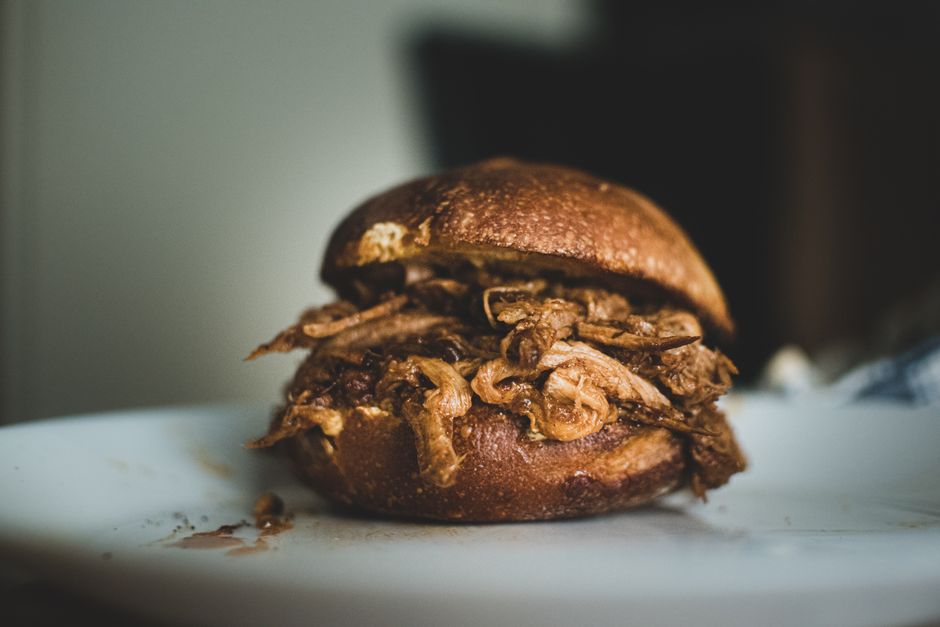
The ideal temperature to pull pork butt is between 198°F and 205°F (92°C to 96°C) when measured in the thickest part of the meat. At this range, the tough collagen in the pork shoulder has fully broken down into gelatin, making the meat tender enough to shred easily with forks. Pulling it too early, below 195°F, often results in dry, chewy meat that fights back.
What Temp To Pull Pork Butt for the Best Texture?
Research from barbecue competitions and meat science labs shows that pork butt needs to reach an internal temperature where collagen converts to gelatin. Collagen, the connective tissue that makes pork shoulder tough, starts breaking down around 160°F but does not fully dissolve until the meat hits 195°F or higher. The sweet spot is 198°F to 205°F.
At 200°F, the meat fibers have loosened enough that a fork slides in with almost no resistance. Below 195°F, you will likely find the meat still has a rubbery bite. Above 210°F, the meat can start to dry out or become mushy. Stick to the 198-205 range for the best pullability.
One thing many home cooks miss is that the temperature continues to rise after you take the pork off the heat. This is called carryover cooking. If you pull the pork at exactly 200°F on the grill, it may climb another 3-5 degrees while resting. Account for this by pulling it off around 198-200°F if you want to stay under 205°F.
What Does the Meat Science Say About Pulling Pork at Different Temps?
The USDA recommends cooking pork to a minimum internal temperature of 145°F for safety. But that is for whole muscle cuts like pork chops. Pork butt is different. It has so much connective tissue that cooking it to only 145°F leaves it inedibly tough. The safety threshold and the tenderness threshold are completely different here.
A study from the University of Wyoming Extension on cooking tough cuts of meat found that collagen begins dissolving around 160°F but the process speeds up significantly above 180°F. Full conversion requires sustained heat. This is why low-and-slow cooking at 225-250°F for hours works better than trying to rush at high heat.
Some people report success pulling pork at 195°F. That is the low end of the acceptable window. If your pork butt is smaller, around 4-5 pounds, it may reach pullable tenderness at 195°F. For larger butts, 8-10 pounds or more, you almost always need to hit 200-203°F. The difference comes down to how much collagen the cut contains. Larger cuts have more connective tissue that needs more time and heat to break down.
How Do You Know When Pork Butt Is Ready to Pull Without a Thermometer?
If you do not have a probe thermometer, you can test doneness with a simple fork test. Insert a fork into the thickest part of the pork and twist gently. If the fork turns easily and the meat starts to separate along the grain lines, it is ready. If the fork meets resistance or the meat stays intact, it needs more time.
Another reliable test is the bone wiggle test. Pork butt often has a bone in it. When the meat is fully cooked, the bone will slide out cleanly with almost no effort. If you have to tug or twist to remove it, the collagen has not fully broken down yet. Put it back on the smoker or oven for another 30-60 minutes.
A meat probe should slide into the pork like it is going into room temperature butter. If you feel any resistance or drag, the meat is not done. This “probe tender” test is what competition pitmasters rely on more than temperature numbers. Temperature is a guide. Feel is the final judge.





What Happens If You Pull Pork Butt at the Wrong Temperature?
Pulling too early, below 195°F, gives you tough, stringy meat that does not shred easily. The collagen has not fully converted, so each bite has a chewy, almost rubbery texture. This is the most common mistake beginners make. They see 165°F and think it is done because that is the safe temp for chicken. Pork butt needs way more heat.
Pulling too late, above 210°F, can dry the meat out. The muscle fibers have squeezed out most of their moisture by that point. The meat may still shred, but it will be dry and crumbly rather than juicy and tender. Some people describe it as tasting like pulled pork that has been reheated twice.
There is also a texture issue at very high temps. Above 210°F, the meat can become mushy or pasty rather than having distinct shreds. This happens because the muscle fibers themselves start to break down, not just the collagen. You lose the pleasant texture that makes pulled pork satisfying.
How Long Should You Rest Pork Butt Before Pulling?
Resting is not optional. When you take the pork butt off the heat at 200°F, the internal temperature continues rising for 10-20 minutes. Letting it rest for at least 30 minutes, and up to 2 hours, allows the juices to redistribute throughout the meat. If you pull it immediately, those juices run out onto the cutting board instead of staying in the meat.
Wrap the pork in foil or butcher paper during the rest. This traps heat and moisture. Place it in a cooler or turned-off oven to hold the temperature steady. Many experienced cooks rest pork butt for 1-2 hours wrapped in foil inside a cooler lined with towels. The temperature stays above 140°F for safety while the meat relaxes.
One common question is whether you can rest it too long. For pork butt, a long rest of 2-4 hours actually improves tenderness. The residual heat continues breaking down any remaining connective tissue. Some competition cooks rest pork for up to 6 hours wrapped in a faux cambro (a cooler) with no quality loss. Just make sure the internal temp stays above 140°F to avoid bacterial growth.
What Are the Best Methods for Cooking Pork Butt to the Right Pull Temp?
Smoking at 225-250°F is the classic method. The low heat gives the collagen plenty of time to break down. A typical 8-pound pork butt takes 10-14 hours at 225°F. The long cook time is what creates that deep smoky flavor and fork-tender texture. Keep the smoker steady and avoid opening the lid frequently.
Oven roasting at 300°F is a faster alternative that still works well. At this higher temp, a pork butt takes about 5-7 hours. The trade-off is less smoke flavor and slightly less rendered fat. But the internal temp target remains the same: 198-205°F. The oven method is more predictable because temperature fluctuations are minimal.
Pressure cooking, like in an Instant Pot, can cook pork butt to pull temp in about 90 minutes. But the texture is different. Pressure cooking breaks down collagen quickly but does not render surface fat the same way dry heat does. The meat comes out tender but lacks the bark and caramelization of smoked or oven-roasted pork. It works fine for quick weeknight meals but is not the same as low-and-slow.
| Cooking Method | Typical Time for 8-lb Butt | Target Pull Temp | Texture Result |
|---|---|---|---|
| Smoker at 225°F | 10-14 hours | 198-205°F | Juicy, smoky, great bark |
| Oven at 300°F | 5-7 hours | 198-205°F | Tender, less bark, reliable |
| Pressure Cooker | 90 minutes | 198-205°F | Tender but no bark, moist |
Common Misconceptions About Pulling Pork Butt
One widespread myth is that you should pull pork butt at exactly 195°F because that is what some recipe blogs say. The truth is that 195°F is the minimum threshold for some smaller cuts. Most pork butts need to go to 200-203°F. If you pull at 195°F and the meat is tough, it was not the recipe’s fault. It just needed more heat.
Another myth is that wrapping pork butt in foil speeds up the cook and makes it more tender. Wrapping, called the Texas crutch, does speed up cooking by trapping heat and steam. But it also softens the bark. It does not make the meat more tender because tenderness depends on internal temperature, not wrapping. Unwrapped pork cooked to the same temp is equally tender, just with a firmer bark.
Some people claim you can pull pork butt at 180°F if you cook it long enough. This is not supported by meat science. Collagen breakdown requires a minimum temperature of about 160°F to start, but full conversion to gelatin requires sustained heat above 190°F. Cooking at 180°F for 24 hours will not get you the same result as cooking at 200°F for 12 hours. The chemistry does not work that way.
A final misconception is that the bone-in versus boneless question changes the pull temp. It does not. The target temperature is the same regardless of whether the bone is present. Bone-in butts may take slightly longer to reach temp because the bone conducts heat differently, but the pull temperature range stays 198-205°F.
Frequently Asked Questions
Can I pull pork butt at 190°F?
190°F is too low for most pork butts. The collagen has not fully broken down, so the meat will be tough and chewy. Wait until at least 198°F.
How long does it take for pork butt to reach 200°F?
At 225°F, an 8-pound pork butt takes roughly 10-14 hours. At 300°F in the oven, it takes about 5-7 hours. Time varies based on size and cooking method.
Should I pull pork butt hot or let it cool first?
Pull it while it is still hot, around 140-150°F after resting. Cold pork butt is harder to shred and the fat solidifies, making the texture less pleasant.
Does the temperature keep rising after I take pork butt off the heat?
Yes, internal temperature can rise 3-5°F during resting. Pull it off at 198-200°F if you want to avoid going over 205°F.
