
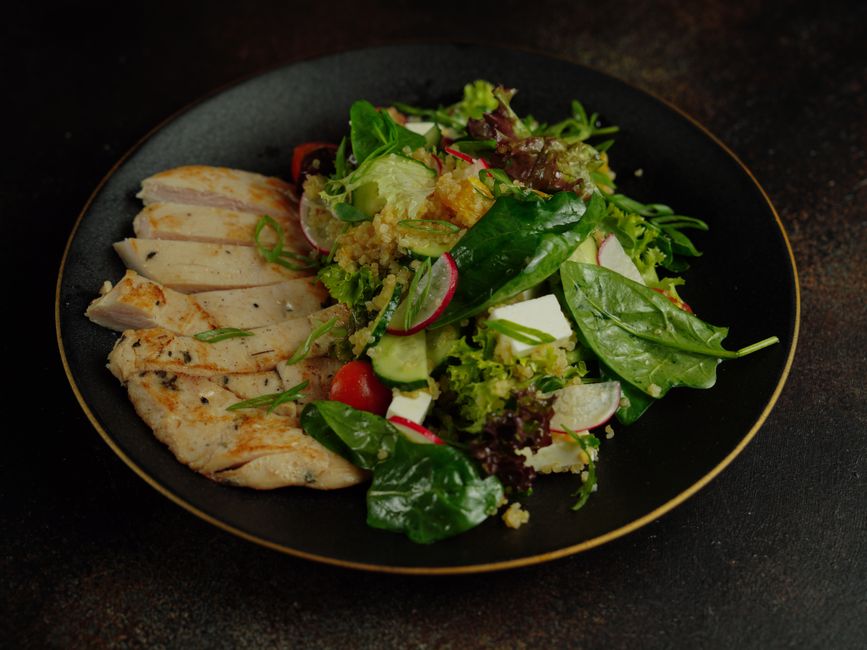
Most people think you need to memorize a specific number for perfectly cooked chicken. The truth is simpler than you might expect. The safe internal temperature for all chicken — breasts, thighs, wings, and whole birds — is 165°F (74°C). This is the point where harmful bacteria like Salmonella and Campylobacter are killed instantly. The United States Department of Agriculture (USDA) sets this standard, and it applies to ground chicken, whole chickens, and every cut you can buy. Reaching 165°F at the thickest part of the meat, without touching bone, is the only reliable way to know your chicken is safe to eat.
Why Is 165°F the Magic Number for Chicken?
The number 165°F is not arbitrary. It comes from food safety research conducted by the USDA and the Food and Drug Administration (FDA). At this temperature, Salmonella is reduced by 7 logarithms — a 99.99999% reduction — in less than 10 seconds. That is essentially instant death for the bacteria that cause the most foodborne illness from poultry.
Chicken is the leading source of food poisoning deaths in the United States. The CDC estimates that about 1 million people get sick from contaminated poultry each year. Cooking to 165°F eliminates nearly all risk. The science behind this number is solid and has been tested repeatedly in labs. It is not a guess or a marketing claim.
Some people argue that lower temperatures can also be safe if held long enough. That is true in theory. For example, chicken held at 155°F for about 50 seconds also kills Salmonella. But home cooks rarely have the equipment or patience to hold precise temperatures for exact times. The USDA picked 165°F because it works instantly and is easy to measure with a basic thermometer.
Does Dark Meat Need a Different Temperature Than White Meat?
No. The safety rule is the same for all chicken parts. Both white and dark meat must reach 165°F internally to be safe. The USDA does not make a distinction between breast meat and thigh meat when it comes to food safety. Bacteria do not care which cut they are on.
That said, dark meat tastes better when cooked to a slightly higher temperature, around 175°F to 185°F. Chicken thighs and legs contain more connective tissue and fat. Cooking them to 165°F makes them safe but often rubbery. The extra heat breaks down collagen and renders fat, making the meat tender and juicy. This is a texture preference, not a safety requirement.
White meat, especially breasts, dries out quickly above 165°F. So many home cooks pull breasts at exactly 165°F to keep them moist. Dark meat benefits from going higher. The key is to measure the thickest part of the thigh or leg, away from bone, and let it reach at least 165°F before you stop worrying about safety. Then you can cook it longer for better texture if you want.
How Do You Actually Measure the Temperature Correctly?
Using a meat thermometer is the only reliable method. Color is not a good indicator. Studies have found that fully cooked chicken can still look pink inside, and undercooked chicken can look white. The USDA explicitly warns against judging doneness by color or juices running clear. Those old rules are not accurate enough.
Here is how to measure correctly:
- Insert the thermometer into the thickest part of the meat. For breasts, that is the center. For thighs, the thickest area away from the bone.
- Avoid touching bone. Bone conducts heat differently and will give a false reading.
- For whole chickens, check the innermost part of the thigh and the thickest part of the breast. Both must hit 165°F.
- Use an instant-read digital thermometer. They are faster and more accurate than dial thermometers.
- If your chicken is stuffed, the stuffing must also reach 165°F. The stuffing can harbor bacteria even if the meat is fully cooked.
A good thermometer costs between $10 and $30. It is the single best investment you can make for food safety. You do not need a fancy wireless probe. A basic digital instant-read model works perfectly.




What About Chicken That Looks Pink or Has Red Near the Bone?
This is one of the most common kitchen worries. Chicken that is fully cooked to 165°F can still show pink color, especially near bones. This is not a sign of undercooking. It is caused by myoglobin, a protein in muscle tissue that holds oxygen. Young chickens have more myoglobin near the bone, and it does not always turn white when cooked.
Smoking or grilling can also cause a pink ring just under the skin. This is called a smoke ring and is completely safe. It happens when nitrogen dioxide from combustion reacts with the meat. It does not mean the chicken is raw.
The only reliable test is temperature. If your thermometer reads 165°F or higher, the chicken is safe regardless of color. Trust the numbers, not your eyes. The CDC reports that many people overcook chicken because they rely on visual cues, leading to dry, tough meat. Color is not your friend here.
| Chicken Cut | Safe Minimum Temperature | Recommended Target for Best Texture |
|---|---|---|
| Breast (boneless or bone-in) | 165°F (74°C) | 165°F (74°C) |
| Thighs and drumsticks | 165°F (74°C) | 175°F to 185°F (80°C to 85°C) |
| Whole chicken | 165°F (74°C) in thigh and breast | 165°F in breast, 175°F+ in thigh |
| Ground chicken | 165°F (74°C) | 165°F (74°C) |
| Wings | 165°F (74°C) | 165°F (74°C) |
What Happens If You Cook Chicken Below 165°F?
This is where things get a little more complicated than most articles admit. If you cook chicken to 160°F and hold it there for about 80 seconds, it is also safe. The USDA recognizes time-temperature equivalence for commercial kitchens and sous vide cooking. But for home cooking, the recommendation stays at 165°F because it is simpler and safer.
The risk of eating chicken cooked below 165°F depends on how long it stays at that lower temperature. A brief exposure to 155°F is not enough to kill all bacteria. But holding chicken at 155°F for nearly a minute works. The problem is that most people cannot maintain that temperature accurately at home. A slight drop in heat means the bacteria survive.
Some people report eating chicken cooked to 150°F or 155°F without getting sick. That does not mean it is safe for everyone. Older adults, pregnant women, young children, and people with weakened immune systems are at much higher risk. The CDC data shows that people over 65 account for more than half of all food poisoning deaths. What works for a healthy 30-year-old might be dangerous for someone else.
For the general public, 165°F is the only temperature you should trust. It eliminates guesswork and covers every vulnerable person who might eat your cooking.
Common Misconceptions About Chicken Temperature
The biggest myth is that you should wash raw chicken before cooking. The CDC and USDA both strongly advise against this. Washing chicken splashes bacteria around your sink, countertops, and nearby dishes. A study published in the Journal of Food Protection found that 60% of sink areas were contaminated after washing chicken. Cooking to 165°F kills the bacteria. Washing does not help and spreads the problem.
Another myth is that letting chicken rest after cooking will continue to cook it enough to be safe. Resting does raise internal temperature by a few degrees, but it is not reliable for safety. If your chicken is at 158°F when you pull it from the heat, resting might bring it to 162°F or 163°F. That is still below the safe threshold. You should always cook to 165°F before resting. Resting is for moisture, not safety.
Some people believe that organic or free-range chicken is less likely to carry bacteria. That is false. Studies from the USDA and Consumer Reports have found that organic and conventionally raised chickens have similar rates of Salmonella and Campylobacter contamination. The bacteria come from the environment, not the farming method. Cooking to 165°F is the only way to make any chicken safe.
Finally, there is the idea that high-heat searing on the outside kills everything. Searing kills surface bacteria, but it does not heat the center of the meat enough. Salmonella can live deep inside the muscle. Only reaching 165°F throughout guarantees safety.
Frequently Asked Questions
Can chicken be safe at 160°F if I hold it long enough?
Yes, but only if held at 160°F for at least 80 seconds. For home cooking, 165°F is recommended because it is instant and easier to verify.
Does the temperature need to be the same for ground chicken?
Yes. Ground chicken must also reach 165°F internally. Bacteria are mixed throughout the meat during grinding, so there is no safe lower temperature.
Can I use a pop-up timer instead of a thermometer?
Pop-up timers are not very accurate. They often trigger at temperatures above 165°F, leading to dry meat. A digital instant-read thermometer is far more reliable.
What if my chicken is pink but reads 165°F?
Pink color after reaching 165°F is normal and safe. It is caused by myoglobin or smoke compounds, not undercooking. Trust your thermometer.
