
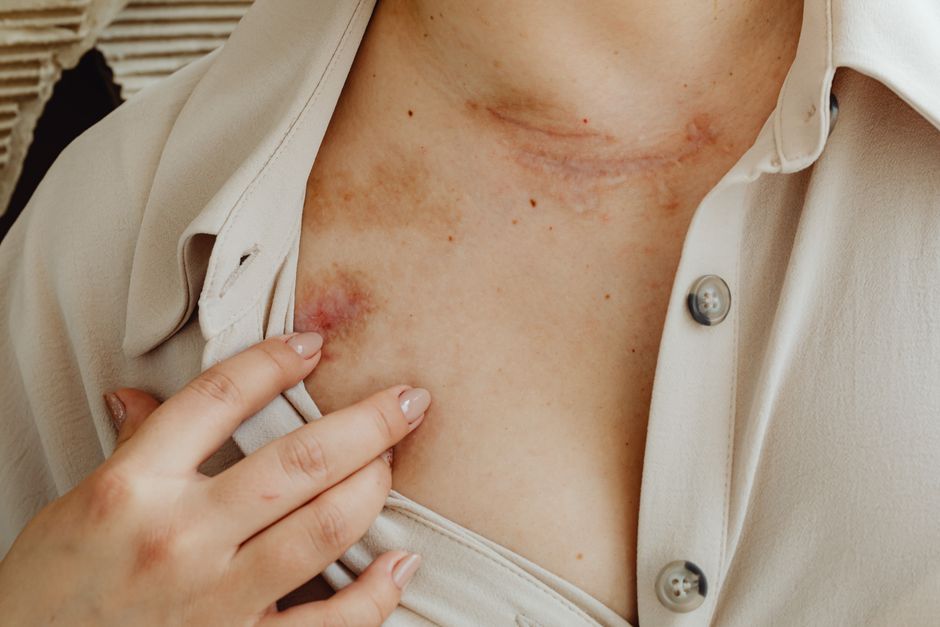
Scabies is caused by tiny mites that burrow into the upper layer of your skin, and it leads to intense itching and a specific rash. However, several other common skin conditions produce nearly identical symptoms, including severe itching and small red bumps. Eczema, contact dermatitis, psoriasis, and even reactions to insect bites are frequently mistaken for scabies by patients and sometimes by doctors.
Why Are So Many Skin Conditions Mistaken For Scabies?
The main reason is that the symptoms overlap heavily. Scabies presents as intense itching that often gets worse at night, along with a rash that can look like tiny blisters, bumps, or scales.
Many inflammatory skin diseases do the exact same thing. Eczema causes red, itchy patches. Contact dermatitis causes a rash where the skin touched an irritant. Even dry winter skin can itch enough to keep you up at night.
Doctors look for specific clues to tell them apart. Scabies typically shows up in skin folds like between the fingers, on the wrists, elbows, armpits, and waistline. It also tends to spare the face in adults. But in the early stages, or when the rash has been scratched raw, those patterns become hard to read.
Eczema: The Most Common Scabies Look-Alike
Eczema, also called atopic dermatitis, is a chronic condition that causes dry, sensitive skin with red patches that itch intensely. It is very common in the US, affecting millions of adults.
The itching can be severe enough to disrupt sleep, just like scabies. When someone scratches eczema, the skin breaks and weeps, which can look similar to the burrows and sores caused by scabies.
The key difference is location and history. Eczema usually appears in the creases of the elbows and knees, on the neck, and around the eyes. It is a long-term condition that flares up and settles down over years. Scabies, on the other hand, is an acute infestation that does not improve without treatment.
If you have never had eczema before and suddenly develop an intensely itchy rash, scabies is more likely. But if you have a history of dry, sensitive skin, eczema is a strong possibility.
Contact Dermatitis: A Reaction That Mimics Mite Bites
Contact dermatitis happens when your skin touches something you are allergic to or that irritates it. Poison ivy is a classic example, but soaps, laundry detergents, metals, and fabrics can all trigger it.
The rash is often red, swollen, and intensely itchy. It can blister and ooze. Because the rash appears wherever the substance touched the skin, it can easily be mistaken for scabies if that area happens to be the hands or waistline.
A key difference is that contact dermatitis usually clears up once the irritant is removed. Scabies will not go away on its own. The mites continue to reproduce and spread to new areas of the body.
Another clue is that contact dermatitis often affects only one area at first. Scabies tends to spread across multiple body regions over time.





Psoriasis: Scaling That Looks Like Scabies Burrows
Psoriasis is an autoimmune condition that speeds up skin cell turnover. It causes thick, silvery scales on red patches of skin, most commonly on the elbows, knees, scalp, and lower back.
In some forms, especially inverse psoriasis, the rash appears in skin folds like the armpits, groin, and under the breasts. These are also prime locations for scabies.
The itching from psoriasis can be intense, although many people with psoriasis report more burning or soreness than pure itch. The scales themselves are a distinguishing feature. Scabies does not produce thick silvery scales.
A skin scraping test can settle the question. A doctor looks at the sample under a microscope. If mites, eggs, or mite feces are present, it is scabies. If not, psoriasis or another condition is likely.
Insect Bites and Other Mite Reactions
Bed bug bites, flea bites, and mosquito bites all cause small, red, intensely itchy bumps. When multiple bites appear in a line or cluster, they can look like the rash of scabies.
There is also a condition called bird mite dermatitis. People who live near nests of pigeons, sparrows, or other birds can develop itchy red bumps from mites that drop off the birds and bite humans. These mites do not burrow into human skin, so they do not reproduce on people. The problem resolves when the bird nest is removed.
Unlike scabies, insect bites usually have a clear pattern of exposure. You might notice bites after sleeping in a hotel, spending time outdoors, or handling infested furniture. Scabies has no such trigger. It spreads through prolonged skin-to-skin contact with an infected person.
Another important difference is that scabies burrows appear as thin, wavy, grayish lines on the skin. These lines are the mites tunneling under the surface. Insect bites do not produce these tracks.
How Do Doctors Confirm A Scabies Diagnosis?
The only way to definitively confirm scabies is to find the mite, its eggs, or its fecal pellets. A doctor does this by scraping the skin with a scalpel blade and examining the material under a microscope.
This test is not always positive even when scabies is present. If the patient has scratched heavily or bathed recently, the mites may be hard to find. In those cases, a doctor may rely on the clinical picture and history.
Some doctors use a dermatoscope, a handheld magnifying device with a light. Under dermoscopy, scabies mites appear as small brown triangles at the end of burrows. This technique can improve diagnostic accuracy.
If the diagnosis remains unclear, a doctor might prescribe a scabies treatment and see if the rash improves. This is called a therapeutic trial. If the itching stops and the rash clears after treatment, scabies was likely the cause.
No blood test currently exists for scabies. Diagnosis relies on physical examination and, when possible, microscopic confirmation.
What Skin Conditions Can Be Mistaken For Scabies In Children?
Children get scabies too, and the rash can look different than in adults. In infants and young children, scabies often involves the face, scalp, palms, and soles of the feet. These areas are usually spared in older children and adults.
In children, scabies is frequently confused with eczema, impetigo, and viral rashes. Impetigo is a bacterial skin infection that causes honey-colored crusts. It can develop on top of scabies because scratching opens the skin to bacteria.
Hand-foot-mouth disease causes blisters on the palms and soles that can resemble scabies in young children. However, hand-foot-mouth disease also causes mouth sores and often a fever, which scabies does not.
If a child has an unexplained itchy rash that does not respond to moisturizers or hydrocortisone cream, a medical evaluation is warranted. Scabies in children requires prescription treatment, and the entire household may need to be treated to prevent reinfestation.
When Should You See A Doctor?
See a doctor if you have an intensely itchy rash that lasts more than two weeks, especially if the itching is worse at night. Also seek medical care if someone in your household has been diagnosed with scabies.
Do not try over-the-counter creams for scabies. Most of these products do not kill the mites effectively. Prescription treatments are the established standard of care.
Over-the-counter hydrocortisone cream may temporarily reduce itching, but it will not cure scabies. Worse, it can mask the symptoms and delay an accurate diagnosis. If you apply steroid cream to scabies, the mites continue to multiply while the itching is suppressed.
Scabies does not resolve without treatment. The mites can survive on a person for months. During that time, the person can spread the infestation to close contacts.
Frequently Asked Questions
Can scabies be mistaken for a yeast infection?
Yes, scabies in the groin area can look like a yeast infection or jock itch. A doctor can distinguish them by examining skin scrapings under a microscope.
Does scabies look like dry skin patches?
Scabies can look like dry, scaly patches, especially in people with darker skin tones where the rash may appear as small bumps rather than obvious red lines. However, scabies causes intense itching, while simple dry skin usually does not itch to that degree.
Can scabies be mistaken for an allergic reaction?
Yes, scabies is often mistaken for an allergic reaction or hives because both cause red, itchy bumps. The key difference is that hives come and go quickly, while scabies rash persists and worsens without treatment.
How long does it take for scabies symptoms to appear?
For a first-time infection, symptoms can take two to six weeks to appear. In someone who has had scabies before, symptoms can appear within one to four days because the immune system responds faster.
