
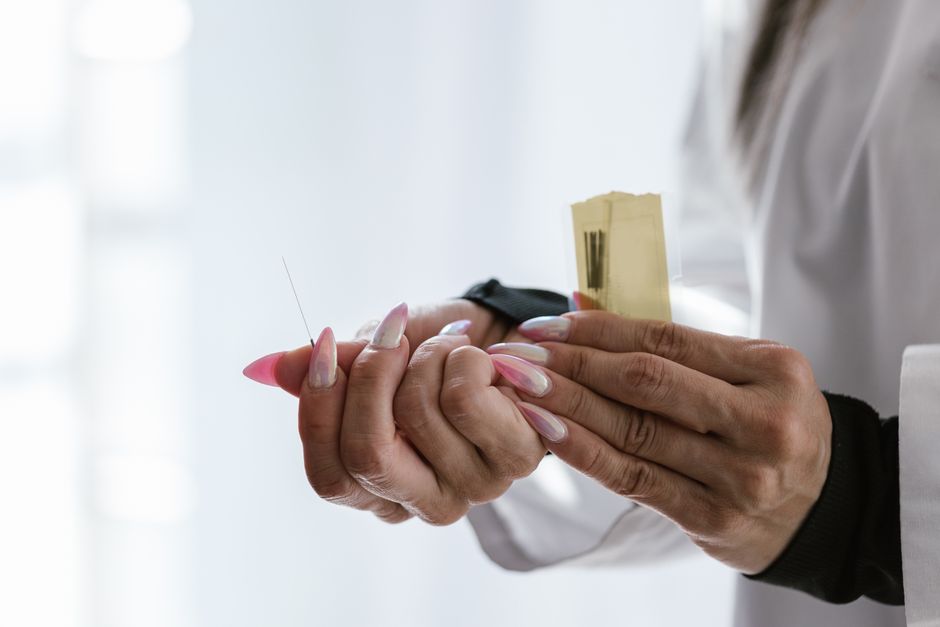
The needle size most often used for a vitamin B12 injection is a small-gauge, short needle — commonly 25 to 27 gauge, and about 5/8 inch (16 mm) to 1 inch (25 mm) long. The exact choice depends on where the shot goes and how much body fat is at that site. For a typical adult receiving an intramuscular dose in the upper arm, a 25-gauge needle that is 5/8 to 1 inch long is standard.
B12 injections are given in a few different ways, and the needle has to match the method. Get the size wrong and the medicine may not reach the right tissue, or the injection may be more painful than it needs to be. This guide explains the options, why they differ, and what the evidence actually says.
What Size Needle Is Used for a Vitamin B12 Injection?
Most B12 injections are given into muscle, and that shapes the needle choice. A needle has two numbers that matter: gauge (thickness) and length. Gauge works backward — a higher number means a thinner needle. So 25 gauge is thinner than 23 gauge.
For a standard intramuscular B12 shot in the upper arm, clinicians commonly reach for:
- 25 to 27 gauge for thickness
- 5/8 inch to 1 inch for length
These are general ranges, not a single fixed number. The right pick depends on the person’s body size, the injection site, and how deep the muscle sits under the skin.
There is no single government-mandated needle for B12. Instead, needle selection follows general injection guidelines used across medicine. The goal is simple: deliver the medicine into muscle, not into fat or just under the skin.
Why Does the Injection Site Change the Needle Size?
Different body sites have different amounts of fat over the muscle, and that changes how long the needle needs to be. A needle that is too short may only reach the fatty layer under the skin. A needle that is too long is not helpful and can be more uncomfortable.
The three common sites for a B12 injection are the upper arm (deltoid), the buttock (gluteal), and the thigh (vastus lateralis). Each has a different depth to the muscle.
- Upper arm: Often the thinnest fat layer. A shorter needle, such as 5/8 inch, may be enough for many adults.
- Buttock: Usually more fat and deeper muscle. A longer needle, often 1 to 1.5 inches, is typically needed.
- Thigh: Depth varies a lot with body size. Length is chosen based on the person.
This is why there is no single “correct” needle. The site and the person decide it together.
Does Body Weight Affect the Needle You Need?
Yes. Body size is one of the main reasons needle length varies from person to person. More fat over a muscle means a longer needle is needed to reach the muscle itself.
This is well established in injection guidance. For people with more subcutaneous fat, a longer needle is generally required to reach muscle. For leaner people, a shorter needle can work.
Some clinical guidance uses body weight to help estimate needle length for certain injections. But there is no single weight cutoff that applies to every B12 shot, because fat distribution differs between people even at the same weight.
Gauge matters less for body size and more for comfort and the thickness of the medicine. B12 solutions are watery, not thick, so a thin needle can usually deliver them without trouble.





What Is the Difference Between Subcutaneous and Intramuscular B12 Shots?
B12 can be given into muscle (intramuscular) or into the fatty layer just under the skin (subcutaneous). The two methods use different needles.
Intramuscular shots need to reach muscle, so they use longer needles — often 5/8 inch to 1.5 inches depending on the site. Subcutaneous shots only need to reach the fat layer, so they use shorter needles, commonly around 3/8 to 5/8 inch.
Both methods can deliver B12. Which one is used depends on the product, the clinician’s preference, and the patient’s needs. The needle has to match the method — a subcutaneous needle is too short to reliably reach muscle, and using a long needle for a subcutaneous shot goes deeper than intended.
One point worth knowing: the route can affect how fast B12 enters the bloodstream. Intramuscular injection generally absorbs faster than subcutaneous. But for most people receiving B12 for a deficiency, the difference in outcome between the two routes is not clearly established as large.
Can You Give a B12 Injection at Home?
Some people are prescribed B12 injections to give at home, often after training from a clinician. If you are doing this, the needle size should be specified by the prescriber or pharmacist — not chosen on your own.
Home injection carries real risks if the technique or supplies are wrong. Using the wrong needle length can mean the medicine goes into the wrong tissue. Reusing needles or sharing them is unsafe and can spread infection.
If you are giving B12 at home, confirm these with your clinician:
- The exact needle gauge and length for your site
- How deep to insert the needle
- Which site to use and how to rotate sites
- How to dispose of used needles safely
Do not guess at needle size. The right one depends on your body and your prescribed method.
Does Needle Size Affect How Much It Hurts?
Needle gauge is the biggest factor in comfort. A thinner needle (higher gauge number) usually causes less discomfort than a thicker one. This is one reason 25 to 27 gauge needles are common for B12 shots.
Length matters less for pain and more for reaching the right depth. A needle that is too short can cause a shallow, more painful injection if the medicine pools in the wrong layer. A needle that is too long is not inherently more painful, but it is unnecessary if a shorter one reaches the muscle.
Technique matters as much as the needle. A steady, quick insertion and the right angle often do more for comfort than a small change in needle size. Letting the alcohol wipe dry before injecting also reduces stinging.
What Do Guidelines Actually Say?
There is no single official needle standard that applies only to vitamin B12. Instead, needle selection follows broader injection safety guidance used across healthcare.
General clinical guidance for intramuscular injections supports choosing needle length based on the site, the patient’s body size, and the depth of the muscle. For adults, common intramuscular needle lengths range from about 5/8 inch to 1.5 inches, with gauge typically between 20 and 25 for many medicines — though thinner gauges like 25 to 27 are often used for watery solutions such as B12.
The honest position: the “right” needle is a clinical decision, not a fixed number. Any source that gives one universal size for every person and every site is oversimplifying. The range is real, and it exists for good reason.
If you are unsure what size you need, that is a question for the person prescribing or administering your injection. They can match the needle to your body, your site, and your dose.
Frequently Asked Questions
What size needle is used for a B12 injection in the arm?
A common choice for an adult arm injection is a 25 to 27 gauge needle that is 5/8 to 1 inch long. The exact length depends on how much fat sits over the arm muscle.
Is a B12 shot intramuscular or subcutaneous?
It can be either, and the needle must match the method. Intramuscular shots use longer needles to reach muscle, while subcutaneous shots use shorter needles that only reach the fat layer.
Can I choose my own needle size for a home B12 injection?
No. The needle size should be set by your prescriber or pharmacist based on your body and injection site. Choosing the wrong size can mean the medicine lands in the wrong tissue.
Does a thinner needle make a B12 injection hurt less?
A thinner needle, meaning a higher gauge number, usually causes less discomfort. Technique and the injection angle often affect pain just as much as the needle itself.
