
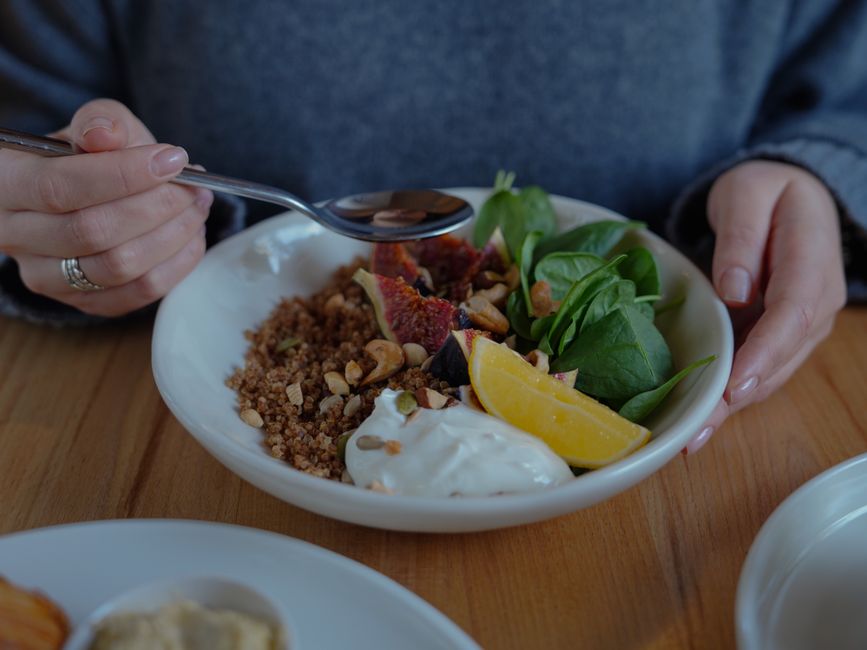
If you want a breakfast that actually helps your body, aim for protein, fiber, and healthy fat. Skip the sugary cereals, pastries, and most breakfast bars. A meal with eggs, Greek yogurt, or a quality protein shake paired with vegetables or fruit gives you steady energy. The goal is to avoid the blood sugar spike and crash that leave you hungry by 10 AM.
What Should You Have For Breakfast to Stay Full Until Lunch?
The key is protein. Research published in the American Journal of Clinical Nutrition found that a high-protein breakfast increases fullness hormones and reduces hunger throughout the morning. Aim for at least 20 to 30 grams of protein at your first meal.
Eggs are a strong choice. Two large eggs give you about 12 grams of protein. Pair them with black beans or a cup of Greek yogurt to reach that 20-gram target. If you do not eat eggs, a protein shake with whey or plant protein works just as well. The evidence is clear that the source matters less than the amount.
Fiber also helps you stay full. Vegetables, berries, and oats provide fiber that slows digestion. A breakfast with both protein and fiber keeps your blood sugar stable longer than either one alone.
Does Eating Breakfast Actually Help With Weight Loss?
This is where the evidence gets complicated. Older studies suggested that skipping breakfast causes weight gain. More recent research tells a different story. A 2019 study published in the BMJ analyzed 13 randomized controlled trials and found no strong evidence that eating breakfast promotes weight loss. Some people who skip breakfast naturally eat less over the full day.
But individual results vary widely. The people in those studies who ate breakfast did not automatically lose weight. The people who skipped breakfast did not automatically lose weight either. What matters is the total calories you eat and the quality of those calories.
If you are hungry in the morning, eat breakfast with protein and fiber. If you are not hungry, forcing yourself to eat will not help your waistline. Listen to your body rather than following a rule.
| Breakfast Type | Protein (g) | Fiber (g) | Blood Sugar Effect |
|---|---|---|---|
| 2 eggs + 1 cup spinach + 1 slice whole grain toast | 18 | 4 | Gradual rise, sustained energy |
| 1 cup Greek yogurt + 1/2 cup berries | 20 | 4 | Stable, minimal spike |
| Bowl of sugary cereal with milk | 6 | 1 | Rapid spike, quick crash |
| Protein shake with 1 scoop powder + water | 25 | 0 | Minimal glucose response |
| Bagel with cream cheese | 8 | 1 | Moderate spike, short satiety |
What Should You Have For Breakfast If You Have Diabetes or Prediabetes?
The American Diabetes Association recommends a breakfast that minimizes blood sugar spikes. That means avoiding refined carbohydrates like white bread, sugary cereals, and fruit juice. These foods cause a rapid increase in blood glucose that your body struggles to manage.
Instead, choose protein and non-starchy vegetables. An omelet with mushrooms, peppers, and onions is a strong option. If you want grains, choose steel-cut oats or whole grain bread with at least 3 grams of fiber per serving. Add nuts or seeds for healthy fat, which further slows digestion.
Some people report that eating breakfast helps them control cravings later in the day. Evidence from the Journal of Nutrition supports this. A stable morning blood sugar reduces the likelihood of impulsive snacking on high-sugar foods. But if you practice intermittent fasting and your blood sugar is well-controlled, skipping breakfast may work for you. Check with your doctor before changing your routine.





What Are the Best Quick Breakfasts for Busy Mornings?
You do not need a complicated meal. The simplest option that meets your protein and fiber needs is often the best. Here are three evidence-backed choices that take under five minutes to prepare:
- Greek yogurt (plain, unsweetened) with a handful of berries and a tablespoon of chia seeds
- A protein shake blended with a handful of spinach and half a banana
- Two hard-boiled eggs with an apple
Prepping ingredients the night before helps. Hard-boil eggs for the week. Portion out yogurt and berries into containers. Keep a bag of frozen spinach in the freezer for smoothies. These small steps remove the friction that leads to grabbing a pastry or skipping breakfast entirely.
Avoid breakfast bars and most commercial smoothies. Many of these products contain added sugar equal to a candy bar. Read the label. If sugar is in the first three ingredients, put it back.
What Should You Have For Breakfast if You Exercise in the Morning?
This depends on the type and intensity of your workout. For moderate exercise like walking, yoga, or light cycling, you likely do not need to eat beforehand. Your body has enough stored glycogen to fuel these activities. Eating a full breakfast before light exercise can actually cause digestive discomfort.
For high-intensity workouts like weightlifting, sprinting, or long runs, eating something small beforehand improves performance. Research from the Journal of the International Society of Sports Nutrition shows that a small meal with carbohydrates and protein eaten 30 to 60 minutes before exercise can boost endurance and reduce muscle breakdown. A banana with a tablespoon of peanut butter or a half cup of oatmeal with protein powder works well.
After exercise, prioritize protein to support muscle repair. A 2022 meta-analysis in Nutrients confirmed that consuming 20 to 40 grams of protein within two hours after resistance training optimizes muscle protein synthesis. This can be your breakfast or a post-workout shake.
What Common Breakfast Myths Should You Ignore?
The biggest myth is that breakfast must be eaten within one hour of waking to “kickstart your metabolism.” This is not supported by evidence. Your metabolism does not shut down overnight and require a morning jumpstart. Research shows that total daily energy expenditure is roughly the same whether you eat breakfast or skip it.
Another myth is that fruit juice counts as a healthy breakfast choice. Most fruit juice contains as much sugar as soda and lacks the fiber of whole fruit. The CDC advises limiting added sugars, and fruit juice is a major source. Eat the whole fruit instead. You get fiber, more nutrients, and fewer calories.
A third myth is that breakfast must be a traditional meal. There is no rule that eggs, cereal, or toast are required. Leftover chicken and vegetables from dinner make an excellent breakfast. Soup, a salad, or a bean burrito all provide protein and fiber. Do not let social expectations dictate your food choices.
Frequently Asked Questions
Is it bad to skip breakfast every day?
For most healthy people, skipping breakfast is not harmful. The key is whether you eat enough quality food later in the day.
What is the healthiest breakfast for weight loss?
A breakfast with at least 20 grams of protein and 5 grams of fiber helps control appetite and reduce total calorie intake throughout the day.
Can I eat oatmeal for breakfast if I have diabetes?
Yes, but choose steel-cut oats instead of instant oats and add protein like nuts or Greek yogurt to slow the blood sugar response.
How much protein should I eat at breakfast?
Most research suggests 20 to 30 grams of protein at breakfast supports fullness and muscle maintenance.
