
Your weight is one number, but it does not tell the whole story about your health. The most useful answer combines three measurements: body mass index (BMI), waist circumference, and body fat percentage. BMI gives you a starting point based on height and weight. Waist circumference shows where you carry fat, which matters because belly fat carries higher health risks. Body fat percentage tells you how much of your total weight is fat versus muscle and bone. No single number is perfect. Together, they give you a realistic picture of where you stand.
What Is BMI and How Do You Calculate It?
BMI is a simple formula using your height and weight. The calculation is your weight in kilograms divided by your height in meters squared. For most adults, the ranges are the same regardless of age or sex.
- Below 18.5: Underweight
- 18.5 to 24.9: Normal weight
- 25.0 to 29.9: Overweight
- 30.0 and above: Obesity
These cutoffs come from large population studies linking higher BMI to increased risk of heart disease, type 2 diabetes, and certain cancers. The relationship is well established. As BMI climbs above 25, health risks generally rise.
But BMI has a real limitation. It does not distinguish between muscle and fat. A muscular athlete can have a BMI of 27 and carry very little body fat. Someone with the same BMI could have high body fat and low muscle. BMI is a screening tool, not a diagnosis. It tells you if you fall into a risk category, but it cannot tell you your body composition.
What Should My Weight Be Based on My Height?
Healthy weight ranges are often presented as a span rather than a single number. For example, a person who is 5 feet 6 inches tall has a healthy BMI range that corresponds to roughly 115 to 154 pounds. A person who is 5 feet 10 inches falls into a healthy range around 129 to 173 pounds.
These ranges come from the BMI categories applied to specific heights. The lower end of the range corresponds to a BMI of 18.5. The upper end corresponds to a BMI of 24.9. Staying within that span keeps you in the normal weight category.
Your ideal weight within that range depends on your frame size, muscle mass, and age. Someone with a larger bone structure may feel healthier at the higher end. A smaller-framed person may feel better near the middle. The range matters more than any single number.
Why Waist Circumference Matters More Than You Think
Where you carry fat affects your health risks more than total body weight. Fat stored around your organs — visceral fat — is metabolically active. It releases inflammatory substances that can raise blood pressure, worsen cholesterol levels, and increase insulin resistance.
Waist circumference is a practical way to estimate visceral fat. For health purposes, the general guidance is that a waist measurement above 35 inches for women and above 40 inches for men indicates increased health risk. These cutoffs are supported by extensive research linking abdominal obesity to cardiovascular disease and type 2 diabetes.
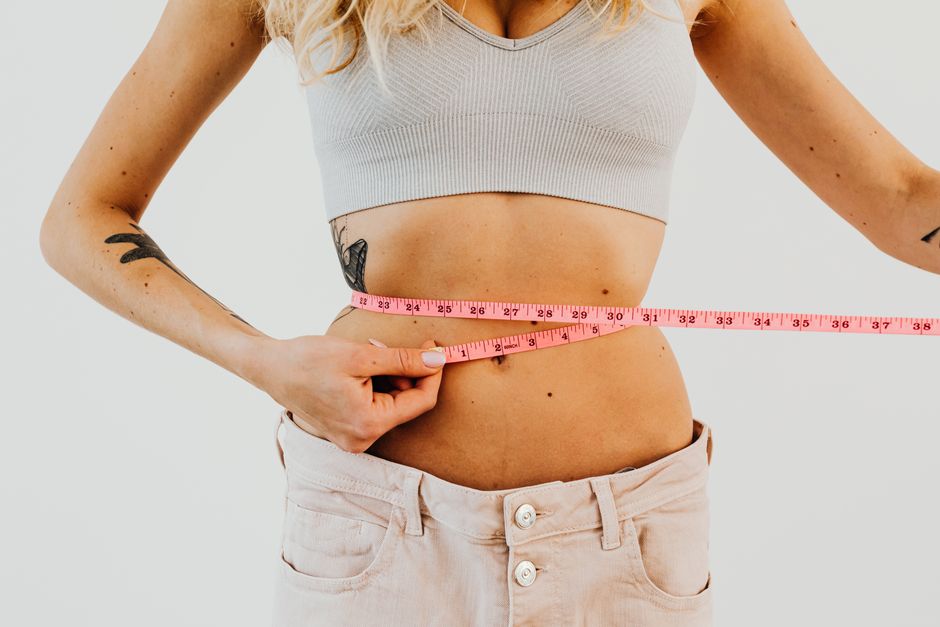
You can measure your waist correctly with a tape measure. Place it around your bare abdomen at the level of your hip bone. Keep it snug but not compressing your skin. Breathe out normally and take the reading. This measurement should not be taken over clothing for accuracy.
Two people can have the same BMI, but the one with the larger waist carries more health risk. This is why waist circumference adds information that BMI alone cannot provide.





What Is Body Fat Percentage and How Do You Measure It?
Body fat percentage is the proportion of your total weight that comes from fat. It includes both essential fat, which your body needs for normal function, and stored fat. Essential fat levels are around 3 to 5 percent for men and 8 to 12 percent for women. Women need more essential fat for reproductive and hormonal functions.
General healthy ranges for body fat are approximately 10 to 20 percent for men and 20 to 30 percent for women. These ranges vary by age. Older adults often carry more body fat at the same weight because muscle mass naturally declines with age.
Measuring body fat accurately is harder than measuring weight or waist circumference. The most accurate methods, like DEXA scans and hydrostatic weighing, are usually available only in medical or research settings. Bioelectrical impedance scales, which send a mild electrical current through your body, are widely available but vary in accuracy. Hydration levels, recent meals, and time of day can all affect the reading.
Skinfold calipers, used by trained professionals, can give reasonable estimates. But the skill of the person taking the measurement matters significantly. No home method is precise enough to track small changes reliably.
How Do BMI, Waist, and Body Fat Work Together?
Each measurement answers a different question. BMI tells you your weight category. Waist circumference tells you about fat distribution. Body fat percentage tells you about body composition.
Consider two people with the same BMI of 26, which falls in the overweight range. One has a waist of 34 inches and a body fat percentage of 18 percent. The other has a waist of 42 inches and a body fat percentage of 32 percent. The first person is likely an athlete with substantial muscle. The second has a higher metabolic risk profile. Both share the same BMI, but their health pictures are very different.
For most people, the practical approach is to start with BMI and waist circumference. These two measurements are easy to obtain and require no special equipment. If your BMI falls in the overweight or obesity range and your waist exceeds the cutoff, you have a clearer signal that weight loss would likely benefit your health. If your BMI is high but your waist is normal and you are physically active, your risk profile may be better than your BMI suggests.
What Are the Limits of All These Measurements?
Every measurement has blind spots. BMI does not account for muscle mass, bone density, or fat distribution. Waist circumference does not tell you about overall body fat. Body fat percentage measurements are often inaccurate outside clinical settings.
None of these numbers capture your metabolic health directly. You can have a normal BMI and still have high blood pressure, elevated blood sugar, or abnormal cholesterol. This condition, sometimes called metabolically obese normal weight, affects a meaningful number of people. Conversely, some people with higher BMIs have normal metabolic markers.
Blood tests and blood pressure readings provide information that weight measurements cannot. Fasting glucose, hemoglobin A1c, lipid panel, and blood pressure give you a direct look at how your body is processing energy. These values matter regardless of what the scale says.
The most honest interpretation is that these measurements are screening tools. They identify risk, not certainty. A high BMI or large waist increases the probability of health problems, but it does not guarantee them. A normal BMI does not guarantee metabolic health either.
How Should You Use This Information?
Track all three measurements over time rather than fixating on one. Weight alone can mislead you. If you start strength training, your weight may stay the same while your waist shrinks and your body fat percentage drops. That is progress, but the scale would not show it.
Measure your weight and waist at the same time of day under similar conditions. Morning measurements after using the bathroom are most consistent. Take body fat readings from the same device under the same conditions if you use one, and treat the absolute number with skepticism. The trend matters more than any single reading.
If your BMI is above 30, your waist exceeds the cutoff, or your body fat percentage is well above the healthy range, this is a reasonable signal to discuss weight management with your healthcare provider. They can order blood tests and assess your individual risk factors. Weight loss of 5 to 10 percent of your body weight has been shown in clinical trials to improve blood pressure, blood sugar, and cholesterol levels in people with excess weight.
Frequently Asked Questions
What is a healthy BMI for my age?
The healthy BMI range of 18.5 to 24.9 applies to most adults of all ages. Some research suggests slightly higher ranges may be acceptable for older adults, but the standard categories remain the reference point.
Can I have a normal BMI and still be unhealthy?
Yes. A normal BMI does not guarantee metabolic health. Blood pressure, blood sugar, and cholesterol levels can be abnormal even at a normal weight, so these markers should be checked independently.
What is the most accurate way to measure body fat?
DEXA scans and hydrostatic weighing are the most accurate methods, but they require clinical or research settings. Home scales and handheld devices are convenient but less precise and should be used only to track trends.
Should I focus on losing weight or losing fat?
Focus on reducing body fat while preserving muscle. Losing weight rapidly often causes muscle loss, which slows your metabolism and makes weight regain more likely. Combining moderate calorie reduction with resistance training helps preserve muscle.
