
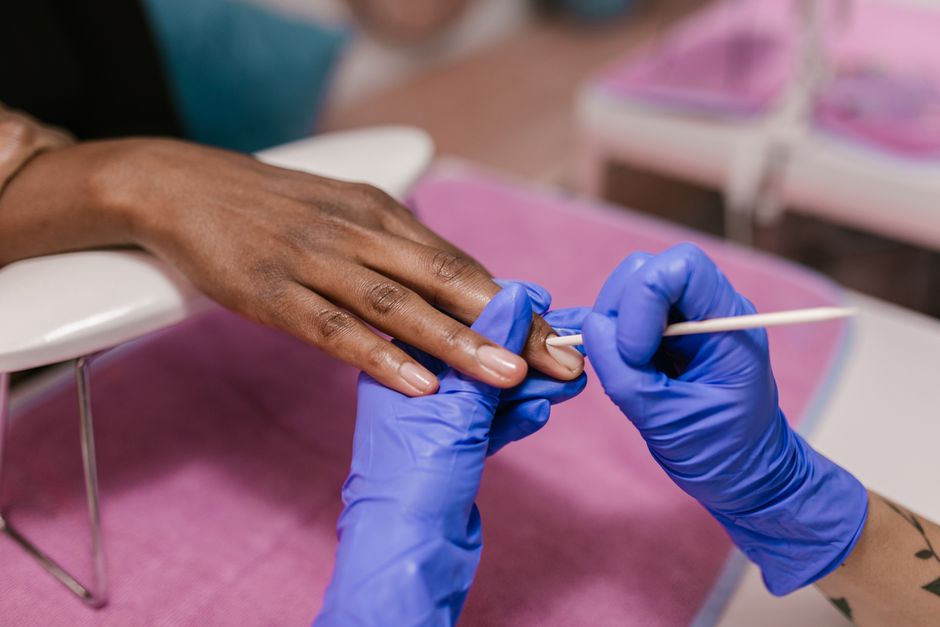
Getting nail glue on your skin is frustrating, and pulling at it can tear your skin. The fastest and safest way to remove nail glue is to soak the area in warm, soapy water, then gently roll or peel the softened glue away. If that does not work, acetone-based nail polish remover is the most effective option, though it is harsh and should be used sparingly.
Why Does Nail Glue Stick So Well to Skin?
Nail glue is a type of cyanoacrylate adhesive. The same family of chemicals used in super glue. It bonds quickly and strongly because it reacts with moisture. Your skin always has a thin layer of moisture on it, which is why the glue sets almost instantly on contact.
The bond is mechanical, not chemical. The glue seeps into the tiny ridges and grooves of your skin’s top layer and hardens there. That is why it feels like it is fused to you. It is not actually bonding to your skin cells on a chemical level. It is just gripping the surface texture tightly.
Understanding that helps with removal. You are not trying to break a chemical bond. You are trying to soften the glue so it loses its grip on those microscopic ridges. Warmth and certain solvents do that job well.
What Removes Nail Glue From Skin Fast?
Acetone is the most reliable answer. It is the active ingredient in most nail polish removers. Acetone dissolves cyanoacrylate adhesives, which is why it works so well on both nails and skin.
To use it, pour a small amount into a bowl or soak a cotton ball. Press the soaked cotton against the glued area and hold it there for a few minutes. Do not rub. Let the acetone sit and break down the glue. After a few minutes, the glue should soften and lift. Gently roll it off with a cotton swab or your fingertip.
Acetone is a strong solvent. It strips natural oils from your skin and can cause dryness, redness, and irritation. It can also be painful on raw or broken skin. Use it only on intact skin and wash the area with soap and water afterward. Apply a moisturizer or petroleum jelly once the glue is gone.
One important note: do not use acetone on skin that is cut, blistered, or otherwise damaged. It will sting badly and can delay healing. For broken skin, use the soapy water method instead and let the glue wear off naturally over a few days.
How to Remove Nail Glue Without Acetone
If you do not have acetone on hand, or you want a gentler approach, warm soapy water is the next best option. It takes longer, but it is much safer for your skin.
Fill a bowl with warm water and add a few drops of dish soap or hand soap. Soak the affected area for 10 to 15 minutes. The warmth softens the glue, and the soap reduces surface tension, helping the glue release from your skin’s ridges. After soaking, gently roll the glue off with your fingers or a soft cloth. Do not pull or yank. That can tear the top layer of skin.
Several other household products are commonly suggested as glue removers. Some people use petroleum jelly, coconut oil, or olive oil. These work by softening the glue over time, but they are slower than acetone. Rub the oil into the glue, wait several minutes, and then try to roll the glue away. This method is gentle and works well for sensitive skin, but it requires patience.
Hand lotion and moisturizer can also help. The skin around the glue is often dry and tight. Moisturizing the area softens both the skin and the glue, making it easier to peel the glue away in one piece. This is a good first step before trying anything stronger.



What Not to Do When Removing Nail Glue
Do not pull the glue off. This is the most common mistake. When you yank at dried glue, you often take a layer of skin with it. The result is a raw, painful patch that takes days to heal.
Do not use sharp objects. Knives, razors, or scissors should never be used to scrape glue off your skin. Even a fingernail can do damage if you dig too hard. The glue is often stuck to the very top layer of skin, and scraping can remove that layer entirely.
Do not use harsh chemicals. Paint thinner, nail glue remover meant for nails, or other industrial solvents are not safe for skin. They can cause chemical burns and serious irritation. Stick to acetone, which is designed for cosmetic use, or the gentler household methods.
Do not repeatedly apply acetone to the same spot. If the glue does not come off after one or two tries, stop. Soak in warm water instead and give your skin a break. Repeated acetone exposure can cause peeling, cracking, and contact dermatitis.
Does Hand Sanitizer or Rubbing Alcohol Remove Nail Glue?
Hand sanitizer and rubbing alcohol are common suggestions, and they can work in some cases. Both contain solvents that can soften cyanoacrylate glue. However, they are less effective than acetone and take longer to work.
Rubbing alcohol (isopropyl alcohol) can dissolve the glue, but it evaporates quickly. That means it does not stay in contact with the glue long enough to soften it thoroughly. You would need to reapply it several times and keep the area covered to trap the alcohol against the skin.
Hand sanitizer has a similar problem. It also contains moisturizers and thickeners that dilute its solvent power. It can work if you apply a generous layer and let it sit for several minutes, but it is not the most efficient choice.
If these are the only options available, they are worth trying. Apply the alcohol or sanitizer, let it sit for a few minutes, then gently roll the glue off. If it does not work, move to warm soapy water or acetone.
How Long Does Nail Glue Take to Wear Off Skin Naturally?
If you do nothing, nail glue will eventually come off on its own. The top layer of your skin sheds constantly, and the glue goes with it. This process usually takes 3 to 5 days, depending on the thickness of the glue and the location on your body.
Areas with frequent friction, like fingertips, shed faster. Glue on those spots may be gone in a day or two. Areas that do not rub against anything, like the back of your hand, may take a week or more.
This is the safest option if the glue is somewhere sensitive or if you have broken skin. Just keep the area moisturized and let your skin do its job. The glue will not cause any harm while it is there. It is an inert plastic once cured.
If you want to speed up the natural process without chemicals, frequent hand washing and moisturizing help. The washing loosens the glue, and the moisturizer softens it. Over a day or two, the glue will gradually peel away on its own.
How to Avoid Getting Nail Glue on Skin in the First Place
Prevention is easier than removal. Apply a thin layer of petroleum jelly or cuticle oil around your nails before you open the glue. This creates a barrier that the glue cannot bond to. If glue lands on the protected skin, it will bead up and peel off easily.
Use less glue. Most people apply too much. A thin, even layer is all you need for a press-on nail or a nail repair. Excess glue is what ends up on your fingers.
Apply the glue carefully and hold the nail in place for a few seconds. If you are using nail tips or press-ons, press down firmly from the base to the tip. This pushes excess glue out where you can wipe it away before it sets.
Keep a cotton swab or paper towel nearby. If glue does get on your skin, wipe it off immediately before it cures. A quick wipe in the first few seconds can save you a much longer cleanup later.
Frequently Asked Questions
Does nail polish remover remove nail glue from skin?
Yes, acetone-based nail polish remover effectively dissolves nail glue on skin. Non-acetone removers are much less effective and may not work at all.
Can I use olive oil to remove nail glue from skin?
Yes, olive oil can soften nail glue, but it takes several minutes and requires patience. Rub it into the glue, wait, and then gently roll the glue away.
Is it safe to pick nail glue off my skin?
No, picking or pulling at nail glue can tear the top layer of your skin. Always soften the glue with warm water or acetone before attempting removal.
How long does nail glue stay on skin if left alone?
Nail glue typically wears off within 3 to 5 days as your skin sheds its top layer. Areas with more friction may clear faster.
