
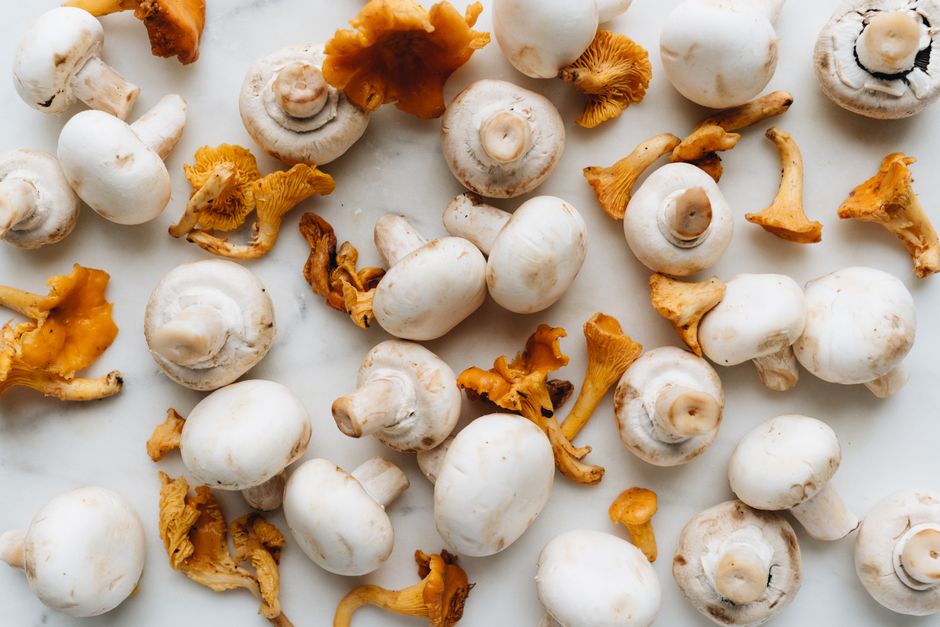
Mushrooms earn their place in the gut-health conversation for a simple reason: they are the only widely eaten food that is neither plant nor animal, and they arrive carrying things the gut actually uses. They supply fiber that human enzymes cannot break down, they carry compounds that feed gut bacteria, and they contain beta-glucans — long sugar chains that interact with the immune tissue lining the digestive tract. The strongest evidence points to mushrooms as a useful piece of a fiber-rich diet, not as a stand-alone remedy.
What Mushrooms Are Good For Gut Health And Why?
Several common mushrooms bring different things to the table, and the differences are worth knowing.
Oyster mushrooms are one of the better studied for gut effects. They contain beta-glucans and other polysaccharides that gut bacteria can ferment. Laboratory and animal studies suggest these compounds support the growth of beneficial bacteria and the production of short-chain fatty acids, though human trials are fewer.
Shiitake mushrooms contain a fiber called lentinan, a beta-glucan that has been studied for immune effects. Most human research on lentinan has used it as an injected pharmaceutical extract in cancer treatment in Japan, not as a food. Eating shiitake is not the same as receiving lentinan injections, and that distinction matters.
Button and cremini mushrooms are the most consumed in the US. They are lower in total fiber than oyster or shiitake but still contribute polysaccharides and are a practical everyday source.
Enoki, maitake, and lion’s mane have each shown some prebiotic activity in laboratory work. Human data is thin for all three. Lion’s mane in particular is heavily marketed for nerve and cognitive effects, and the gut-health claims attached to it are mostly extrapolated from lab studies rather than confirmed in people.
The short version: oyster and shiitake have the most research behind them for gut-related effects, button mushrooms are the most practical daily option, and the rest have promising but incomplete evidence.
How Do Mushrooms Feed Gut Bacteria?
Mushrooms contain polysaccharides — long chains of sugars — that survive digestion in the small intestine and reach the colon largely intact. This is the same basic mechanism behind prebiotic fibers in oats, onions, and legumes.
Once in the colon, gut bacteria ferment these compounds. The fermentation produces short-chain fatty acids, mainly acetate, propionate, and butyrate. Butyrate is the primary fuel source for the cells lining the colon, and short-chain fatty acid production is one of the better established mechanisms linking fiber intake to gut health.
The beta-glucans in mushrooms are structurally different from those in oats and barley. Mushroom beta-glucans are primarily 1,3 and 1,6 linked, while grain beta-glucans are 1,3 and 1,4 linked. This changes how they behave in the gut and how the immune system recognizes them. It also means research on oat beta-glucans does not automatically transfer to mushroom beta-glucans.
One clarification worth making: mushrooms contain chitin in their cell walls, the same structural material found in insect shells. Humans produce chitinase enzymes, but at levels too low to break chitin down efficiently. Some of it passes through undigested, which is part of why mushrooms can feel heavy and why cooking them changes their texture so much.
What Does the Research Actually Show?
The honest position is that mushroom research for gut health is promising but not settled.
Most of the mechanistic work — showing that mushroom polysaccharides feed bacteria and increase short-chain fatty acid production — has been done in laboratory dishes and in animals. Human trials exist but are smaller and fewer.
Some human studies have looked at mushroom consumption and measures like stool frequency, gut bacteria composition, and inflammatory markers. Results have been mixed. Effects tend to be modest and are often seen alongside other dietary changes, which makes it hard to isolate what the mushrooms alone did.
What is well established is broader: diets high in fermentable fiber consistently support a more diverse gut microbiome, and microbiome diversity is associated with better digestive and metabolic health. Mushrooms fit into that pattern. Whether they outperform other fiber sources is not established.
Claims that a specific mushroom “balances” or “repairs” the gut microbiome should be treated with caution. No clinical evidence currently confirms that any single mushroom can do that on its own.




Are Mushrooms a Prebiotic or a Probiotic?
Mushrooms are prebiotics, not probiotics. That distinction gets blurred constantly in marketing.
Prebiotics are compounds that feed existing gut bacteria. Probiotics are live microorganisms that are themselves consumed. Mushrooms contain no live bacteria of benefit to the gut — they are food for the bacteria already there.
Some fermented mushroom products are marketed as probiotic. Whether they deliver meaningful live cultures depends on the specific product, how it was made, and how it was stored. Many commercial fermented products do not contain enough viable organisms to meet the standard definition of a probiotic.
Mushrooms also contain small amounts of compounds that can act as antimicrobials in laboratory settings. This has led to speculation that they might harm gut bacteria. In practice, the amounts present in food are far below what would be needed to affect gut bacteria meaningfully. The concern does not hold up for normal consumption.
Which Mushrooms Have the Most Fiber and Beta-Glucans?
Fiber content varies considerably by species and by how the mushroom is prepared. The table below uses USDA data for raw mushrooms.
| Mushroom | Fiber per 100g (raw) | Notable compounds |
|---|---|---|
| Oyster | About 2.3 g | Beta-glucans, polysaccharides |
| Shiitake | About 2.5 g | Lentinan, beta-glucans |
| Button (white) | About 1.0 g | Polysaccharides, chitin |
| Maitake | About 2.7 g | Beta-glucans (D-fraction studied) |
| Enoki | About 2.7 g | Polysaccharides |
For context, 100 grams is roughly a small handful of raw mushrooms. Cooking reduces water content and concentrates fiber by weight, so cooked mushrooms show higher fiber per 100 grams than raw. That is a measurement effect, not a change in the mushroom.
Total fiber intake matters more than which mushroom you choose. Most US adults fall short of the recommended daily fiber intake, and mushrooms are one of several foods that can help close that gap.
How Should You Eat Mushrooms for Gut Health?
Cook them. Raw mushrooms contain small amounts of agaritine, a compound that is reduced by cooking. The button mushroom in particular contains agaritine, and while the amounts in food are considered low risk, cooking is the standard recommendation.
Cooking also breaks down chitin partially, which makes the mushroom easier to digest and its compounds more accessible. This is why cooked mushrooms are generally better tolerated than raw.
Variety matters more than volume. Rotating oyster, shiitake, and button mushrooms over a week gives you a broader mix of polysaccharides than eating one type in large amounts.
Pair mushrooms with other fermentable fibers — oats, legumes, onions, garlic, cooled potatoes. The gut responds to the overall pattern of fiber intake, not to any single food.
If you are new to eating mushrooms regularly, start with modest amounts. Large servings of any high-fiber food can cause bloating and gas while the gut adapts. This is normal and usually settles within a week or two of consistent intake.
Are There Risks or People Who Should Avoid Mushrooms?
For most people, eating cooked culinary mushrooms is safe and well tolerated. The main exceptions are worth stating plainly.
Anyone with a known mushroom allergy should avoid them. Reactions range from mild to serious.
People with gout or a history of kidney stones may want to discuss mushroom intake with a clinician. Mushrooms contain purines and moderate levels of oxalates, and both are relevant to those conditions. This is a general caution, not a blanket restriction.
Wild mushrooms should never be eaten unless identified by someone with genuine expertise. Poisonous species exist that closely resemble edible ones, and mushroom poisoning can be fatal. This is not a small risk. It is one of the more common causes of serious plant and fungal poisoning worldwide.
Mushroom supplements are a different category from mushrooms as food. Concentrated extracts are sold with claims about immune and gut effects that have not been confirmed in large human trials. Dosing is not standardized, and product content varies widely between brands. No clinical guidelines currently exist for using mushroom supplements for gut health.
If you take immunosuppressant medication, check with your clinician before using mushroom extracts. Some compounds in mushrooms can interact with immune-modulating drugs, and this is a case where the interaction risk is real even if the benefit is unproven.
Do Mushroom Supplements Work the Same as Eating Mushrooms?
No. Supplements and whole mushrooms are not interchangeable, and the evidence gap between them is large.
Whole mushrooms deliver a mix of fiber, polysaccharides, protein, B vitamins, selenium, and other compounds together. Supplements typically isolate one fraction — often beta-glucan extract from the mycelium or fruiting body.
Many mushroom supplements are made from mycelium grown on grain, which means the final product may contain more grain starch than mushroom material. Independent testing has found that some products labeled as mushroom extracts contain little of the compound they claim to feature.
Human trials on mushroom supplements for gut outcomes are limited. Some studies have looked at beta-glucan supplements from other sources, but those results do not transfer directly to mushroom-derived products.
The practical takeaway: if you want the gut-related benefits that mushrooms may offer, eating cooked whole mushrooms as part of a fiber-rich diet is the better supported path. Supplements are not a shortcut, and the marketing around them runs well ahead of the evidence.
Frequently Asked Questions
Which mushrooms are best for gut health?
Oyster and shiitake mushrooms have the most research behind them for gut-related effects, largely because of their beta-glucan content. Button mushrooms are the most practical everyday option, though they contain less fiber.
Are mushrooms prebiotics or probiotics?
Mushrooms are prebiotics — they feed the bacteria already in your gut. They are not probiotics, which are live microorganisms you consume directly.
Can mushrooms cause bloating or gas?
Yes, especially if you are not used to eating high-fiber foods. Bloating and gas are common when you first increase fiber intake and usually settle within a week or two of consistent eating.
Do mushroom supplements help gut health?
No clinical evidence currently confirms that mushroom supplements improve gut health. Whole cooked mushrooms are better supported, and supplement content varies widely between brands.
