
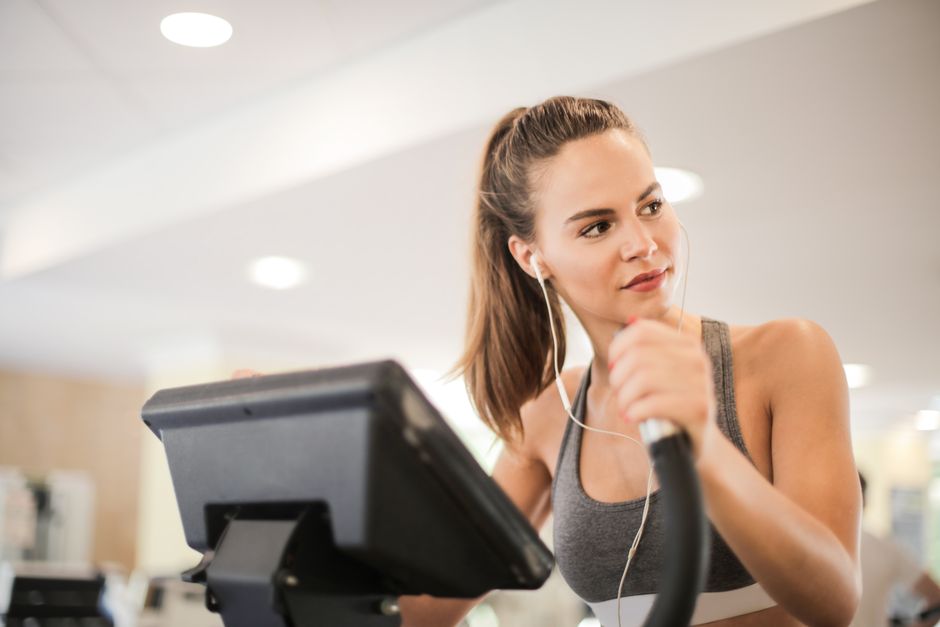
An elliptical machine works the muscles of your lower body and, if you use the moving handles, your upper body too. The primary movers are the quadriceps, glutes, hamstrings, and calves. Your hip flexors help drive the pedals forward, and your core stays engaged to keep you balanced. The arm handles add work for your back, chest, shoulders, biceps, and triceps.
That is the short answer. The longer answer depends on how you set the machine up and how you move on it. Resistance, incline, stride length, and whether you push, pull, or stand tall all shift which muscles do more of the work.
What Muscles Does A Elliptical Machine Work?
The elliptical is a low-impact, full-body machine, and the muscles it recruits span both the lower and upper body. On the lower half, the quadriceps (front of the thigh) straighten the knee as you push the pedal forward and down. The glutes (buttocks) and hamstrings (back of the thigh) extend the hip, especially when you lean into a higher incline or push harder. The calves point the foot and stabilize the ankle through every stroke.
The hip flexors get more work than most people expect. Because your feet stay attached to the pedals, the leg is pulled forward on every stride, and those muscles at the front of the hip are active the whole time. Your core muscles — the abdominals and the muscles along the spine — work to keep your torso upright and steady.
If you hold and move the arm handles, you add the upper body. Pushing the handles forward recruits the chest and the front of the shoulders. Pulling them back recruits the back muscles and the biceps. The triceps assist on the push. The harder you drive the handles, the more your upper body contributes.
How Do Resistance and Incline Change Which Muscles Work?
Turning up resistance and incline changes how hard the muscles work, not which muscles are involved. The same groups are active, but the load on them rises.
Higher resistance makes each push and pull harder, so the quadriceps, glutes, and calves have to produce more force. Adding incline tilts the pedals so you are pushing uphill, which shifts more of the demand toward the glutes and calves. Some people lean forward on a high incline to make it feel easier. That reduces the glute work and puts more strain on the lower back. Standing tall keeps the effort in the legs where it belongs.
Lower resistance with a faster stride emphasizes the hip flexors and the rhythm of the movement more than raw strength. This is one reason two people on the same machine can get very different workouts.
Does the Elliptical Work Your Upper Body as Much as Your Legs?
No. The legs do most of the work on an elliptical, even when you use the handles. The arm portion is real, but it is secondary.
The handles are attached to the pedals through the machine’s linkage. When you push a handle, you are partly moving the pedals, not just working your arms. That means the upper body gets a lighter load than the legs in most setups. To get more upper-body work, you have to actively push and pull the handles rather than letting them glide with your stride.
If upper-body strength is your main goal, an elliptical is a supporting tool, not the main event. Resistance training with weights or bodyweight exercises builds arm and back strength more directly. The elliptical’s upper-body benefit is best thought of as a bonus on top of a leg-focused cardio session.





Is the Elliptical Good for Building Muscle?
The elliptical builds some muscular endurance, but it is not a muscle-building machine in the way resistance training is. Muscle growth depends on progressive overload — gradually lifting heavier or doing more challenging work against resistance. The elliptical provides resistance, but it is fixed and light compared with weights.
That said, the elliptical can help maintain muscle and improve cardiovascular fitness. For people who cannot tolerate the pounding of running, it offers a way to keep the legs moving with less joint stress. Some studies suggest low-impact cardio like this can support heart health and endurance. It is a reasonable part of a fitness routine, especially alongside strength training.
One clarification worth making: the elliptical is often marketed as “weight-bearing” exercise, but it is only partly weight-bearing. Your feet never leave the pedals, so the impact on bones is far lower than walking or running. That is good for your knees and hips. It also means the elliptical does less for bone density than higher-impact activities.
How Does the Elliptical Compare to Other Cardio Machines?
Each machine loads the muscles a little differently. Here is a general comparison of the main muscle emphasis and joint impact.
| Machine | Main muscle emphasis | Joint impact |
|---|---|---|
| Elliptical | Quadriceps, glutes, hamstrings, calves; some upper body | Low |
| Treadmill (walking or running) | Glutes, hamstrings, calves, quadriceps | Moderate to high |
| Stationary bike | Quadriceps, hamstrings, calves, glutes | Low |
| Rowing machine | Legs, back, core, arms (full body) | Low |
| Stair climber | Glutes, quadriceps, calves | Moderate |
The treadmill involves more impact and more bone loading. The bike keeps you seated and emphasizes the quadriceps. The rower spreads work across the whole body more evenly than the elliptical. None of these is “best” in a general sense — the right choice depends on your joints, your goals, and what you will actually use.
How Should You Use the Elliptical to Target Different Muscles?
Small changes in how you stand and move shift the emphasis. None of these are strict rules, but they are practical adjustments.
- For more glute work: raise the incline, stand tall, and push through your heel as the pedal moves back.
- For more quadriceps work: use a moderate incline and keep your torso upright while pushing the pedals forward and down.
- For more calf work: keep your heels down and let the ankle move through its full range rather than staying flat-footed.
- For more upper-body work: actively push and pull the handles instead of letting them swing with your legs.
- To protect your lower back: avoid leaning heavily on the handles or hunching forward, especially at high incline.
Posture matters more than most people realize. Gripping the handles tightly and slouching puts load on the spine and reduces the work your legs and core do. Standing tall with a light grip keeps the effort where you want it.
Who Should Be Careful on an Elliptical?
The elliptical is generally gentle on the joints, but it is not risk-free for everyone. People with balance problems, hip or knee injuries, or lower-back issues should check with a clinician before starting. The fixed foot position can feel awkward for some hip and knee conditions.
Beginners should start with low resistance and a comfortable stride, then build up gradually. Holding the handles lightly rather than leaning on them helps you stay balanced and keeps your posture honest. If you feel joint pain — not muscle effort, but sharp or lasting pain — stop and get it checked.
The elliptical is a useful tool, not a complete program. It works the legs well, adds some upper-body and core involvement, and offers low-impact cardio. Pairing it with strength training and some higher-impact activity, if your body tolerates it, covers more of the bases that a single machine cannot.
Frequently Asked Questions
What muscles does an elliptical work the most?
The quadriceps, glutes, hamstrings, and calves do most of the work. The hip flexors and core stay active throughout, and the upper body contributes when you use the handles.
Does the elliptical tone your arms?
It works the arms, but lightly compared with the legs. For noticeable arm strength or size, resistance training is more effective than the elliptical alone.
Is 30 minutes on the elliptical a good workout?
Yes, 30 minutes at a moderate effort is a reasonable cardio session for most healthy adults. The exact benefit depends on your resistance, pace, and fitness level.
Does the elliptical work your abs?
Your core stays engaged to keep you balanced and upright, but it is not a primary target. Dedicated core exercises build abdominal strength more directly.
