
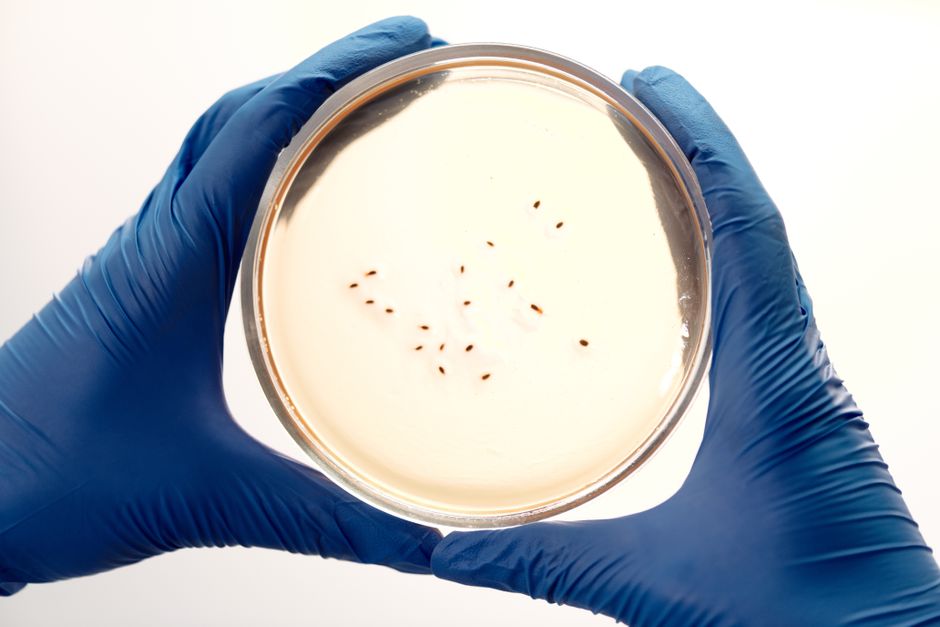
An assay in microbiology is a test that measures the presence, activity, or concentration of a specific microorganism or its products, like toxins or proteins. Think of it as a detective tool that gives you a yes/no answer or a precise number about a microbe. These tests are essential for diagnosing infections, testing new drugs, and ensuring food and water are safe to consume. The work is done by combining a sample with specific reagents or conditions that trigger a measurable reaction, such as a color change or growth pattern.
What Is An Assay In Microbiology And How Does It Work?
A microbiological assay is a laboratory method used to detect and quantify microorganisms or their biological activity. The core principle is simple: you expose a sample to a controlled environment and measure the response. This response could be growth of bacteria, a color change from a chemical reaction, or a signal from a fluorescent tag.
The process starts with a sample, which could be blood, urine, food, or water. This sample is then prepared and introduced to a test system. For example, in a growth-based assay, the sample is placed on a nutrient medium. If bacteria are present, they will grow, and you can count the colonies to determine the original number. In a molecular assay, you might break open the cells to release DNA and then use a technique called PCR to amplify a specific genetic sequence. The key is that each assay is designed to answer a very specific question about the microbe in question.
What Are the Main Types of Microbiological Assays?
There are several major categories, each with its own strengths. The most common types are growth-based, biochemical, immunological, and molecular assays. Growth-based assays are the oldest and most straightforward. You culture the microbe on agar plates or in liquid broth and observe growth patterns. This tells you if a microbe is present and how many there are.
Biochemical assays look at the chemical activities of microbes. For instance, if a bacterium produces a specific enzyme, you can add a substrate that changes color when that enzyme is present. Immunological assays, like ELISA, use antibodies to detect specific proteins from microbes. These are fast and very specific. Molecular assays, such as PCR, detect the genetic material (DNA or RNA) of a microbe. They are extremely sensitive and can identify tiny amounts of a pathogen. Research published in the Journal of Clinical Microbiology has shown that molecular assays can detect infections days earlier than culture-based methods for some diseases.
How Do You Choose the Right Assay for a Specific Microbe?
Choosing the right assay depends on what you need to know. The first question is: are you looking for a specific microbe or just checking if any are present? If you need to identify a specific pathogen, like Salmonella in food, a molecular assay like PCR is often the best choice. It is fast and highly specific to that bacterium’s DNA.
If you need to know how many viable bacteria are in a water sample, a growth-based assay like the plate count method is standard. For measuring the effectiveness of a new antibiotic, you would use a broth dilution assay to find the minimum inhibitory concentration. The table below summarizes common scenarios:
| Question You Have | Best Assay Type | Example Application |
|---|---|---|
| Is this specific microbe present? | Molecular (PCR) | Detecting SARS-CoV-2 in a nasal swab |
| How many live bacteria are in this sample? | Growth-based (Plate Count) | Testing drinking water quality |
| Does this microbe produce a specific toxin? | Immunological (ELISA) | Screening food for E. coli toxins |
| Which antibiotic will kill this infection? | Broth Dilution | Guiding treatment for a urinary tract infection |




What Are the Common Mistakes People Make with Microbiological Assays?
One of the biggest mistakes is contamination. If your sample or equipment is contaminated with microbes from the air or your hands, the results are useless. This is why sterile technique is drilled into every microbiology student. Another error is using the wrong assay for the question. Using a growth-based assay to detect a virus that cannot grow on standard media will give a false negative.
Another common issue is misinterpreting the results. A positive result in a molecular assay does not always mean you have a live infection. PCR can detect dead bacteria or viral fragments for weeks after an infection has cleared. The CDC has noted that this is a major reason why PCR tests for some infections are not used to decide when someone can stop isolation. You must understand what each assay actually measures, not just what the result says.
What Does the Research Say About Assay Accuracy and Limitations?
Research consistently shows that no single assay is perfect. Each has a trade-off between sensitivity (how well it finds true positives) and specificity (how well it avoids false positives). A study in Nature Reviews Microbiology found that molecular assays often have sensitivity above 95% but can have specificity issues if the primers bind to similar DNA from non-target organisms.
Growth-based assays are considered the gold standard for viability because they only detect live microbes. However, they are slow. Some bacteria take days or weeks to grow. Biochemical assays are fast but can be fooled by similar metabolic pathways in different bacteria. The key takeaway is that accurate microbiology often requires using multiple assays together. For example, a positive PCR might be confirmed with a culture to ensure the microbe is alive. This combined approach reduces the chance of error and is standard practice in clinical labs.
How Are Assays Used in Real-World Applications?
Assays are everywhere in modern life. In hospitals, they diagnose infections like strep throat or tuberculosis. A rapid antigen test for strep uses an immunological assay to detect the bacteria’s cell wall components in minutes. In the food industry, assays check for pathogens like Listeria in ready-to-eat meals. The USDA requires these tests for certain products before they can be sold.
In environmental science, assays monitor water quality. The standard test for coliform bacteria uses a growth-based assay to ensure drinking water is safe. In pharmaceutical development, assays are used to test new antibiotics. A broth microdilution assay measures exactly how much drug is needed to stop bacterial growth. This data is required by the FDA before a new drug can be approved. Without reliable assays, none of these safety checks would be possible.
What Are the Limitations You Should Know About?
Every assay has limits. The most important one is that a negative result does not always mean no microbe is present. It may mean the level was too low to detect, or the assay was not sensitive enough. This is called the limit of detection. Another limitation is that some assays cannot distinguish between live and dead microbes. This is a well-known problem with PCR tests for some bacteria.
Some people report that home test kits are easy to use, but strong evidence is limited on their accuracy compared to lab-based methods. The FDA has warned that some at-home tests have higher false negative rates than laboratory versions. Cost is also a factor. Advanced molecular assays require expensive equipment and trained technicians. This is why simpler growth-based assays are still the standard in many parts of the world. Understanding these limits helps you interpret results correctly and avoid false confidence in a single test result.
Frequently Asked Questions
What is the difference between a qualitative and quantitative assay?
A qualitative assay gives a yes or no answer about the presence of a microbe. A quantitative assay measures the exact amount or concentration of a microbe in a sample.
How long does it take to get results from a microbiological assay?
It depends on the type. Rapid immunological assays can give results in 15 minutes, while growth-based assays may take 24 to 48 hours or longer for slow-growing bacteria.
Can a single assay confirm a diagnosis of an infection?
Usually not. Most diagnoses rely on a combination of assay results, patient symptoms, and clinical history to reduce the chance of false positives or false negatives.
What does a positive result in a PCR assay actually mean?
It means the genetic material of a specific microbe was detected in the sample. It does not always mean the microbe is alive or causing an active infection.
