
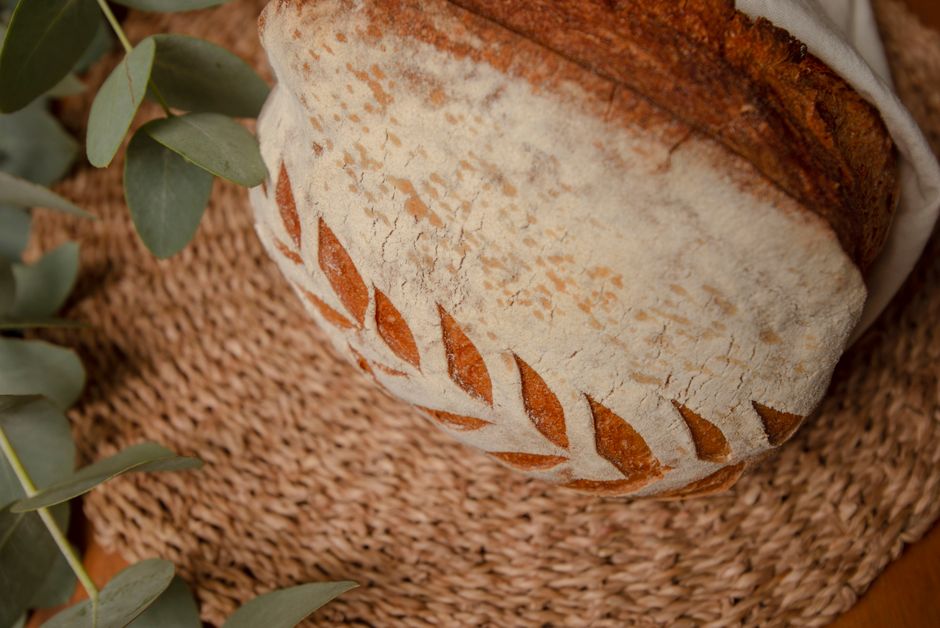
Sourdough bread rises through a natural fermentation process driven by a living community of wild yeast and lactic acid bacteria. Unlike commercial bread that relies on packaged yeast, sourdough uses a starter culture that captures these microorganisms from the environment. The wild yeast produces carbon dioxide gas that gets trapped in the dough’s gluten network, causing it to expand and rise. The bacteria contribute acidity and flavor while also affecting how the gluten behaves.
What Makes Sourdough Rise: Yeast, Bacteria, Gluten?
The short answer is that carbon dioxide gas is what makes sourdough rise. The wild yeast in a sourdough starter ferments sugars in the flour and releases carbon dioxide as a byproduct. This gas forms bubbles that are trapped by the gluten network in the dough. As the bubbles expand, the dough inflates like a balloon.
But yeast alone does not tell the whole story. The lactic acid bacteria in sourdough also play a role. These bacteria produce organic acids, mainly lactic acid and acetic acid. The acids change the pH of the dough, which affects how the gluten proteins behave. A more acidic environment makes the gluten stronger and more elastic in some ways, which helps the dough hold onto the gas bubbles longer.
This is a key difference between sourdough and commercial bread. Commercial bread uses a single strain of yeast that is fast and predictable. Sourdough uses a complex mix of wild yeast and bacteria that work together over many hours. The result is a slower rise, a more complex flavor, and a different crumb structure.
How Does Wild Yeast Differ from Commercial Yeast?
Commercial yeast, typically Saccharomyces cerevisiae, is a single cultivated strain selected for speed and reliability. It produces gas quickly and consistently, which is why commercial bread can go from mixing to baking in a few hours.
Wild yeast in sourdough is different. It is a mix of various yeast species, often including Saccharomyces cerevisiae but also others like Kazachstania and Candida species. These wild yeasts are slower and more sensitive to temperature and acidity. They produce gas steadily over a longer period rather than in one fast burst.
Wild yeast also behaves differently in response to the acids produced by bacteria. As the bacteria lower the pH of the dough, the yeast activity changes. Some yeast strains thrive in more acidic conditions while others slow down. This balance between yeast and bacteria is what gives sourdough its characteristic timing and flavor.
What Role Do Lactic Acid Bacteria Play?
Lactic acid bacteria are the other half of the sourdough fermentation team. The most common genera are Lactobacillus and Leuconostoc. These bacteria ferment sugars and produce lactic acid and acetic acid.
The acids serve several purposes. They create the tangy flavor that sourdough is known for. They also lower the pH of the dough, which inhibits the growth of spoilage organisms and molds. This is one reason sourdough bread has a longer shelf life compared to some commercial breads.
The acids also affect the gluten structure. Gluten proteins are sensitive to pH. In a more acidic environment, the proteins become less soluble and interact differently with water. This can make the dough less sticky and easier to handle. It also changes how the dough holds gas, often producing a more open crumb with larger irregular holes.
Some research suggests that the fermentation process may break down some of the gluten proteins. This does not mean sourdough is safe for people with celiac disease. The gluten is not completely eliminated. But it may explain why some people with mild gluten sensitivity report fewer symptoms after eating sourdough. The evidence here is limited and results vary from person to person.





How Does Gluten Hold the Gas?
Gluten is the protein network that gives wheat dough its structure. It forms when two proteins, glutenin and gliadin, mix with water and are kneaded. These proteins link together to form a stretchy, elastic network.
Think of gluten as a stretchy balloon. The carbon dioxide produced by yeast pushes against the gluten network. Because gluten is elastic, it stretches rather than tears. This stretching creates the air pockets that become the bread’s crumb.
The strength of the gluten network matters. If the gluten is too weak, the gas escapes and the bread comes out flat and dense. If the gluten is too strong and tight, the gas cannot expand and the bread is heavy. Sourdough bakers develop the gluten through kneading and folding to get the right balance.
Sourdough dough is often wetter and more extensible than commercial dough. The acids produced by bacteria contribute to this. They make the gluten more relaxed and extensible, which allows the dough to stretch further without tearing. This is why sourdough often produces a more open crumb with large holes compared to commercial bread.
Why Does Sourdough Rise So Slowly?
Sourdough rises slowly because the wild yeast and bacteria work at a different pace than commercial yeast. A typical sourdough bulk fermentation lasts 4 to 12 hours depending on temperature and starter strength. Commercial dough might rise in 1 to 2 hours.
Temperature is the biggest factor. Wild yeast and bacteria are most active at warm temperatures, typically between 75°F and 85°F. At cooler temperatures, fermentation slows down dramatically. Many bakers use this to their advantage by putting dough in the refrigerator for a slow cold fermentation that develops flavor over 12 to 24 hours.
The acidity of the dough also slows things down. As bacteria produce acids, the pH drops. This acidification slows the yeast over time. It is a self-limiting process. The longer the dough ferments, the more acidic it becomes, and the slower the fermentation gets. This is why sourdough has a natural stopping point before it overproofs.
The slow rise is not a disadvantage. It is what allows complex flavors to develop. During the long fermentation, enzymes in the flour break down starches into sugars that the yeast and bacteria feed on. This produces a wide range of flavor compounds that simply do not form in a quick commercial rise.
Is Sourdough Easier to Digest?
Many people report that sourdough is easier to digest than regular bread. There is some scientific basis for this, but it is not a simple story.
The long fermentation does break down some of the carbohydrates and proteins in flour. Fructans, which are chains of fructose molecules, are one type of carbohydrate that can cause digestive discomfort in some people. Research suggests that the fermentation process in sourdough reduces fructan levels in the bread. Some studies indicate that people with irritable bowel syndrome tolerate sourdough better than conventional bread for this reason.
The fermentation also produces lactic acid, which may affect how the body processes the bread. Some research suggests that the acid slows the rate at which glucose enters the bloodstream. This could mean sourdough has a lower glycemic response compared to some other breads. The evidence is not conclusive, and results vary depending on the specific starter and fermentation method.
It is important to be clear about what sourdough does not do. Sourdough is not gluten-free. People with celiac disease must avoid it. The gluten is modified during fermentation but not eliminated. No clinical evidence supports the claim that sourdough is safe for people with celiac disease.
How Do You Know When Sourdough Has Risen Enough?
Bakers look for several signs that sourdough is ready to bake. These are practical indicators that experienced bakers rely on.
The dough should look noticeably puffy and have increased in volume. It should feel light and airy when you pick it up. A common test is the poke test. Press your finger gently into the dough. If the indentation springs back slowly and leaves a small mark, the dough is ready. If it springs back immediately, it needs more time. If it does not spring back at all, the dough is overproofed.
The dough should also show signs of fermentation on its surface. Small bubbles on the top and sides are a good sign. When you look at the side of a glass container, you should see a web of small holes throughout the dough. This indicates that gas is being produced and trapped evenly.
The dough should smell slightly sour and yeasty. If it smells strongly of vinegar or alcohol, it has fermented too long. The yeast and bacteria have consumed most of the available sugars and are producing off-flavors.
Frequently Asked Questions
Can sourdough rise without gluten?
No. Gluten is what traps the carbon dioxide gas and allows the dough to expand. Gluten-free sourdough relies on other ingredients like xanthan gum or psyllium husk to create structure, but it rises differently and produces a denser crumb.
Why does my sourdough not rise?
The most common causes are a weak starter, dough that is too cold, or not enough fermentation time. A starter that is not active enough will not produce enough gas to lift the dough. Check that your starter doubles in volume within 4 to 6 hours after feeding before using it.
Is sourdough safe for people with celiac disease?
No. Sourdough contains gluten and is not safe for people with celiac disease. The fermentation process modifies some gluten proteins but does not eliminate them. No clinical evidence supports using sourdough as a substitute for gluten-free bread in celiac disease.
How long does sourdough take to rise?
Bulk fermentation typically takes 4 to 12 hours at room temperature. The exact time depends on the strength of your starter, the room temperature, and the hydration of the dough. A cold fermentation in the refrigerator can extend this to 12 to 24 hours for deeper flavor.
