
Green stool is usually the result of one of two things: food moving through your digestive tract too quickly, or something green that you ate or swallowed. Bile, the digestive fluid your liver makes, starts out yellow-green. Under normal conditions, bacteria in your colon break it down into a brown pigment called stercobilin, which is what gives stool its typical color. When that process gets rushed or interrupted, the green shows through. In most cases, green stool is not a sign of anything serious, but there are situations where it points to something worth checking.
What Makes Green Stool?
The color of your stool comes down to how long bile spends in your intestines and what else is mixed in with it. Bile is produced continuously by the liver, stored in the gallbladder, and released into the small intestine to help digest fats. It is yellow-green at the start.
As bile travels through the large intestine, normal gut bacteria convert its pigments into stercobilin, a brown compound. This conversion takes time. If food and bile move through your system faster than usual, there is less time for that bacterial breakdown to happen. The result is stool that still carries the green pigment.
Anything that speeds up transit time can do this. So can eating large amounts of green food, or consuming artificial green food coloring. Iron supplements can also turn stool green or nearly black, because unabsorbed iron reacts with compounds in the gut.
What Foods and Drinks Cause Green Stool?
Diet is the most common and least concerning cause. If you ate something green in large amounts within the past day or two, that is the first thing to consider.
Foods that frequently turn stool green include:
- Leafy greens like spinach, kale, and Swiss chard
- Broccoli, green beans, and other green vegetables eaten in large portions
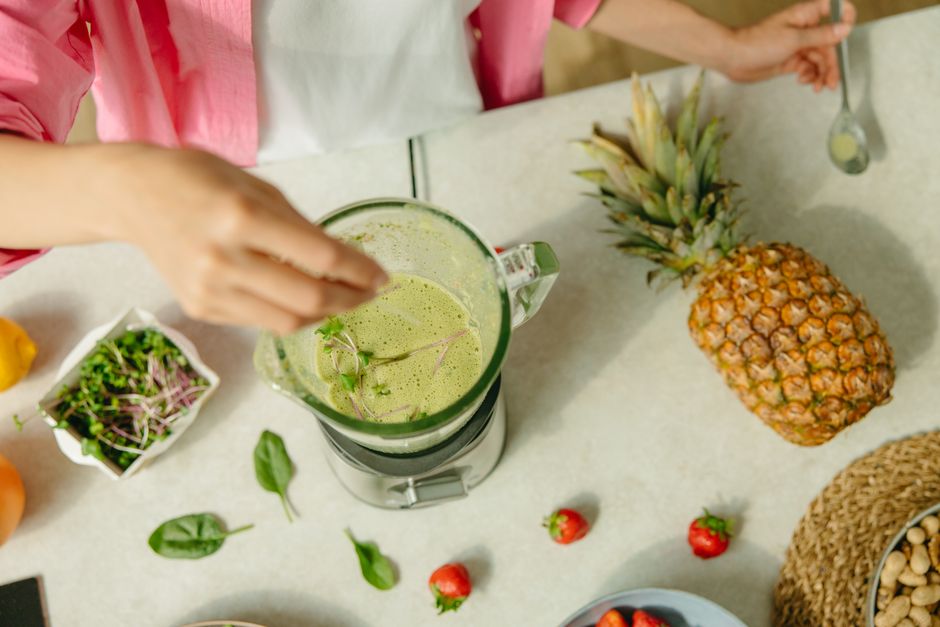
- Matcha, wheatgrass, and green smoothies
- Blueberries and black licorice (these can sometimes produce green stool through pigment interactions)
- Foods and drinks with green artificial coloring, including some frostings, candies, and sports drinks
The key detail is quantity. A normal serving of spinach is unlikely to change stool color. A large daily green smoothie or a heavy serving of kale several days in a row is more likely to show up.
Iron supplements deserve their own mention. Iron is not fully absorbed in the small intestine. What remains travels to the colon, where it can oxidize and produce a dark green or black color. This is a known and generally harmless effect. If you take iron and notice dark stool, it is worth mentioning to your doctor so they can distinguish it from other causes of dark stool.
How Does Diarrhea Cause Green Stool?
Diarrhea is one of the most common reasons stool turns green. When the intestines are irritated, they push contents through faster than normal. Bile does not get enough time to be converted to brown by gut bacteria.
This is why green stool often accompanies:
- Viral gastroenteritis (stomach bugs)
- Food poisoning
- Bacterial infections
- Parasitic infections
- Antibiotic-associated diarrhea
Antibiotics can cause green stool in two ways. They can speed up transit time, and they can also disrupt the normal gut bacteria that convert bile pigments. When the bacterial balance shifts, the conversion process changes.
If diarrhea lasts more than a few days, or comes with fever, severe pain, or signs of dehydration, that is a reason to see a doctor. Green color alone is not the concern. The underlying cause of the diarrhea is what matters.




When Is Green Stool a Sign of Something More Serious?
Green stool by itself is rarely a medical emergency. But it can accompany conditions that need attention. The color is a clue, not a diagnosis.
Conditions that may involve green stool include:
- Giardiasis — a parasitic infection that can cause greasy, foul-smelling, green stool along with diarrhea and cramping
- Crohn’s disease or ulcerative colitis — inflammatory bowel conditions that can speed transit and alter stool color
- Celiac disease — damage to the small intestine can affect how nutrients and bile are processed
- Malabsorption — when the gut does not absorb fats properly, stool can become greasy, pale, and sometimes green
- Bile duct obstruction — this usually causes pale or clay-colored stool, not green, but partial blockages can produce variable colors
What matters more than color is what comes with it. Seek medical care if green stool appears alongside:
- Blood in the stool or black tarry stool
- Severe or persistent abdominal pain
- Fever
- Unexplained weight loss
- Diarrhea lasting more than a few days
- Signs of dehydration — dizziness, dry mouth, little urination
One clarification worth making: green stool is not the same as black tarry stool. Black tarry stool can indicate bleeding in the upper digestive tract and needs prompt medical evaluation. Green stool from food or rapid transit is a different situation entirely.
Green Stool in Babies and Children
Green stool is common in infants and usually not a concern. A newborn’s first stools, called meconium, are dark green-black. As breast milk or formula becomes the main source of nutrition, stool color shifts.
Breastfed babies often have mustard-yellow or greenish stool. Formula-fed babies may have green stool if the formula contains iron. Both are considered normal variations.
In older children, the same causes that affect adults apply — green foods, food coloring, diarrhea, and iron supplements. If a child has green stool with diarrhea, watch for dehydration. If green stool comes with blood, mucus, or persistent pain, contact a pediatrician.
No clinical guidelines exist for using stool color alone to diagnose any condition in infants. Color is one piece of information among many.
How Long Does Green Stool Last?
If the cause is food or food coloring, stool typically returns to its normal color within a day or two after you stop eating the culprit. Transit time varies from person to person, but most adults pass food in roughly one to three days.
If the cause is diarrhea or a gut infection, color usually normalizes as the infection resolves and transit time returns to normal. That may take several days to a week or more, depending on the cause.
If green stool persists for more than a week without an obvious dietary reason, or if it keeps coming back, that is worth a conversation with your doctor. Persistent changes in stool color can be a sign of an underlying issue that needs evaluation.
What Should You Do About Green Stool?
Most people do not need to do anything. If you can connect the green stool to something you ate, a supplement you take, or a recent bout of diarrhea, that likely explains it.
A reasonable approach:
- Think back over the past two days. Did you eat a lot of green vegetables, drink matcha or green smoothies, or consume green-colored foods?
- Are you taking iron supplements? If so, that is a likely cause.
- Have you had diarrhea recently? Rapid transit is a common reason.
- Are there other symptoms — pain, fever, blood, weight loss? If yes, see a doctor.
There is no treatment for green stool itself. The color is a symptom, not a condition. If an underlying cause needs treatment, that is what gets addressed. If no cause is found and you feel fine, the color will likely return to normal on its own.
Do not use stool color alone to self-diagnose. It is one signal among many, and it is easily influenced by diet and transit time.
Frequently Asked Questions
What makes green stool?
Green stool happens when bile moves through your intestines too quickly to be broken down into its normal brown color, or when you eat something green or iron-rich. Diarrhea, green vegetables, food coloring, and iron supplements are the most common causes.
Is green stool a sign of cancer?
Green stool by itself is not a known sign of cancer. However, persistent changes in stool color or habits, especially with blood, weight loss, or pain, should be evaluated by a doctor.
Can green stool be caused by stress?
Stress itself does not directly turn stool green, but it can speed up digestion and trigger diarrhea, which can lead to green stool. If stress is causing ongoing digestive changes, it is worth discussing with a doctor.
How long does green stool last?
Green stool from food or food coloring usually clears within a day or two after you stop eating the cause. If it lasts more than a week without a clear reason, see a doctor.
