
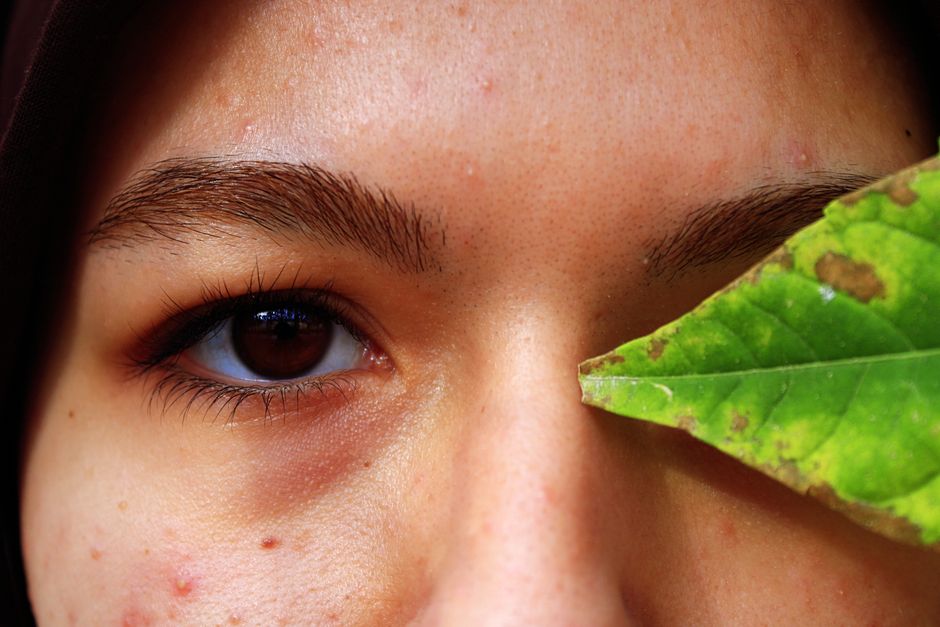
Your eyebrows are not just hair and skin. They are a habitat. Millions of tiny organisms live in and around your brow hairs, including microscopic mites, bacteria, and fungi. Most of them are harmless. In fact, many of them are part of a normal, healthy skin ecosystem that every person carries.
What Are the Tiny Mites Living in My Eyebrows?
Two species of mites live on human skin: Demodex folliculorum and Demodex brevis. These are microscopic, eight-legged creatures that belong to the same family as spiders and ticks. They are so small you cannot see them without a microscope.
Demodex folliculorum lives inside hair follicles, including the follicles of your eyebrows and eyelashes. Demodex brevis lives deeper in the sebaceous glands attached to the hair follicles. These glands produce the oil that keeps your skin moisturized.
These mites are not parasites in the harmful sense. They eat dead skin cells and the oil your glands produce. They come out at night to mate and then crawl back into the follicles to lay eggs. This is normal biology. Most adults on Earth carry them.
How Common Are Eyebrow Mites in Humans?
Research consistently shows that Demodex mites are nearly universal in adults. Studies have found that the rate of colonization increases with age. Many children have low numbers. By middle age, a large majority of people carry them. By older age, most people do.
This does not mean everyone has symptoms. Carrying a small number of mites is normal. Problems arise only when the mite population grows far beyond the typical level. When that happens, the mites can contribute to skin conditions that require medical attention.
What Bacteria and Fungi Also Live in Eyebrows?
Eyebrow skin hosts a diverse community of bacteria and fungi just like the rest of your face. The most common bacterial groups include Cutibacterium acnes (formerly called Propionibacterium acnes), Staphylococcus epidermidis, and various Corynebacterium species.
Cutibacterium acnes lives in the oil glands and feeds on sebum. Staphylococcus epidermidis is a common skin colonizer that helps prevent harmful bacteria from taking hold. Fungi such as Malassezia also live on the skin and feed on oils. These organisms form a balanced ecosystem. When that balance is disrupted, problems can develop.





Can Eyebrow Mites Cause Symptoms or Health Problems?
In most people, Demodex mites cause no symptoms at all. You will not feel them moving, and they do not bite or feed on blood. The immune system keeps their numbers in check.
Problems can occur when mite numbers increase significantly. Some research links high Demodex populations to blepharitis, which is inflammation of the eyelid margins. Symptoms include redness, itching, burning, crusting along the lash line, and a gritty feeling in the eyes. This condition is common and treatable.
Demodex mites have also been studied in relation to rosacea, a skin condition that causes facial redness and bumps. Some studies suggest that people with rosacea tend to have higher mite counts on their facial skin. However, the evidence is mixed. It is not clear whether the mites cause rosacea or simply thrive on skin that is already inflamed. No large clinical trial has confirmed a direct cause-and-effect relationship.
In people with weakened immune systems, Demodex mite populations can grow out of control. This can lead to a condition called demodicosis, which causes scaly, itchy patches on the skin. This is not common in healthy adults.
How Do You Know If You Have an Overgrowth?
You cannot diagnose a mite overgrowth by looking in a mirror. The symptoms overlap with many other skin conditions, including eczema, allergic reactions, and simple dry skin.
Signs that may prompt a doctor visit include:
- Persistent itching or burning around the eyebrows or eyelids
- Redness that does not go away with regular skincare
- Crusting or flaking at the base of the brow hairs or eyelashes
- Hair loss in the eyebrow area that is not explained by other causes
- A gritty sensation in the eyes that persists
A dermatologist can diagnose a mite overgrowth. The standard method is a skin scraping or a sample of the eyelashes examined under a microscope. The doctor counts the mites and compares the number to established reference ranges. This is a simple, quick procedure done in the office.
What Treatments Work for Eyebrow Mite Overgrowth?
If a doctor confirms that mite overgrowth is causing your symptoms, several treatments are available. These are prescription treatments, not over-the-counter cosmetic products.
Topical creams containing ivermectin or metronidazole are commonly used. Ivermectin kills the mites directly. Metronidazole reduces inflammation and has some antimicrobial effects. Both are approved for treating rosacea and are used off-label for Demodex overgrowth.
Tea tree oil is frequently mentioned as a natural remedy. Some clinical evidence supports its use for eyelid mites. However, the concentration matters. High concentrations of tea tree oil can irritate the eyes and skin. Some clinicians recommend diluted tea tree oil wipes for eyelid hygiene, but no established clinical guideline currently specifies a universal safe concentration for home use. If you are considering this, ask a doctor or pharmacist for guidance.
Simple hygiene measures can help keep mite populations under control:
- Wash your face twice daily with a gentle cleanser
- Avoid heavy oil-based products on the brow area
- Wash pillowcases and washcloths regularly in hot water
- Do not share makeup, brushes, or towels with others
These measures are reasonable and low-risk. However, they are not proven to eliminate mites entirely. They help manage the environment but do not replace medical treatment when symptoms are present.
Can You Prevent Eyebrow Mites Completely?
No. You cannot prevent Demodex mites from living on your skin. They are transmitted through close contact with other people, including shared bedding, towels, or physical contact. Nearly every adult already carries them. Trying to eliminate them completely is neither possible nor necessary.
What you can do is keep the skin environment balanced. Healthy skin with a normal oil level and an intact skin barrier is less likely to support an overgrowth. Over-washing can be counterproductive because it strips oils and disrupts the skin barrier. Gentle, consistent cleansing is the better approach.
If you have persistent eyebrow or eyelid symptoms, see a dermatologist. Self-diagnosis is unreliable because many conditions look alike. A proper diagnosis ensures you treat the actual problem rather than guessing.
Are Eyebrow Mites a Sign of Poor Hygiene?
No. This is a common myth. Demodex mites are not related to how often you wash your face. They live in the deep layers of the hair follicle and the oil glands, where soap and water do not reach. Even people with meticulous hygiene carry them.
The idea that mites indicate dirtiness is false. These organisms are a normal part of human skin biology. Blaming hygiene for a mite overgrowth is inaccurate and can lead people to scrub their skin excessively, which causes irritation and makes the problem worse.
Frequently Asked Questions
Can you feel eyebrow mites moving?
No. Demodex mites are microscopic and move slowly at night. You cannot feel their movement.
Do eyebrow mites cause hair loss?
High mite populations can contribute to hair loss in the brow area by inflaming the follicles, but this is not common. Most people with mites have no hair loss at all.
Are eyebrow mites contagious?
Yes, they can transfer through close contact, shared bedding, or shared towels. However, almost all adults already carry them, so transmission is not a practical concern.
Does washing my face get rid of eyebrow mites?
Washing removes surface oils and dead skin but does not reach mites inside the follicles. Regular cleansing helps manage the skin environment but does not eliminate mites.
