
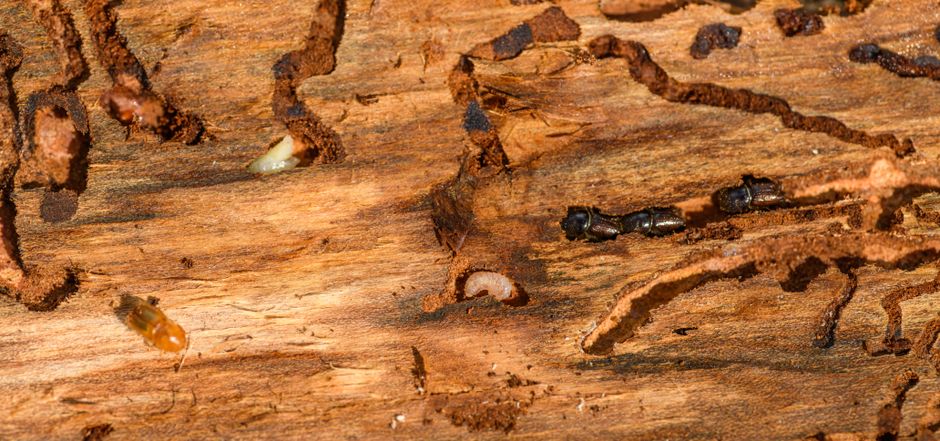
Termites eat wood that contains cellulose, and they will feed on nearly any wood species when conditions allow. Softwoods like pine and spruce are attacked most often because they are common in construction and tend to be softer. But termites also eat hardwoods such as oak, maple, and ash. The wood’s species matters far less than its moisture level, age, and whether it is already damaged or decaying.
What Kind Of Wood Do Termites Eat?
Termites are not picky about tree species. Their digestive systems are built to break down cellulose, the main structural carbohydrate in wood and plant cell walls. Any wood that contains cellulose is a potential food source.
In practice, termites are found in softwoods and hardwoods alike. Pine, fir, spruce, and other common framing lumber are frequent targets because they are widely used in homes and are relatively soft. Oak, maple, and other hardwoods are also eaten, though some hardwood species are denser and slower for termites to consume.
What actually drives termite damage is not the tree’s name. It is the condition of the wood. Damp, soft, or already-decaying wood is far easier for termites to chew and digest than dry, solid, sound wood. This is why a leaky pipe or poor drainage often matters more than which wood was used to build a house.
Do Termites Prefer Softwood Or Hardwood?
Termites generally find softwoods easier to attack. Softwoods come from conifer trees like pine, spruce, fir, and hemlock. They are less dense than most hardwoods, which makes them easier to chew through.
Hardwoods come from broadleaf trees such as oak, maple, and ash. Many hardwoods are denser, which can slow termites down. But “slower” does not mean “safe.” Termites will still infest hardwood framing, flooring, and furniture when moisture and access allow it.
Density is the key variable, not the softwood or hardwood label. Some hardwoods are actually fairly soft, and some softwoods are relatively dense. The practical takeaway is that no common commercial wood is termite-proof on its own.
Which Wood Species Are Most Resistant To Termites?
Some wood species resist termites better than others, but resistance is relative, not absolute. No untreated wood is completely immune.
Naturally resistant species tend to contain oils, resins, or other compounds that termites avoid or that are toxic to them. Examples often cited include teak, cedar, redwood, and certain tropical hardwoods. Cypress is sometimes included as well.
Resistance varies by species, by the age of the tree, and by the part of the wood used. The heartwood — the dense inner portion of the tree — is usually more resistant than the sapwood, which is the softer outer layer. Termites often attack sapwood first.
Even resistant species can be damaged over time, especially when the wood stays wet or when termites have few other options. Resistance slows infestation. It does not stop it permanently.





Does Treated Wood Stop Termites?
Pressure-treated wood is more resistant to termites than untreated wood, but it is not a guarantee. The treatment forces preservative chemicals deep into the wood, and those chemicals make the wood less appealing or harmful to termites.
How well it works depends on the treatment type, the retention level, and the wood species. Wood rated for ground contact has more preservative than wood rated only for above-ground use. Over time, chemicals can leach out, especially in wet soil, and the protection weakens.
Termites have also been known to tunnel through or around treated wood to reach untreated material. In some cases they will damage treated wood directly. Treated wood is one layer of defense, not a complete barrier.
What Makes Wood Attractive To Termites?
Moisture is the single biggest factor. Termites need a damp environment to survive, and wood that has absorbed water is far more vulnerable. This is why termite problems often start near leaks, gutters, downspouts, and foundations with poor drainage.
Other conditions that raise risk include:
- Wood that touches soil directly, giving termites a hidden path inside
- Firewood, lumber, or mulch stacked against a foundation
- Cracks in a foundation or slab that let termites enter
- Poor ventilation in crawl spaces that traps humidity
- Old or already-decaying wood that is soft and easy to chew
Wood that is dry, elevated off the ground, and well-ventilated is much less likely to be attacked. The condition of the wood usually matters more than the species.
Do Termites Eat Anything Besides Wood?
Yes. Termites eat other cellulose-rich materials beyond solid lumber. That includes paper, cardboard, and the paper facing on drywall. It also includes cotton fabric and other plant-based fibers.
This is why termites are sometimes found in stored boxes, old books, and paper records. They are not eating the wood specifically — they are eating cellulose wherever they find it. Some termite species also cultivate fungi inside their colonies and feed on the fungus, and others eat grass, leaves, or decaying plant matter.
For a homeowner, the practical point is that termites are not limited to structural lumber. Any cellulose material in a damp, accessible spot can become a food source.
How Do You Tell If Termites Are Eating Your Wood?
Termite damage often looks like nothing at first. Termites eat wood from the inside out, so the surface can look normal while the interior is hollowed out.
Signs to watch for include:
- Wood that sounds hollow when tapped
- Mud tubes on foundations, walls, or framing
- Small piles of pellets that look like sawdust or coffee grounds
- Blistered or bubbling paint that hides tunnels underneath
- Discarded wings near windows or doors
- Doors or windows that suddenly stick because framing has warped
These signs can also come from other causes, including water damage, wood-boring beetles, or carpenter ants. Carpenter ants, for example, tunnel through wood but do not eat it. A pest professional can confirm what is actually present.
How Can You Protect Wood From Termites?
Protecting wood is mostly about controlling moisture and blocking access. These steps reduce the chance of infestation, though no method eliminates all risk.
- Keep wood from touching soil. Leave a visible gap between siding and soil.
- Fix leaks and improve drainage around the foundation.
- Store firewood away from the house and off the ground.
- Keep mulch and plants from piling up against the foundation.
- Ventilate crawl spaces to reduce trapped moisture.
- Use treated wood where it contacts the ground or is exposed to moisture.
Regular inspections matter too. Termites are often found before visible damage appears, which is why many pest professionals recommend periodic checks, especially in regions where termites are common. If you live in a high-risk area, a professional inspection is a reasonable step.
Does The Wood Species Really Matter?
Species matters less than most people think. Termites will eat softwoods and hardwoods, framing lumber and furniture, paper and cardboard. The species affects how fast damage happens, not whether it happens.
Some wood resists termites better than others, and treated wood adds another layer of protection. But the strongest defenses are dry wood, good drainage, and keeping wood off the soil. A termite colony does not choose a house because it is built from pine. It chooses a house because the wood is wet, accessible, and easy to reach.
Frequently Asked Questions
What kind of wood do termites eat most?
Termites most often attack softwoods like pine and spruce because these are common in construction and relatively easy to chew. They also eat hardwoods such as oak and maple, especially when the wood is damp or decaying.
Do termites eat hardwood or softwood?
They eat both. Softwoods are usually easier for termites to damage because they are less dense, but hardwoods are still vulnerable, particularly when moisture is present.
Is pressure-treated wood safe from termites?
Pressure-treated wood is more resistant than untreated wood, but it is not termite-proof. Protection depends on the treatment type and retention level, and it can weaken over time as chemicals leach out.
Do termites eat dry wood?
Some termite species, such as drywood termites, can infest dry wood with very little moisture. Most other termites need damp conditions, which is why moisture control is the most important prevention step.
