
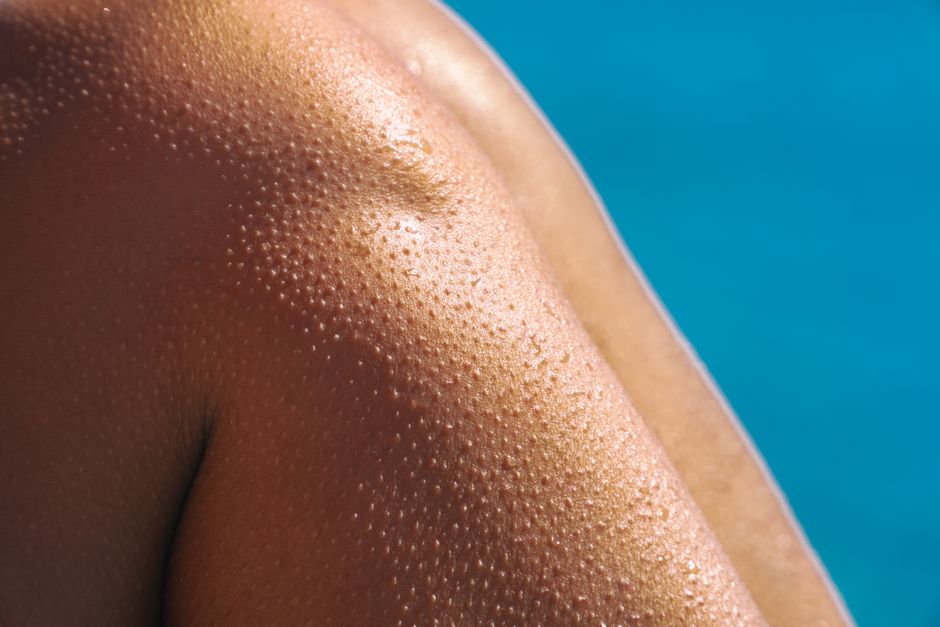
Your body is a living furnace. Every cell that works, every muscle that moves, and every organ that functions produces heat as a byproduct of energy use. At rest, a typical adult produces about 100 watts of heat — roughly the same amount of energy as a bright incandescent light bulb. During intense exercise, that number can spike to over 1,000 watts for short periods. This constant internal heat production is why your core temperature stays near 98.6°F (37°C) regardless of the weather outside.
What Determines How Much Heat Your Body Makes?
Your metabolic rate sets the baseline. Metabolism is the chemical process your cells use to convert food into energy. Every chemical reaction in that process releases some heat. The faster your metabolism runs, the more heat you generate.
Several factors shift your personal heat output:
- Body size: Larger bodies have more cells working at any given moment. A bigger person produces more total heat than a smaller person.
- Muscle mass: Muscle tissue burns more energy than fat tissue even when you are not moving. People with more muscle produce more heat at rest.
- Age: Metabolic rate tends to decline with age. Children and teenagers often run warmer than older adults.
- Sex: Men generally produce more heat than women due to larger body size and greater muscle mass on average.
- Hormones: Thyroid hormone directly controls metabolic speed. Higher thyroid activity means more heat production.
These factors explain why two people in the same room can feel completely different temperatures. They are not imagining it. Their furnaces are running at different rates.
How Much Heat Does A Human Body Produce During Exercise?
Exercise dramatically increases heat output because working muscles demand far more energy. During vigorous activity, your metabolic rate can increase 10 to 20 times above resting levels. Heat production during intense exercise can reach 1,000 to 1,500 watts.
To put that in perspective, a typical home space heater runs at about 1,500 watts. A hard-working athlete generates comparable heat from within.
Your body cannot store this heat safely for long. If it did, core temperature would rise past dangerous levels within minutes. This is why sweating is essential. Evaporating sweat from your skin is your body’s most powerful cooling mechanism. Without it, heavy exercise would be impossible in warm environments.
This is also why you feel hot and flushed after a workout. Your blood vessels widen to carry heat from your core to your skin surface, where it can escape into the air. The red face you see after exercise is your body actively dumping excess heat.
How Does The Body Balance Heat Production And Heat Loss?
The brain acts as your body’s thermostat. A region called the hypothalamus constantly monitors your internal temperature and adjusts heat production and loss to keep you near 98.6°F (37°C).
When you get too warm, your body responds in three ways:
- Blood vessels dilate: More blood flows near the skin surface, releasing heat to the environment.
- Sweating increases: Sweat evaporates off the skin and pulls heat away with it.
- Metabolic rate drops slightly: The body reduces internal heat generation.
When you get cold, the opposite happens. Blood vessels constrict to keep warm blood near your vital organs. Your muscles contract rapidly and involuntarily — that is shivering. Shivering can increase heat production by 5 to 10 times resting levels, which is why you can warm up quickly even in cold weather.
This balance system is remarkably precise. Healthy adults maintain core temperature within a narrow range of roughly 97°F to 99°F (36.1°C to 37.2°C) despite enormous swings in external conditions and internal heat production.





Why Does Heat Production Matter For Weight And Health?
Heat production is a direct measure of how many calories your body burns. Every watt of heat your body produces represents energy that came from food or stored fat. This connection is why metabolism and body temperature are linked to body weight.
A person who produces more heat at rest burns more calories doing nothing. This resting heat production is called your basal metabolic rate. It accounts for roughly 60 to 75 percent of the total calories you burn each day.
This is also why some people feel warm after eating a large meal. Digesting food requires energy, and that energy produces heat. The medical term is diet-induced thermogenesis. It is a small effect for most people, but it is real.
Some weight loss products claim they can “boost metabolism” by increasing heat production. Be cautious with these claims. While certain compounds like caffeine do slightly increase metabolic rate, the effect is small and temporary. No supplement has been shown to safely increase heat production enough to cause meaningful weight loss.
Can You Measure Your Own Heat Production?
Directly measuring your heat output requires specialized equipment called a calorimeter. These devices measure how much heat your body releases into a sealed chamber. They are accurate but impractical for everyday use.
Indirect methods estimate heat production by measuring oxygen consumption. Your body uses oxygen to burn fuel, and the amount of oxygen you consume closely tracks your energy expenditure. This is how many fitness and medical devices estimate calorie burn.
Consumer wearable devices use heart rate and movement data to estimate calorie expenditure. These estimates vary in accuracy. Some research suggests wrist-worn fitness trackers can be off by 20 to 90 percent depending on the activity. They are useful for tracking trends over time but not for precise measurements of heat production.
Core body temperature is easier to measure than total heat output. A standard thermometer reading of 98.6°F (37°C) tells you your body is maintaining its set point. It does not tell you how much total heat you are producing.
What Happens When Heat Production Goes Wrong?
Fever raises your body’s thermostat. When you have an infection, your immune system releases chemicals that tell the hypothalamus to raise the target temperature. Your body then increases heat production and reduces heat loss to reach the new higher set point. This is why you may shiver when a fever is rising — your body is actively generating more heat.
Heat stroke occurs when heat production or environmental heat overwhelms your cooling systems. Your core temperature rises above 104°F (40°C), and sweating often stops. This is a medical emergency that requires immediate treatment. It is not the same as heat exhaustion, which is less severe but still requires attention.
On the opposite end, hypothermia happens when heat loss exceeds heat production. Core temperature drops below 95°F (35°C). Shivering stops at very low temperatures because the muscles can no longer generate enough energy. This is also a medical emergency.
Does Clothing Or Environment Change Heat Production?
Clothing does not change how much heat your body produces. It changes how quickly that heat escapes. Warm clothing traps heat close to your skin, slowing heat loss. This allows your body to maintain its core temperature with less internal effort.
Your environment works the same way. In a hot room, heat loss slows because the temperature difference between your body and the air is smaller. Your body must work harder to shed heat. In a cold room, heat escapes quickly, and your body may increase heat production to compensate.
Humidity matters too. Sweat only cools you when it evaporates. High humidity slows evaporation, which is why hot, humid days feel more oppressive than hot, dry days. Your cooling system becomes less effective, and your body retains more heat.
Frequently Asked Questions
How many watts of heat does a resting human produce?
A resting adult produces roughly 100 watts of heat, similar to a bright incandescent light bulb. This varies with body size, muscle mass, and metabolic rate.
Can a human body produce more heat than a space heater?
During intense exercise, heat production can reach 1,000 to 1,500 watts, comparable to a household space heater. This level is temporary and only sustainable for short periods.
Why does my body produce more heat when I am sick?
Fever resets your brain’s thermostat to a higher temperature. Your body increases heat production and reduces heat loss to reach this new target, which helps fight infection.
Does shivering really warm you up?
Yes. Shivering can increase heat production by 5 to 10 times resting levels. The rapid muscle contractions generate significant internal heat.
