
You have probably heard the same advice for years: bleach kills mold. Vinegar kills mold. Borax kills mold. And they do. But each has real downsides. Bleach fumes are harsh. Vinegar can damage some surfaces. Borax is hard to find in some stores. The good news is you have better options. Hydrogen peroxide, tea tree oil, and commercial mold removers like Concrobium all kill mold effectively without the worst side effects. The right choice depends on the surface and how bad the mold is.
Does Hydrogen Peroxide Kill Mold Better Than Bleach?
Hydrogen peroxide is one of the most effective mold killers you can buy. It is a strong oxidizer. That means it breaks down the cell walls of mold and kills it at the root. Bleach only kills surface mold. It leaves the porous material underneath untouched. That is why mold often comes back after bleach.
Research shows hydrogen peroxide kills a wide range of mold species. The CDC includes it as an acceptable disinfectant for mold cleanup. You can buy 3% hydrogen peroxide at any drugstore. Spray it on the mold, let it sit for 10 minutes, then scrub. No harsh fumes. No toxic residue. It breaks down into water and oxygen.
There is one catch. Hydrogen peroxide can bleach dark fabrics and some colored surfaces. Test it on a hidden spot first. But for tile, grout, glass, and most hard surfaces it works better than bleach and is safer to breathe.
Does Tea Tree Oil Actually Kill Mold?
Tea tree oil is one of the most talked-about natural mold killers. And the evidence backs it up. Studies published in the Journal of Applied Microbiology have found that tea tree oil kills several common mold species including Aspergillus and Penicillium. It works because the oil penetrates mold cell walls and disrupts their structure.
But here is the honest part. Tea tree oil is expensive. A small bottle costs eight to fifteen dollars. You only need one teaspoon per cup of water for a spray solution. That makes it affordable per use. But if you are treating a large basement wall you will go through a lot of it.
The bigger issue is smell. Tea tree oil has a strong medicinal odor. Some people find it unpleasant. It fades after a few hours but it is not a neutral scent like bleach. If you are sensitive to smells this may not be your best choice.
For small spots of mold on bathroom tile or window sills tea tree oil works well. For large areas you are better off with hydrogen peroxide or a commercial product.
What About Baking Soda and Lemon Juice?
Baking soda gets a lot of attention as a mold killer. The truth is more modest. Baking soda is mildly alkaline. It creates an environment where mold struggles to grow. But it does not actively kill mold the way peroxide or tea tree oil does. It is better at absorbing moisture and preventing future growth than killing existing mold.
Lemon juice has citric acid. Acid can kill some mold. But the concentration in lemon juice is too low to be reliable. You would need to leave it on the mold for hours. Even then studies show it is less effective than vinegar or peroxide. It smells nice but that is not the same as working.
A paste of baking soda and water can help scrub mold off surfaces. The abrasiveness helps physically remove it. But do not rely on baking soda alone to kill mold. Use it as a scrubbing aid after applying a real mold killer.




What Kills Mold Besides Bleach Vinegar Borax More Effectively on Porous Surfaces?
This is where most people get mold cleanup wrong. Porous surfaces like drywall, wood, and ceiling tiles absorb moisture deep inside. Bleach sits on top and kills surface mold. The mold roots stay alive inside the material. Within weeks you see it again.
For porous surfaces you need something that penetrates. Hydrogen peroxide works because it is liquid and seeps in. But for deeply embedded mold in drywall or wood you may need to replace the material entirely. The EPA states that porous materials with heavy mold growth should be removed and replaced. No cleaner fixes that.
For lighter mold on wood surfaces a product called Concrobium works well. It is a sodium carbonate solution that kills mold and leaves a residue that prevents regrowth. It is widely used by professional remediators. You can find it at hardware stores. It is non-toxic and has no smell.
For concrete and stone hydrogen peroxide or a diluted bleach solution is fine. These surfaces do not absorb much. But for drywall, wood, and ceiling tiles you have to be honest with yourself. If the mold covers more than a small patch you need to cut it out.
Can Commercial Mold Removers Beat Homemade Solutions?
Commercial mold removers are not always better. Some are just bleach with fancy labels. Others contain ingredients you cannot easily mix at home. The table below compares common options so you can see the tradeoffs clearly.
| Product | Active Ingredient | Best For | Downside |
|---|---|---|---|
| Hydrogen peroxide 3% | Hydrogen peroxide | Hard surfaces, small patches | Mild bleach effect on fabrics |
| Concrobium | Sodium carbonate | Porous surfaces, prevention | Costs more than homemade |
| Tea tree oil spray | Tea tree oil | Small spots, sensitive areas | Strong smell, expensive |
| White vinegar | Acetic acid | Non-porous surfaces | Can damage stone and grout |
| Bleach | Sodium hypochlorite | Non-porous only | Harsh fumes, does not penetrate |
For most home situations hydrogen peroxide or Concrobium are the best choices. They kill mold effectively. They are safer to breathe than bleach. And they do not damage most surfaces. Commercial sprays that list hydrogen peroxide as the active ingredient work the same as the drugstore bottle but cost more. Save your money.
What Are the Side Effects of Mold Killers You Should Know?
Every mold killer has side effects. Bleach fumes can irritate your lungs and eyes. The American Lung Association warns against mixing bleach with ammonia or other cleaners. That creates toxic chlorine gas. Even vinegar and bleach together produce chlorine gas. Never mix them.
Hydrogen peroxide is safer but can irritate skin at full strength. Wear gloves. It can also bleach clothes and carpets. Tea tree oil can cause skin irritation in some people. Test it on a small area first. Borax is a mild irritant if you breathe the dust. Wear a mask when mixing it with water.
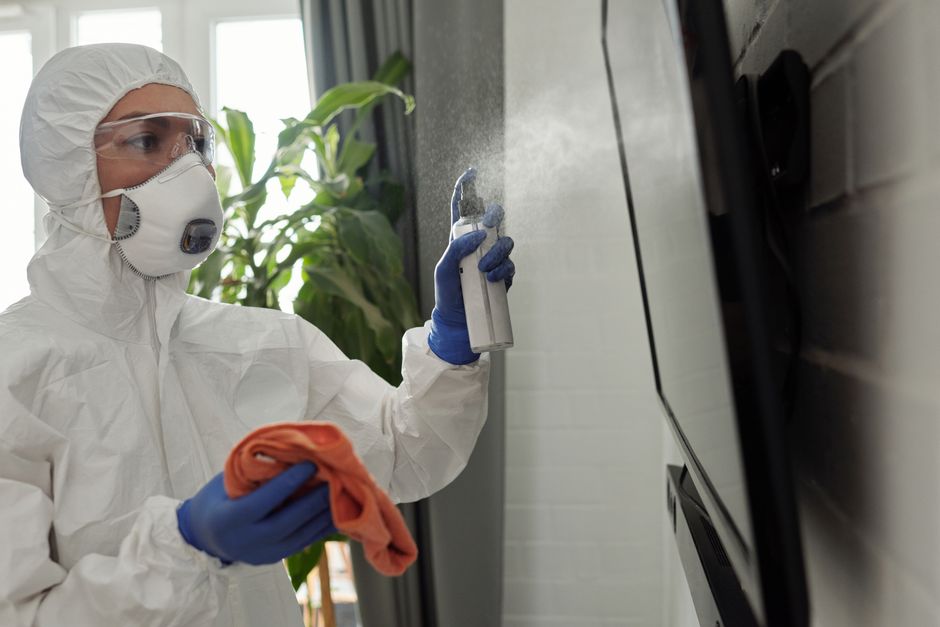
The biggest side effect people miss is the mold itself. Scrubbing mold releases spores into the air. Those spores can cause allergic reactions or asthma attacks. Always wear an N95 mask and goggles when cleaning mold. Open windows for ventilation. The cleaner you use matters less than protecting your lungs from the spores you stir up.
Here are the key steps to follow for safe mold cleanup:
- Wear an N95 mask, goggles, and gloves before starting.
- Open windows or use a fan to ventilate the area.
- Spray the mold killer and let it sit for 10-15 minutes.
- Scrub with a brush, then wipe clean with a damp cloth.
- Dry the area completely within 24 hours to prevent regrowth.
- Discard any porous materials that are heavily infested.
Common Misconceptions About Killing Mold
One of the most common myths is that bleach kills all mold. It does not. Bleach kills mold on hard non-porous surfaces like tile and glass. On drywall and wood it leaves the roots alive. The mold comes back. That is why many people think their mold problem is untreatable. They used bleach and it returned. The problem was not the mold. It was the method.
Another myth is that ammonia kills mold. Ammonia is a cleaner but it is not a reliable mold killer. The CDC does not recommend it. Ammonia fumes are also harsh and dangerous if mixed with bleach. Skip it.
Some people believe that painting over mold solves the problem. It does not. The mold continues growing under the paint. It will bubble and crack the paint within months. You must kill and remove the mold before painting. Use a mold-killing primer like Kilz if you paint afterward.
A final myth is that mold is always visible. Mold can grow behind walls, under carpets, and inside HVAC systems. If you smell a musty odor but see no mold you may have hidden growth. A moisture meter can help find damp areas. The only permanent fix is stopping the moisture source. No cleaner prevents mold if the area stays wet.
Frequently Asked Questions
Can I use hydrogen peroxide on drywall?
Yes but only for small spots. Spray it on let it sit and scrub gently. For large areas replace the drywall.
Is vinegar or hydrogen peroxide better for mold?
Hydrogen peroxide is more effective because it penetrates deeper. Vinegar works on non-porous surfaces but does not last as long.
Does bleach actually kill mold permanently?
No. Bleach only kills surface mold on hard surfaces. On porous materials the roots survive and mold returns.
What is the safest mold killer for homes with pets?
Hydrogen peroxide or Concrobium are safest. Both break down into harmless substances after use and have low toxicity.
