

Vesicular stomatitis virus (VSV) is a virus that mainly infects livestock — cattle, horses, and pigs — and can occasionally spread to people who handle infected animals. In humans, it usually causes a short, flu-like illness that clears on its own, and it is not known to spread from person to person.
What Is VSV Virus?
Vesicular stomatitis virus is an RNA virus in the family Rhabdoviridae, the same broad family that includes the rabies virus. Unlike rabies, VSV does not attack the nervous system. It belongs to the genus Vesiculovirus, and it is the type virus for that group.
The virus gets its name from the blisters, or vesicles, it causes. In animals, these sores appear on the mouth, tongue, lips, nostrils, and teats. They can also form on the hooves, which is why the disease is sometimes confused with foot-and-mouth disease. The two are different viruses, and telling them apart matters for agriculture.
VSV is not a new virus. It has been studied for decades, partly because it is easy to grow in the lab and partly because scientists have used it as a research tool. It is also being studied as a possible backbone for vaccines against other diseases, though that work is experimental and not the same as a proven product.
There are two main types of the virus found in the Americas: the New Jersey serotype and the Indiana serotype. The New Jersey type is the one most often linked to outbreaks in livestock in the United States.
What Are the Symptoms of VSV in Humans?
Human infection with VSV is uncommon and usually mild. When symptoms do appear, they tend to look like a brief flu-like illness rather than anything dramatic.
Reported symptoms include:
- Fever
- Muscle aches
- Headache
- Feeling tired
- Sometimes a sore throat or mouth discomfort
In a small number of documented cases, people who were exposed through lab work or animal contact developed blister-like sores, similar in appearance to the sores seen in animals. Some of these cases involved the mouth or lips. This is not the typical picture, and most human infections are either unnoticed or pass as a vague illness.
An important point: the evidence on human VSV symptoms comes mainly from a limited number of case reports and outbreak investigations, not from large controlled studies. So the range of symptoms is understood in general terms, but the exact frequency of each symptom is not well established.
How Does VSV Spread?
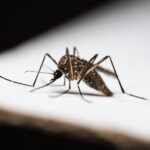
In animals, VSV spreads through direct contact and through insect bites. Black flies and sand flies are considered the main insect carriers, and the virus can move through a herd when these insects are active. Contact with saliva, blister fluid, or shared feed and water equipment can also play a role.
For people, the main route of exposure is direct contact with infected animals or their fluids. This is why the people most at risk are farmers, veterinarians, livestock handlers, and laboratory workers who study the virus. A person handling an infected cow’s saliva or a ruptured blister without gloves is the classic exposure scenario.
There is no confirmed evidence of VSV spreading from one person to another. That matters because it shapes how much concern the general public needs to have. If you do not work with livestock or the virus itself, your risk is very low.
One clarification that often gets lost: VSV is not a foodborne illness. There is no evidence that eating properly cooked meat or drinking pasteurized milk transmits the virus to people.




Is VSV a Risk to the General Public?
For most people, no. VSV is an occupational and agricultural concern, not a general public health threat. The people who face any real risk are those in direct contact with infected animals or with the virus in a lab setting.
The virus does cause economic harm. When it shows up in a herd, animals get sick, milk production can drop, and the disease can be mistaken for foot-and-mouth disease, which triggers trade restrictions and testing. That agricultural impact is significant even though the human health impact is small.
Outbreaks in the United States have occurred, mostly in the southwestern states, and they tend to follow seasonal patterns tied to insect activity. The virus is also found in parts of Mexico, Central America, and South America.
For a health-conscious reader with no livestock contact, VSV is not something to worry about day to day. The honest framing is that it is a real virus with real effects on animals and on the people who work with them, and a minor concern for everyone else.
How Is VSV Diagnosed and Treated?
Diagnosis in people is not routine because the illness is uncommon and usually mild. When a doctor does suspect it — typically because of a clear animal or lab exposure — testing can be done through specialized public health or reference laboratories. Standard clinics do not test for VSV as part of normal blood work.
There is no specific antiviral treatment for VSV in humans. Care is supportive, meaning rest, fluids, and fever management as needed. Most reported human cases resolve without complications.
For animals, the situation is different in scale but similar in approach. There is no treatment that targets the virus directly. Affected animals are managed with supportive care, and outbreaks are handled through isolation and insect control.
This is a case where it is worth being clear about what does not exist: there is no vaccine approved for human use against VSV, and no antiviral drug specifically for it. Anyone claiming otherwise is ahead of the evidence.
How Can Exposure Be Prevented?
Prevention centers on reducing contact with infected animals and their fluids. For people who work with livestock, the practical steps are straightforward and align with general infection-control practice.
- Wear gloves when handling animals with mouth or hoof sores
- Wash hands thoroughly after animal contact
- Avoid direct contact with saliva, blister fluid, or open sores
- Use insect protection when working around livestock during fly season
- Report unusual blistering illness in herds to a veterinarian
For laboratory workers, the virus is handled under appropriate containment procedures, which is standard practice for work with infectious agents.
There is no specific guidance for pregnant women, infants, or children regarding VSV, because human infection in these groups is not well documented. If someone in these groups has had clear exposure to an infected animal, the right step is to talk to a healthcare provider rather than rely on general information.
How Does VSV Compare to Similar Viruses?
VSV is often mentioned alongside other viruses that cause blistering disease in animals. The comparison helps clarify why VSV is not the feared one.
| Virus | Main Host | Human Risk |
|---|---|---|
| Vesicular stomatitis virus | Cattle, horses, pigs | Low; mainly occupational |
| Foot-and-mouth disease virus | Cattle, pigs, sheep | Rare, generally mild in humans |
| Rabies virus | Many mammals | Severe and almost always fatal once symptoms start |
The key difference is that VSV and foot-and-mouth disease virus are not the same, despite causing similar-looking sores in animals. And while VSV shares a family with rabies, it behaves nothing like rabies in the human body.
What Does the Evidence Actually Show?
It is worth being honest about the limits here. Much of what is known about human VSV comes from a small number of case reports, lab-associated infections, and outbreak investigations. There has not been a large human study tracking symptoms, outcomes, or long-term effects, and there is no reason to expect one, given how rare human infection is.
What is well established: the virus infects livestock, spreads through contact and insects, and can cause a mild flu-like illness in exposed people. What is less certain: the exact proportion of exposed people who get sick, how often blistering occurs, and whether any long-term effects exist.
For the general public, the practical takeaway is simple. VSV is not a virus that spreads through communities or from person to person. It is a livestock and occupational virus. If you do not work with animals or the virus itself, your risk is very low.
Frequently Asked Questions
Can vesicular stomatitis virus spread from person to person?
No confirmed cases of person-to-person spread have been documented. The virus spreads mainly through contact with infected animals or insect bites.
What are the symptoms of VSV in humans?
Most human infections cause a mild flu-like illness with fever, muscle aches, headache, and fatigue. A small number of cases have involved blister-like sores, usually after direct animal or lab exposure.
Is VSV dangerous to people?
For the general public, no. Human infection is uncommon, usually mild, and clears without specific treatment; the people at any real risk are those with direct livestock or laboratory contact.
Is there a vaccine or treatment for VSV in humans?
No vaccine or antiviral treatment is approved for human use against VSV. Care is supportive, meaning rest, fluids, and fever management as needed.
