
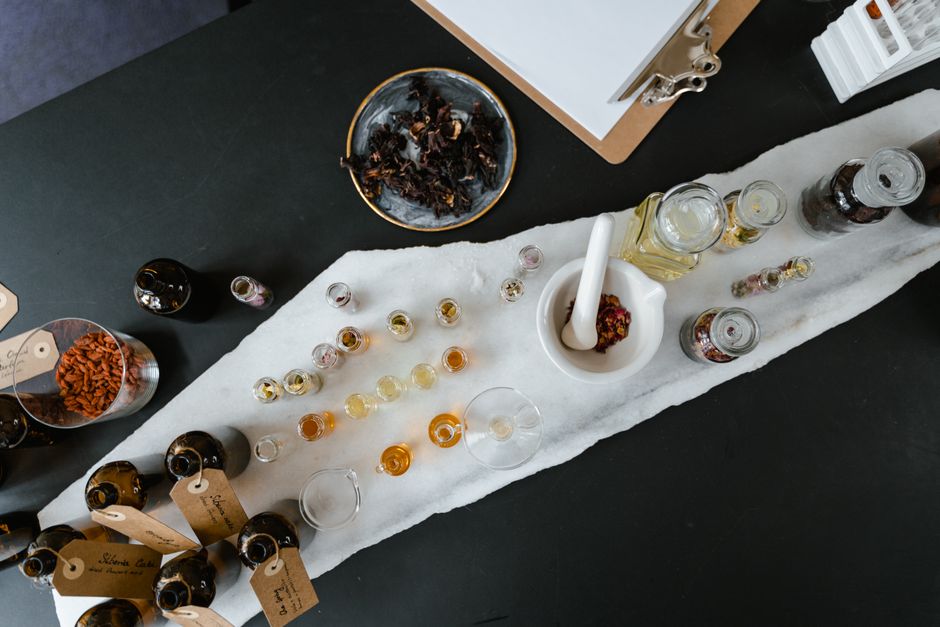
Vanilla extract is a liquid flavoring made by soaking vanilla beans in a mixture of water and alcohol. The alcohol pulls the flavor compounds out of the beans, creating the concentrated vanilla taste used in baking and cooking. It is one of the most common flavorings in the world, and it is not the same as vanilla flavoring or imitation vanilla.
How Is Vanilla Extract Made?
Real vanilla extract starts with vanilla beans. These beans are the cured fruit pods of orchids in the Vanilla genus. The beans are chopped or ground, then soaked in a solution of water and ethyl alcohol. Over time, the alcohol extracts the flavor compounds from the bean material.
The process takes time. Commercial producers often let the mixture steep for weeks or months. The result is a dark brown liquid with the characteristic aroma and taste of vanilla.
The main flavor compound in vanilla is called vanillin. It is responsible for most of the smell and taste we associate with vanilla. Real vanilla beans contain vanillin along with hundreds of other compounds that add complexity to the flavor. These extra compounds are why real extract tastes different from imitation versions.
What Is the Difference Between Pure and Imitation Vanilla?
Pure vanilla extract is made only from vanilla beans, water, and alcohol. Imitation vanilla is made with synthetic vanillin, often produced from wood pulp or petroleum byproducts. The chemical structure of synthetic vanillin is identical to the vanillin found in real beans, but imitation vanilla lacks the other flavor compounds.
In the United States, the Food and Drug Administration (FDA) has a legal standard for what can be called vanilla extract. The standard requires a specific ratio of vanilla bean solids to alcohol. Products that do not meet this standard cannot be labeled as pure vanilla extract.
Imitation vanilla is much cheaper to produce. It is also more stable in high heat. Some bakers prefer imitation vanilla for baked goods because the flavor holds up when cooked. Others prefer pure extract for no-bake recipes like custards, frostings, and ice cream where the delicate flavors remain noticeable.
Neither version is “bad.” The choice depends on your budget, your recipe, and your taste preference. Many professional bakers keep both on hand.
What Is Vanilla Extract Used For?
Vanilla extract is primarily a flavoring for food. It is used in cakes, cookies, puddings, custards, ice cream, and beverages. It can also be added to coffee, smoothies, oatmeal, and yogurt. A small amount goes a long way because the flavor is concentrated.
Beyond food, vanilla extract appears in some personal care products. It is used as a fragrance in soaps, lotions, and candles. The scent is widely liked and rarely causes allergic reactions, though it can in sensitive individuals.
Some people use vanilla extract for non-culinary purposes. These uses are not backed by strong clinical evidence. For example, some claim vanilla extract repels insects. There is limited research on this, and no reliable evidence confirms it works as well as standard insect repellents.



Does Vanilla Extract Have Health Benefits?
Vanilla has been studied for potential health effects. Some research suggests that vanillin has antioxidant properties. Antioxidants are compounds that can neutralize harmful molecules called free radicals in the body. However, the amount of vanilla extract used in cooking is very small, so any antioxidant effect is likely minimal.
Some studies have looked at vanillin for its potential calming effects. Aromatherapy products sometimes include vanilla for relaxation. The evidence here is limited and mixed. There is no strong clinical proof that smelling or eating vanilla reduces anxiety in a meaningful way.
One area of emerging research involves vanillin and certain medical conditions. Laboratory studies have examined whether vanillin affects bacteria or cancer cells. These are early-stage studies done in test tubes, not in humans. No clinical guidelines currently recommend vanilla extract for any medical purpose.
The honest position is this: vanilla extract makes food taste good. It is not a medicine. If you enjoy it, use it in your cooking. Do not expect it to treat or prevent any illness.
How Should You Store Vanilla Extract?
Vanilla extract has a long shelf life. The alcohol acts as a preservative. Stored properly, it can last for years without spoiling.
Keep it in a cool, dark place away from direct sunlight. A kitchen cabinet works well. The bottle should be tightly sealed when not in use. Refrigeration is not required, though it will not harm the extract if you choose to refrigerate it.
Over time, the extract may develop sediment or change color slightly. This is normal and does not mean the product has gone bad. If the smell or taste changes dramatically, or if mold appears, discard it. Mold is unlikely because of the alcohol content, but it is possible if the bottle was contaminated.
How Much Vanilla Extract Should You Use?
Recipes usually specify the amount needed. In general, one teaspoon of vanilla extract is a common amount for a standard batch of cookies or a cake. Some recipes call for more, some for less.
If you are substituting vanilla extract for vanilla beans, the conversion is not always exact. One vanilla bean is roughly equivalent to about three teaspoons of extract. However, the flavor profile differs. The bean contains tiny seeds that add visual speckles and a slightly different taste. If a recipe calls for a vanilla bean and you use extract instead, the result will be similar but not identical.
If you are substituting pure extract for imitation vanilla, use the same amount. The flavor strength is comparable. The taste will differ slightly because of the additional compounds in the pure extract.
Can You Make Vanilla Extract at Home?
Yes, you can make vanilla extract at home. The process is simple but takes time. You need vanilla beans, alcohol, and a glass jar.
Use a neutral alcohol with a high proof. Vodka is the most common choice. The alcohol should be at least 35% alcohol by volume (70 proof). Some people use bourbon or rum for a different flavor profile, but vodka lets the vanilla flavor come through cleanly.
A common ratio is about 6 to 8 whole vanilla beans per cup of alcohol. Split the beans lengthwise to expose the interior seeds. Place them in the jar and cover with alcohol. Seal the jar and store it in a cool, dark place.
Shake the jar once a week. The extract will be usable after about 8 weeks, but it continues to improve for several months. Homemade extract does not meet the FDA standard for “vanilla extract” because the exact bean-to-alcohol ratio is not controlled. You can call it “homemade vanilla extract” for personal use, but you should not sell it labeled as pure vanilla extract.
Is Vanilla Extract Safe for Everyone?
Vanilla extract is safe for most people when used in normal cooking amounts. The alcohol content is a consideration. Standard vanilla extract is about 35% alcohol. This is not a concern in baked goods because the heat evaporates most of the alcohol. In no-bake recipes, some alcohol remains.
Pregnant women and people who avoid alcohol for medical or personal reasons should be aware of this. If you want to avoid alcohol entirely, look for vanilla extract made with glycerin instead. These are sometimes labeled as alcohol-free vanilla extract. They work well in most recipes, though the flavor can be slightly different.
People with vanilla allergies are rare, but they exist. Symptoms can include skin irritation or digestive discomfort. If you have a known allergy to vanilla, avoid vanilla extract in all forms.
Vanilla extract should not be given to infants or young children in large amounts because of the alcohol content. Normal amounts used in cooking for the whole family are generally considered safe, but you should always be cautious with alcohol-containing products around children.
Frequently Asked Questions
What is the difference between vanilla extract and vanilla essence?
Vanilla extract is made from real vanilla beans soaked in alcohol and water. Vanilla essence is a weaker product, often made with synthetic vanillin, and is not held to the same legal standards as extract.
Does vanilla extract go bad?
No, vanilla extract does not spoil in the traditional sense because the alcohol preserves it. It can last for years if stored in a cool, dark place, though the flavor may slowly weaken over time.
Can you use vanilla extract if you are allergic to alcohol?
You should avoid standard vanilla extract because it contains alcohol. Alcohol-free versions made with glycerin are available and are a suitable alternative.
Is pure vanilla extract worth the higher price?
Pure vanilla extract costs more because it uses real vanilla beans, which are expensive to grow and harvest. Many people find the complex flavor is worth it for no-bake recipes, while imitation vanilla works well for baked goods where heat changes the flavor.
