
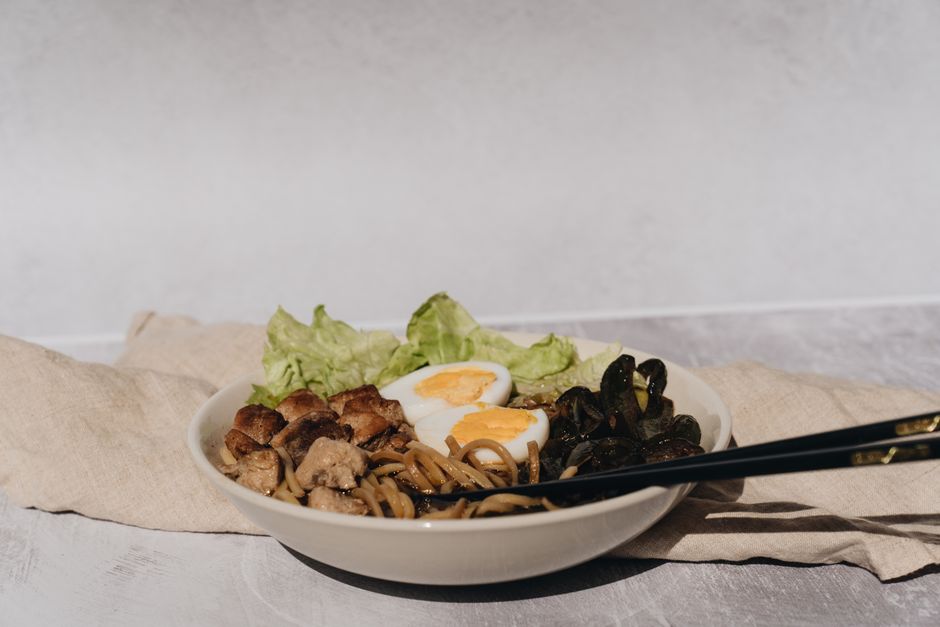
Umami is the taste of glutamate, an amino acid found naturally in meat, fish, aged cheese, mushrooms, tomatoes, and fermented foods. It is one of the five basic tastes, alongside sweet, sour, salty, and bitter. The word comes from Japanese and roughly translates to “pleasant savory taste.” Your tongue detects it through specific taste receptors that respond to glutamate and a few related compounds.
What Is Umami Taste and Why Does It Matter?
Umami is a distinct taste category, not a flavor combination. For much of the twentieth century, scientists debated whether it qualified as a basic taste at all. That question is now settled.
The story starts in 1908, when Japanese chemist Kikunae Ikeda isolated glutamate from kombu seaweed and proposed that it represented a taste category beyond the four known ones. It took decades for the broader scientific community to accept this. The identification of specific glutamate receptors on the tongue in the early 2000s provided the physiological evidence that settled the debate.
What makes umami different from other tastes is how it signals. Sweet and bitter tastes typically signal energy or potential toxins. Umami signals protein. Foods rich in glutamate tend to be protein-rich foods, and the taste likely evolved to help humans identify nutritious sources of amino acids.
Umami also has a synergistic effect that the other basic tastes do not share. When glutamate combines with certain nucleotides — compounds called inosinate and guanylate — the perceived umami intensity increases substantially. This is why a broth made from both seaweed and dried bonito flakes tastes far more savory than either ingredient alone would suggest.
What Foods Are High in Umami?
Glutamate occurs naturally in many foods. It is not an additive invented in a laboratory. Human breast milk contains glutamate, which may help explain why infants accept it readily.
Foods with notably high natural glutamate levels include:
- Aged cheeses, especially Parmesan and Roquefort
- Fish sauce and soy sauce
- Miso and other fermented soybean products
- Mushrooms, particularly dried shiitake
- Ripe tomatoes and tomato paste
- Cured meats like prosciutto
- Anchovies and sardines
- Kombu seaweed
- Green tea, especially matcha
Some foods are high in the synergistic nucleotides rather than glutamate itself. Dried bonito flakes and dried shiitake mushrooms are rich in inosinate and guanylate. When these are combined with glutamate-rich ingredients, the umami effect multiplies.
This is not a modern food science trick. Traditional cuisines discovered these combinations centuries ago. Japanese dashi uses kombu and bonito together. Italian cooking pairs Parmesan with tomato. Chinese cuisine uses soy sauce with mushrooms. Each combination exploits the same biochemical synergy.
How Does Your Body Detect Umami?
Umami is detected by a specific taste receptor — a protein complex called T1R1+T1R3. This receptor sits on taste cells in your taste buds and responds specifically to glutamate and a few related amino acids.
When glutamate binds to this receptor, it triggers a signal cascade inside the taste cell. That signal travels to your brain through dedicated nerve fibers. The brain interprets it as the savory taste we call umami.
The receptor also responds to the nucleotide compounds mentioned earlier. Inosinate and guanylate do not activate the receptor on their own, but when they are present alongside glutamate, they bind to a different site on the same receptor complex and amplify the signal. This is the molecular basis of umami synergy.
Interestingly, this receptor is not limited to the tongue. Similar receptors have been found in the stomach and intestines. Some research suggests they may play a role in detecting protein content in food and preparing the digestive system accordingly. The full significance of these gut receptors is still being studied.





Is Umami the Same as MSG?
No. MSG — monosodium glutamate — is a manufactured form of glutamate, but umami is the taste itself. The relationship is similar to the difference between sweetness and table sugar.
MSG was first produced commercially in 1909, based on Ikeda’s discovery. It is made through fermentation of starch or sugar, a process similar to how soy sauce or yogurt is made. The result is a white crystalline powder that dissolves easily and provides pure umami taste.
The glutamate in MSG is chemically identical to the glutamate in tomatoes, Parmesan, or mushrooms. Your body processes both the same way. The human body also produces and uses glutamate as a neurotransmitter and in normal metabolism.
Concerns about MSG date back to a 1968 letter published in a medical journal describing symptoms after eating at Chinese restaurants. The letter was anecdotal, not a controlled study. Subsequent research has not consistently reproduced those symptoms under controlled conditions. Reviews of the available evidence have not established a causal link between MSG consumption and the reported symptoms in the general population.
That said, some individuals report sensitivity to large amounts of MSG. The evidence for this is limited and the mechanism is unclear. If someone notices symptoms after eating foods with added MSG, avoiding it is reasonable. But the widespread belief that MSG is harmful to everyone is not supported by the current evidence.
Why Do Some People Taste Umami More Than Others?
Umami perception varies between individuals, and the reasons are not fully understood. Genetic differences in taste receptor genes likely play a role, but the research is still developing.
What is clearer is that umami perception can be influenced by context. The presence of salt enhances umami taste. So does the presence of the synergistic nucleotides. A dish that seems mildly savory on its own may taste intensely umami when combined with the right ingredients.
Repeated exposure also matters. People who grow up eating cuisines rich in umami — Japanese, Korean, Chinese, Italian — tend to recognize and value it more readily. This is not simply familiarity. It reflects how taste preferences are shaped by experience and culture.
Age may also play a role. Some research suggests that umami perception changes with age, though the findings are not consistent. What is clear is that umami remains one of the five basic tastes throughout life.
How Is Umami Used in Cooking?
Umami is not just a taste to identify. It is a tool that can change how food tastes without adding salt or fat.
Adding a small amount of an umami-rich ingredient can make a dish taste fuller and more satisfying. A splash of fish sauce in a stew. A piece of Parmesan rind in soup. A spoonful of miso in a dressing. These additions do not make the dish taste like fish sauce or cheese. They deepen the overall flavor.
This effect is why umami-rich ingredients appear across so many cuisines. They make food taste more substantial without adding calories or sodium in large amounts.
For people trying to reduce salt, umami can help. Salt enhances umami perception, and umami can partially compensate for reduced salt. Some research suggests that using umami-rich ingredients may allow for lower sodium levels while maintaining acceptability, though this varies by food and individual.
Umami also interacts with other tastes. It can soften bitterness and enhance sweetness. This is why a pinch of MSG or a dash of soy sauce can make vegetables taste better to people who normally dislike them.
Is Umami Bad for You?
Umami itself is not harmful. It is a basic taste that humans are built to detect, and glutamate is an amino acid your body uses constantly.
The health concerns that sometimes get attached to umami are usually about specific ingredients, not the taste itself. MSG has been the main target, but as noted, the evidence for harm in the general population is weak. Soy sauce and fish sauce are high in sodium, which is a legitimate concern for blood pressure and heart health. Aged cheeses are high in saturated fat and sodium.
The taste of umami is not the problem. The foods that deliver it can be, depending on what else they contain and how much you eat.
For most people, enjoying umami-rich foods as part of a balanced diet is not a health concern. If you are watching sodium, pay attention to how much soy sauce, fish sauce, or processed meat you use. If you are watching saturated fat, be mindful of cheese. But there is no evidence that the experience of umami taste itself is harmful.
Frequently Asked Questions
What does umami taste like?
Umami tastes savory, brothy, and rich — like the flavor of soup stock, aged cheese, or mushrooms. It is distinct from salty, sweet, sour, and bitter, though it often appears alongside them.
Is umami the same as MSG?
No. Umami is the taste, while MSG is a manufactured form of glutamate that triggers that taste. Glutamate occurs naturally in many foods, and MSG is chemically identical to the glutamate found in those foods.
What foods are highest in umami?
Foods high in natural glutamate include aged cheeses, fish sauce, soy sauce, miso, mushrooms, ripe tomatoes, and cured meats. Dried bonito flakes and dried shiitake mushrooms are high in compounds that amplify umami when combined with glutamate.
Is umami bad for your health?
Umami itself is not harmful. Health concerns usually relate to specific ingredients like high-sodium soy sauce or high-fat cheese, not to the taste of umami.
