
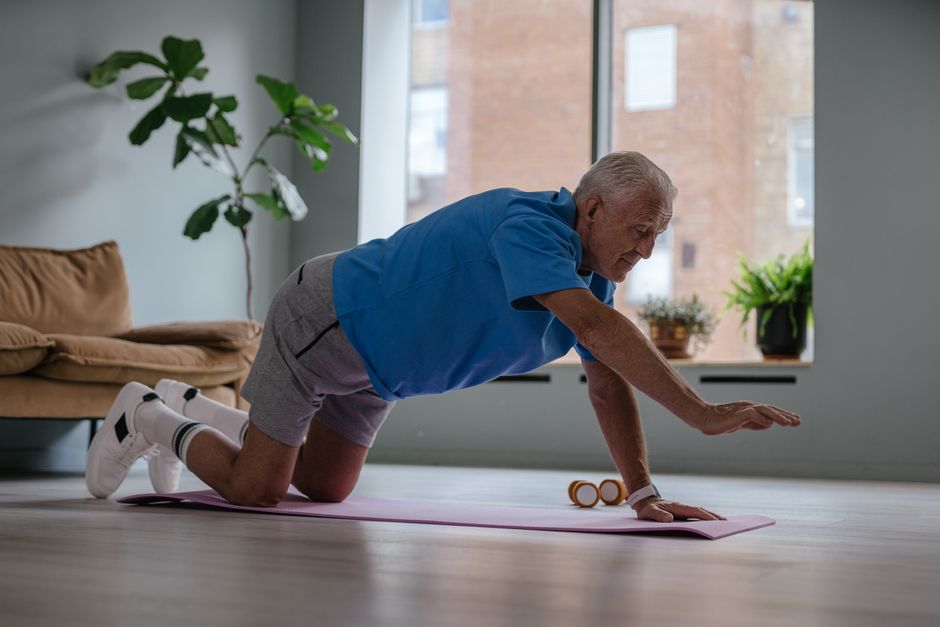
TRE stands for Tension Releasing Exercises, a movement routine designed to trigger natural shaking in the muscles as a way to release built-up tension. The method was developed by David Berceli, a trauma specialist who observed that people under extreme stress often shake involuntarily. TRE therapy exercises are a specific sequence of seven movements done in order, followed by a period of guided shaking while lying on the back. The evidence base is limited. Most published research consists of small studies and case reports, not large controlled trials.
What Is TRE Therapy and How Does It Work?
TRE is a body-based practice built on the idea that shaking is a natural stress-release mechanism. Animals in the wild often tremble after a threat passes. Berceli proposed that humans suppress this response, and that the unreleased tension stays stored in the body.
The routine uses gentle exercises to fatigue specific muscle groups, particularly in the legs and hips. This fatigue is intended to trigger a spontaneous shaking response called neurogenic tremors. The person then lies down and allows the shaking to continue for several minutes.
The proposed mechanism involves the psoas muscle, a deep hip flexor that connects the spine to the legs. According to the theory, releasing tension in the psoas and surrounding areas calms the nervous system. This explanation is plausible from an anatomical standpoint, but it has not been confirmed by controlled research. The idea that shaking “releases stored trauma” is a theoretical model, not an established biological fact.
What is well established is that the psoas plays a role in posture and hip movement, and that chronic stress affects muscle tension. Whether TRE specifically changes that tension in a lasting way is a different question that remains open.
What Is the TRE Exercise Sequence?
The standard TRE sequence includes seven exercises performed in a specific order. Each one is done for a short period, usually until the muscles begin to fatigue. The full routine typically takes 10 to 15 minutes before the shaking phase begins.
The exercises include:
- Ankle rotations and foot flexing while seated or lying down
- Diamond pose, with the soles of the feet pressed together and knees dropped outward
- A standing wall sit or half-squat variation
- Leg extensions and hip movements performed from the floor
- Pelvic tilts and bridging movements
- Gentle spinal twists
- A final resting position on the back with knees bent
The exact order and duration vary between instructors. TRE is taught through a certification program, and there is no single universal protocol. This lack of standardization makes it harder to compare results across studies.
During the final phase, the person lies on their back and lets the legs shake. A trained facilitator may guide the process, but many people practice alone after learning the basics. The shaking is involuntary and often described as a buzzing or vibrating sensation in the legs and hips.
What Does the Research Actually Show?
The research on TRE is early-stage. Most studies are small, and several lack control groups. That does not mean the findings are worthless, but it does mean the results should be read with caution.
Some studies have reported reductions in self-reported anxiety and stress after TRE sessions. A few have looked at measures like heart rate variability, which reflects nervous system activity. These findings are interesting but preliminary. Small studies without control groups cannot rule out placebo effects or the simple benefit of resting and paying attention to the body.
No large randomized controlled trial has established TRE as a treatment for any specific condition. The evidence does not currently support claims that TRE treats PTSD, chronic pain, or depression. Some clinicians and practitioners report benefits in their clients, and that clinical experience has value, but it is not the same as proof of effectiveness.
It is also worth noting that many forms of gentle movement and relaxation have been shown to reduce stress symptoms. TRE may work through the same general pathways as yoga, stretching, or breathing exercises, rather than through a unique shaking mechanism.





Who Might Try TRE and Who Should Avoid It?
TRE is generally presented as a low-impact practice suitable for most healthy adults. People often seek it out for stress, tension, or a sense of being “stuck” in their body. Some find the shaking sensation pleasant and relaxing.
However, TRE is not for everyone. Because the practice can bring up strong physical or emotional sensations, it may not be appropriate for people with certain conditions. Those with a history of trauma, dissociative disorders, or panic attacks should approach it with caution and ideally work with a trained practitioner.
People with recent injuries, joint problems, or conditions affecting the spine should check with a healthcare provider before starting. Pregnant women should also consult a provider, as no clinical guidelines exist for TRE during pregnancy.
The involuntary shaking can feel unusual or even distressing at first. Some people report muscle soreness afterward. If the shaking becomes intense or painful, the practice should be stopped.
It is important to be clear about what TRE is not. It is not a replacement for mental health treatment, physical therapy, or medical care. Anyone dealing with a serious condition should not rely on TRE alone.
How Does TRE Compare to Other Stress-Reduction Methods?
TRE is one of many approaches to managing stress through the body. Others include yoga, tai chi, progressive muscle relaxation, and simple breathing exercises. Each has a different evidence base.
Yoga and tai chi have been studied more extensively than TRE. Research has found benefits for stress, balance, and quality of life in various populations. Breathing exercises, particularly slow breathing, have also been studied and shown to affect the nervous system.
TRE’s main distinction is the shaking component. Whether that adds anything beyond the relaxation and body awareness that come with any gentle movement practice is unknown. No head-to-head studies have compared TRE to yoga or other methods.
For someone looking for a low-cost, self-directed practice, TRE is easy to learn and requires no equipment. That accessibility is a real advantage. But the same is true of many free stretching and breathing routines with stronger evidence behind them.
What Are the Key Takeaways About TRE?
TRE is a movement practice that uses fatigue and shaking to release muscle tension. Its theoretical basis is interesting but not proven. The research is limited, and no large trials support it as a treatment for specific conditions.
That does not mean it is useless. Many people report feeling calmer and more relaxed after practicing. If you enjoy it and it helps you feel better, that is a legitimate reason to continue. Just keep your expectations realistic.
Be skeptical of anyone who claims TRE can cure trauma, fix chronic pain, or replace therapy. Those claims go beyond what the evidence shows. TRE may be a helpful addition to a broader approach to health, but it is not a standalone solution.
If you decide to try TRE, consider learning from a qualified instructor first, especially if you have a history of trauma or any medical condition. Start gently and stop if anything feels wrong.
Frequently Asked Questions
What is TRE therapy good for?
TRE is used by some people to reduce stress and muscle tension. The evidence for these benefits is limited and mostly comes from small studies without control groups.
Is TRE scientifically proven?
No. TRE has not been proven effective in large controlled trials for any specific condition. Some small studies suggest possible benefits for stress, but the research is early-stage.
How often should you do TRE exercises?
There is no standard recommendation for frequency. Many practitioners suggest starting once or twice a week and adjusting based on how you feel, but no clinical guidelines exist.
Can TRE release trauma?
The idea that shaking releases stored trauma is a theory, not a proven fact. TRE may help some people feel more relaxed, but it is not an established treatment for trauma-related conditions.
