
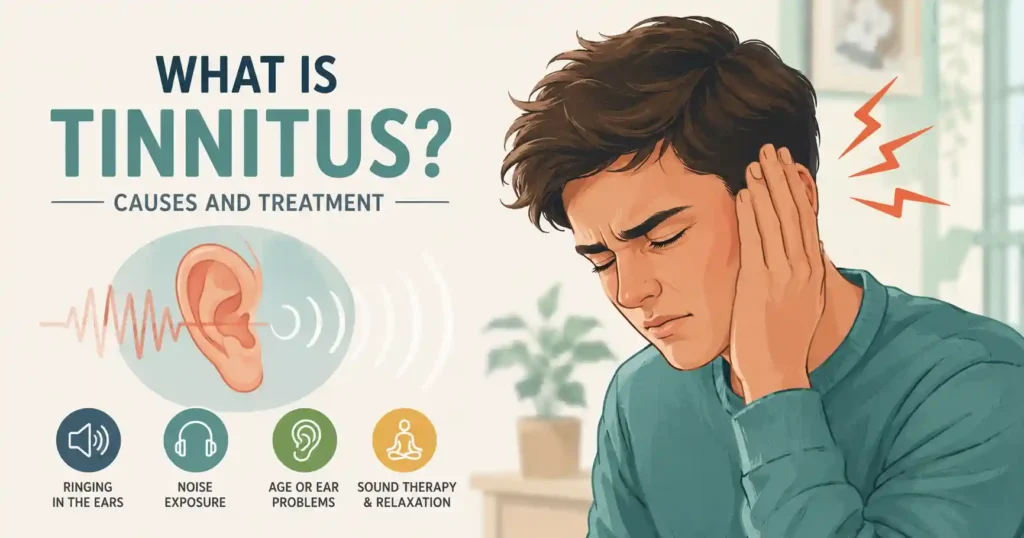
Tinnitus is the perception of sound when no external noise is present. Most people describe it as ringing, but it can also sound like buzzing, hissing, clicking, or roaring. Around 15 to 20 percent of adults experience it at some point. For some, it is mild and occasional. For others it is constant and loud enough to interfere with sleep, concentration, and daily life.
What Causes Tinnitus?
Tinnitus is not a disease. It is a symptom. The most common cause is damage to the tiny hair cells in the inner ear. These cells convert sound waves into electrical signals that your brain interprets as sound. When they are damaged, they can send false signals, creating phantom noise.
Noise exposure is the leading trigger. Concerts, power tools, firearms, and loud headphones can all cause permanent damage. Age-related hearing loss also damages these cells over time. Other causes include earwax blockage, ear infections, head or neck injuries, certain medications, and conditions like Meniere’s disease or temporomandibular joint disorders.
In rare cases, tinnitus is pulsatile. You hear a rhythmic whooshing that matches your heartbeat. This type is usually related to blood flow issues near the ear and should be evaluated by a doctor.
What Does Research on Tinnitus Show?
As of 2026, there is no cure for most cases of tinnitus. Research has found that the condition involves both the ear and the brain. Even when the inner ear is damaged, the brain continues trying to process sound. In some people, the brain amplifies this signal, which is why tinnitus can feel louder over time.
Some studies suggest that tinnitus may be linked to hyperactivity in the auditory cortex. Brain scans show increased neural activity in people with chronic tinnitus compared to those without it. This has led researchers to explore treatments that target brain activity rather than just the ear.
A 2020 review of clinical trials found that cognitive behavioral therapy and sound therapy are the most effective management strategies. Medications like antidepressants or anti-anxiety drugs do not treat tinnitus directly, but may help if it is causing significant distress. There is no FDA-approved drug specifically for tinnitus.
How Is Tinnitus Diagnosed?
Diagnosis starts with a hearing test. An audiologist will measure your hearing ability across different frequencies. Many people with tinnitus also have some degree of hearing loss, even if they have not noticed it.
Your doctor will ask about your medical history and any medications you take. Some drugs, including certain antibiotics, diuretics, and high doses of aspirin, are known to cause or worsen tinnitus. If your symptoms are one-sided or pulsatile, imaging tests like an MRI or CT scan may be ordered to rule out structural problems.
There is no objective test that measures tinnitus itself. Doctors rely on your description. You may be asked to match the pitch and volume of the sound you hear using tones played through headphones.





What Treatments Actually Work for Tinnitus?
Treatment focuses on reducing the impact rather than eliminating the sound. Sound therapy is one of the most widely used approaches. This involves playing background noise like white noise, nature sounds, or soft music to mask the tinnitus. Hearing aids help if hearing loss is present. By amplifying external sounds, they reduce the contrast between the tinnitus and your environment.
Cognitive behavioral therapy has strong evidence behind it. It does not change the tinnitus, but it changes how you respond to it. People who complete CBT often report that the sound bothers them less, even though the volume has not changed. Tinnitus retraining therapy combines sound therapy with counseling.
The goal is to help your brain reclassify the tinnitus as an unimportant sound, similar to how you tune out the hum of a refrigerator. Studies show it can be effective, but it requires months of consistent use.
Some people try supplements like ginkgo biloba or zinc. Evidence for this is limited at best. A 2013 Cochrane review found no convincing proof that ginkgo biloba reduces tinnitus. Zinc may help only if you have a confirmed deficiency.
| Treatment | Evidence Level | Best For |
|---|---|---|
| Sound Therapy | Moderate | Masking symptoms during quiet times |
| Hearing Aids | Strong | People with hearing loss |
| Cognitive Behavioral Therapy | Strong | Reducing distress and improving coping |
| Tinnitus Retraining Therapy | Moderate | Long-term habituation |
| Ginkgo Biloba | Weak | Not recommended based on current evidence |
Can Lifestyle Changes Help Manage Tinnitus?
Stress and lack of sleep often make tinnitus worse. Many people notice their symptoms are louder when they are anxious or tired. Regular exercise, good sleep hygiene, and relaxation techniques like deep breathing or meditation may help reduce the severity.
Caffeine and alcohol affect tinnitus differently for different people. Some find that cutting back helps. Others notice no change. It is worth experimenting to see if certain foods or drinks worsen your symptoms.
Protect your ears from further damage. Use earplugs at concerts or when operating loud machinery. Keep headphone volume below 60 percent of maximum. Once hearing damage occurs, it cannot be reversed.
When Should You See a Doctor About Tinnitus?
See a doctor if tinnitus appears suddenly without an obvious cause like noise exposure. If it occurs in only one ear or is accompanied by dizziness, hearing loss, or ear pain, get evaluated promptly. These symptoms can indicate an underlying condition that needs treatment.
Pulsatile tinnitus always warrants a visit. It may be related to blood vessel abnormalities or increased pressure in the skull. Most cases are benign, but some require medical attention.
If tinnitus is affecting your quality of life, do not wait. Even if there is no cure, management strategies can make a significant difference. Audiologists and ear, nose, and throat specialists have the most experience treating this condition.
- Sudden onset of tinnitus, especially if one-sided
- Tinnitus with hearing loss or dizziness
- Pulsatile tinnitus that matches your heartbeat
- Symptoms that interfere with sleep or concentration
- Tinnitus after starting a new medication
Frequently Asked Questions About Tinnitus
Does tinnitus go away on its own?
It can. Tinnitus caused by earwax buildup or a temporary ear infection often resolves once the underlying issue is treated. Noise-induced tinnitus may fade within days or weeks if the exposure was brief.
Is tinnitus a sign of hearing loss?
Often but not always. Around 90 percent of people with tinnitus also have some degree of hearing loss. However you can have tinnitus with normal hearing test results.
Can stress cause tinnitus?
Stress does not directly cause tinnitus but it can make existing symptoms worse. High stress levels increase your awareness of the sound and reduce your ability to ignore it.
Are there any medications that cure tinnitus?
No. As of 2026 no medication has been proven to cure tinnitus. Some drugs may help manage anxiety or depression related to the condition but they do not eliminate the sound itself.
