
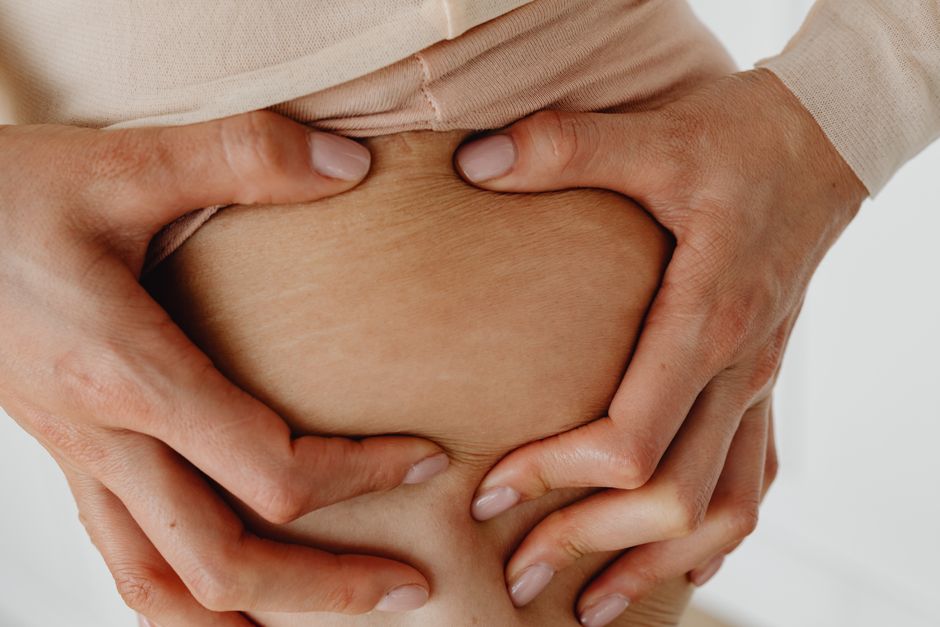
Stretch marks happen when your skin stretches or shrinks faster than it can keep up with. The middle layer of your skin, called the dermis, tears in tiny places. Your body then fills those tears with scar tissue, which shows up as lines on your skin. The color depends on how old the marks are — new ones tend to be red, purple, or pink, while older ones fade to white or silver.
What Exactly Causes Stretch Marks to Form?
The simple answer is physical stretching of the skin. But the real story is more about what happens inside the skin itself. Your skin has three layers. The outer layer is the epidermis. The middle layer is the dermis. The deepest layer is the hypodermis. Stretch marks form in the dermis.
The dermis contains collagen and elastin fibers. These give your skin strength and flexibility. When something pulls the skin too far or too fast, these fibers snap. Your body responds by sending blood vessels to the area to repair the damage. That is why new stretch marks look red or purple. Over time the blood vessels shrink and the scar tissue fades to a lighter color.
Hormones also play a role. Cortisol, a stress hormone, can weaken the collagen and elastin in your skin. When the skin is already weaker, it tears more easily under the same amount of stretch. This is why stretch marks are common during pregnancy, puberty, and periods of rapid weight change — all times when hormone levels shift.
What Is The Reason Of Stretch Marks During Pregnancy?
Pregnancy is the most common time for women to develop stretch marks. Research published in the Journal of the American Academy of Dermatology found that up to 90 percent of pregnant women get them. The main cause is the rapid growth of the belly as the baby grows.
But there is more going on than just stretching. Pregnancy changes your hormones significantly. Higher levels of glucocorticoids make the skin less elastic. This means the dermis is more likely to tear even with normal amounts of stretching. The breasts, hips, thighs, and abdomen are the most common locations.
Genetics also matter a lot. If your mother or sister had stretch marks during pregnancy, you are more likely to get them too. Some women can gain a lot of weight and never get marks, while others gain very little and still get them. This is not about how much you stretch. It is about how your specific skin handles the stretch.
Do Genetics Determine Whether You Get Stretch Marks?
Yes, genetics is one of the strongest predictors. A study published in the Journal of Investigative Dermatology looked at families and found clear genetic links. Certain genes affect how your body produces collagen and elastin. If your skin naturally has weaker structural fibers, you are more likely to develop stretch marks.
This explains why two people can have the exact same weight gain and only one gets stretch marks. It is not fair, but it is biology. Your skin has a built-in limit for how much it can stretch before tearing. Genetics largely sets that limit.
Race and ethnicity also play a role. Some studies suggest people with darker skin types may be less prone to stretch marks, though the evidence is not completely settled. The differences likely come down to how melanin and other skin components interact with the healing process.




What Actually Works to Prevent or Reduce Stretch Marks?
Let us be direct about what the evidence shows. No cream, oil, or treatment can completely prevent stretch marks. Anyone who promises that is overhyping their product. The research is clear on this point.
That said, some things show modest benefit. A 2023 review in the Journal of Cosmetic Dermatology looked at dozens of studies. The strongest evidence was for topical treatments containing centella asiatica, hyaluronic acid, and tretinoin. These ingredients may help support collagen production and improve the appearance of existing marks. Tretinoin is a prescription retinoid and should not be used during pregnancy.
Here is a simple comparison of common treatments and what the evidence says:
| Treatment | What Evidence Shows | Best For |
|---|---|---|
| Centella asiatica creams | Moderate evidence of prevention and reduction | New stretch marks |
| Hyaluronic acid | Moderate evidence of prevention | Application during rapid growth |
| Tretinoin (prescription retinoid) | Strong evidence for reducing appearance | Older white or silver marks |
| Cocoa butter | Weak evidence — no better than placebo in studies | Moisturizing but not preventing |
| Laser therapy | Moderate evidence for improving texture and color | Mature stretch marks |
| Microneedling | Growing evidence of modest improvement | Deep or wide marks |
The most important thing to understand is timing. New stretch marks respond better to treatment than old ones. Once a stretch mark has turned white or silver, the blood vessels are gone and the scar tissue is fully formed. Treatments at that point can help appearance but will not erase the mark completely.
What Popular Myths About Stretch Marks Are Wrong?
There is a lot of bad information out there. Let us clear up the most common myths with what the science actually says.
Myth: Cocoa butter prevents stretch marks. This is the most persistent myth. Multiple well-designed studies have tested cocoa butter against placebo creams. None found any difference. Cocoa butter moisturizes your skin, which feels nice, but it does not strengthen the dermis or prevent tearing.
Myth: Only overweight people get stretch marks. Not true. Bodybuilders and athletes get them from rapid muscle growth. Teenagers get them during growth spurts. Pregnant women of all sizes get them. Weight is not the only factor — skin elasticity and genetics matter more.
Myth: You can erase stretch marks completely. No treatment currently available can fully remove stretch marks. The best treatments can make them less noticeable by improving color and texture, but the scar tissue remains. Any product that claims to erase them completely is lying.
Myth: Stretch marks mean your skin is unhealthy. Stretch marks are a normal response to rapid change. They are not a sign of poor health, bad diet, or lack of self-care. Your skin is doing exactly what it is supposed to do — healing itself after being stretched beyond its limit.
When Should You See a Doctor About Stretch Marks?
Stretch marks themselves are harmless and do not require medical treatment. They are a cosmetic concern, not a health concern. If you are bothered by how they look, a dermatologist can discuss treatment options with you.
There is one situation where you should see a doctor. If your stretch marks appear suddenly without any obvious cause like weight gain, growth, or pregnancy, it is worth getting checked. Very rarely, stretch marks can be a sign of Cushing’s syndrome, a condition caused by high cortisol levels. This is uncommon, but sudden unexplained marks warrant a conversation with your healthcare provider.
Also see a doctor if the marks are painful, itchy, or have an unusual color change. Normal stretch marks are not painful. If yours hurt, something else may be going on.
Frequently Asked Questions
Can stretch marks go away on their own?
Stretch marks do not fully go away on their own. They fade over time from red or purple to white or silver, but the scar tissue remains.
What age do people get stretch marks the most?
Stretch marks are most common during puberty and pregnancy. Both are times of rapid growth and hormonal changes that affect skin elasticity.
Do men get stretch marks as often as women?
Men get stretch marks less often than women overall, but they still get them. Common causes include rapid muscle growth from weightlifting and rapid weight gain.
Is there a vitamin deficiency that causes stretch marks?
There is no strong evidence that vitamin deficiency directly causes stretch marks. However, adequate vitamin C and zinc are needed for collagen production, so a deficiency could theoretically make skin more prone to tearing.
