
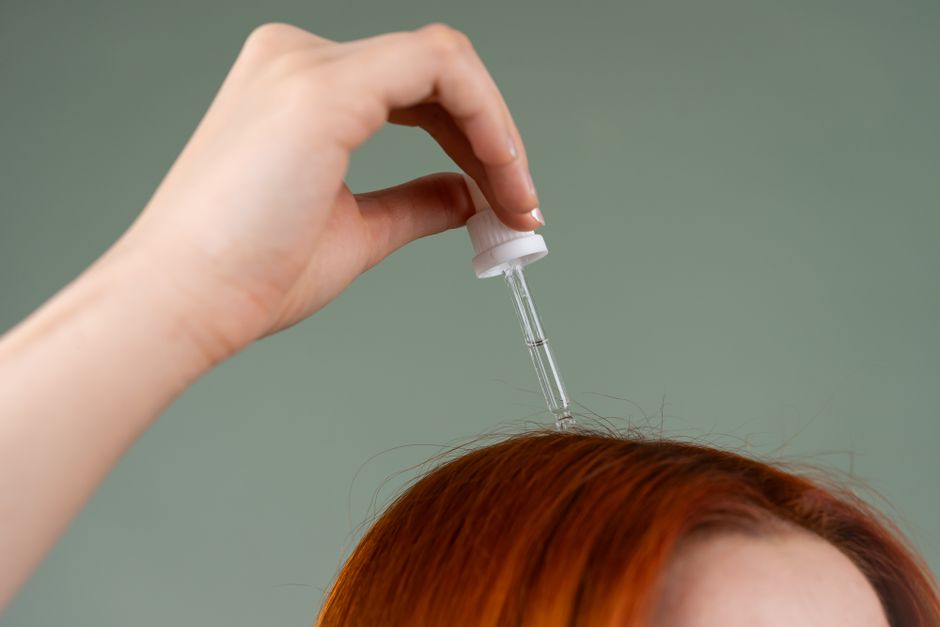
There is no single best hair loss treatment for women. The most effective option depends on what is causing the hair loss, how long it has been happening, and whether the follicles are still active. Minoxidil is the only topical medication approved by the FDA for female pattern hair loss, and it remains the most widely recommended first-line treatment. But for some causes of hair loss, medication is not the answer at all.
Why Hair Loss in Women Is Different From Men
Hair loss in women rarely follows the same pattern as it does in men. Men tend to lose hair at the temples and crown in a recognizable pattern. Women typically experience diffuse thinning across the whole scalp, with the part line widening over time.
The mechanisms overlap but are not identical. Both involve androgens, the hormones that include testosterone. In men, the enzyme 5-alpha-reductase converts testosterone into dihydrotestosterone (DHT), which shrinks hair follicles in genetically susceptible areas. In women, the role of androgens is less clear. Many women with female pattern hair loss have normal hormone levels. Some have elevated androgens, but many do not.
This matters for treatment. Drugs that block DHT, like finasteride, work well in men. They are not FDA-approved for women and are generally avoided in women of childbearing age because they can cause birth defects. The evidence for their effectiveness in women is limited and mixed.
Another key difference: women are far more likely to experience hair loss from causes other than genetics. Thyroid disorders, iron deficiency, hormonal shifts after pregnancy or menopause, autoimmune conditions, and physical or emotional stress can all trigger shedding. Treating the underlying cause is often more effective than any hair loss medication.
What Causes Hair Loss in Women?
Identifying the cause is the first step toward effective treatment. The most common types of hair loss in women are:
- Androgenetic alopecia (female pattern hair loss). The most common cause. It is genetic and involves gradual shrinking of hair follicles. It typically causes widening of the part and diffuse thinning on top.
- Telogen effluvium. A temporary shedding condition triggered by stress, illness, surgery, rapid weight loss, or emotional trauma. Hair falls out in large amounts, usually a few months after the trigger. It often resolves on its own within six to twelve months, though it can become chronic.
- Alopecia areata. An autoimmune condition that causes sudden, patchy hair loss. It can affect any hair-bearing area, including eyebrows and eyelashes.
- Traction alopecia. Hair loss caused by repeated tension from tight hairstyles, braids, or extensions. It is preventable if caught early.
- Nutritional deficiencies. Low iron stores (ferritin), vitamin D deficiency, and inadequate protein intake can all contribute to hair shedding.
- Thyroid disorders. Both hypothyroidism and hyperthyroidism can cause diffuse hair loss.
A dermatologist can usually distinguish between these types through a physical exam, blood tests, and sometimes a scalp biopsy. Self-diagnosis is unreliable because the treatments differ significantly.
What Is the Best Hair Loss Treatment for Women?
For female pattern hair loss, topical minoxidil is the most established treatment. It is the only topical medication FDA-approved for this condition in women. It works by prolonging the growth phase of the hair cycle and widening blood vessels in the scalp, which may improve follicle function.
Minoxidil comes in two strengths: 2% and 5%. Both are available over the counter. The 5% formulation is generally considered more effective, though it may cause more scalp irritation. It must be used consistently. Hair loss typically resumes within a few months if treatment stops.
Oral minoxidil is increasingly prescribed off-label for hair loss at lower doses than those used for blood pressure. Some studies suggest it may be effective, but it is not FDA-approved for hair loss in women, and it carries potential side effects including fluid retention, dizziness, and unwanted facial hair growth. It should only be used under medical supervision.
Other treatments a dermatologist may consider:
- Spironolactone. An oral medication that blocks androgens. It is commonly prescribed off-label for female pattern hair loss, particularly when there are signs of excess androgens. It is not safe during pregnancy.
- Platelet-rich plasma (PRP) injections. Some studies show modest improvement in hair density. The evidence is still limited, and results vary. It is not FDA-approved for hair loss.
- Low-level laser therapy. Some devices are cleared by the FDA for hair regrowth. Evidence suggests they may help in some cases, but the quality of studies is mixed.
- Hair transplantation. A surgical option for women with stable hair loss and sufficient donor hair. It does not stop future loss and works best alongside medication.
For telogen effluvium, no medication is usually needed. Correcting the trigger — treating thyroid disease, replenishing iron stores, reducing stress — is the primary approach. Minoxidil is sometimes used to speed recovery, but it does not address the root cause.
For alopecia areata, treatment depends on severity. Corticosteroid injections into the scalp are common for small patches. More extensive cases may require oral medications or other therapies. Recent research has led to new treatment options, though access and insurance coverage vary.





Do Natural Remedies for Hair Loss Work?
Most natural remedies for hair loss have limited or no clinical evidence. This does not mean they are all useless, but it does mean claims should be viewed with caution.
Some evidence suggests rosemary oil may be comparable to 2% minoxidil for androgenetic alopecia, though the studies are small. A few small trials have looked at pumpkin seed oil, saw palmetto, and biotin. Results are not strong enough to recommend them as primary treatments.
Biotin deserves special mention. It is widely marketed for hair growth. However, biotin deficiency is rare in people who eat a balanced diet. If you are not deficient, biotin supplements are unlikely to help. High-dose biotin can also interfere with certain lab tests, including thyroid and cardiac tests, which can lead to inaccurate results.
Scalp massage, onion juice, garlic, and various essential oils are often promoted online. No large controlled trials support these as effective treatments for hair loss.
When to See a Doctor About Hair Loss
Hair loss is common, but that does not mean it should be ignored. See a doctor or dermatologist if:
- You notice sudden or patchy hair loss
- Your part is widening or your scalp is becoming more visible
- You have other symptoms like fatigue, weight changes, or irregular periods
- Hair loss is accompanied by scalp pain, itching, or scaling
- You have tried over-the-counter treatments for six months without improvement
Blood tests can check for thyroid function, iron levels, vitamin D, and hormone imbalances. These are common and treatable contributors to hair loss in women.
Early treatment generally leads to better results. Once a hair follicle stops producing hair for a long time, it may not recover. This is especially true for traction alopecia and long-standing pattern hair loss.
How Long Does It Take to See Results?
Hair grows slowly. Most treatments take at least three to six months before any noticeable change. Minoxidil may cause a temporary increase in shedding during the first few weeks as old hairs are pushed out to make way for new growth. This is normal and not a sign the treatment is failing.
Full results from minoxidil typically take six to twelve months. If there is no improvement after a year of consistent use, the treatment is unlikely to work.
Hair transplantation results are visible sooner in terms of the transplanted follicles, but the full cosmetic effect takes about a year.
Consistency matters more than any single product. Skipping doses or switching treatments frequently makes it hard to know what is working. Patience is not a marketing slogan here — it is a clinical reality.
What About Hormone Replacement Therapy and Menopause?
Menopause can trigger or worsen hair loss. Falling estrogen levels may unmask genetic hair loss that was previously less noticeable. Hormone replacement therapy (HRT) may help some women, but the evidence is mixed and it is not approved specifically for hair loss.
Some women experience improvements in hair thickness with HRT, while others see no change. The decision to use HRT should be based on overall health needs, not hair alone, and should be discussed with a doctor.
Postmenopausal women may also be prescribed spironolactone or oral minoxidil if topical treatments are not effective or practical.
Frequently Asked Questions
What is the most effective hair loss treatment for women?
Topical minoxidil is the most established and only FDA-approved topical treatment for female pattern hair loss. Other options like spironolactone, oral minoxidil, and PRP are used off-label and may help some women, but they require medical supervision.
Can hair loss in women be reversed?
It depends on the cause. Telogen effluvium often resolves on its own or with treatment of the underlying trigger. Female pattern hair loss cannot be cured, but it can often be slowed or partially reversed with consistent treatment.
Does biotin help with hair loss?
Biotin only helps if you have a deficiency, which is rare in people who eat a balanced diet. No strong evidence shows biotin improves hair growth in people who are not deficient.
How long should I try minoxidil before giving up?
Give it at least six months of consistent use. Full results may take up to a year. If there is no improvement after twelve months, it is unlikely to work for you.
