
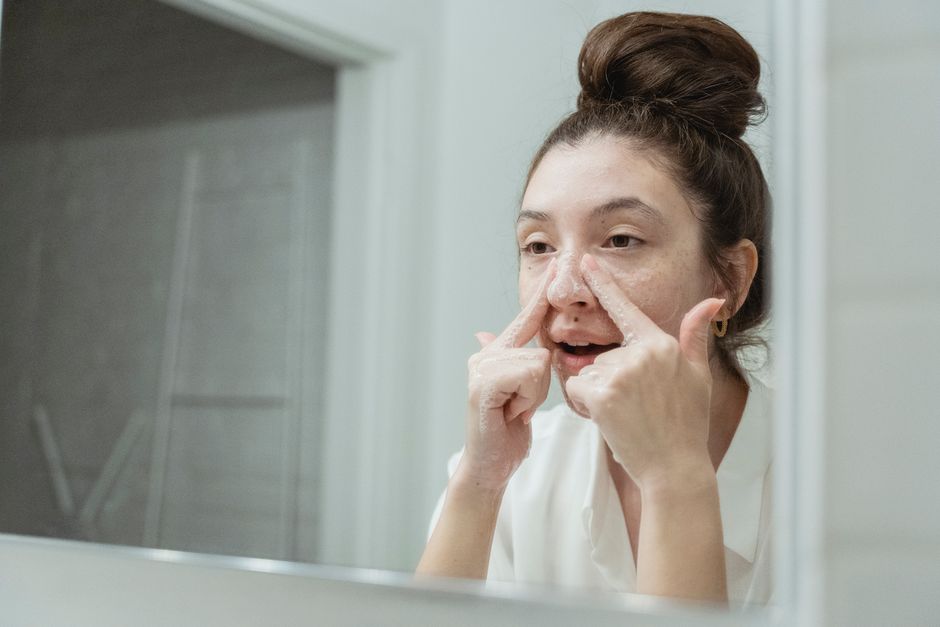
The best facial cleanser for rosacea is a gentle, fragrance-free, non-foaming cleanser with a short ingredient list and a slightly acidic pH. Dermatologists generally steer patients toward mild syndet (synthetic detergent) bars or creamy liquid cleansers rather than traditional soap, scrubs, or anything containing alcohol, menthol, or exfoliating acids. The goal is to remove dirt, oil, and sunscreen without stripping the skin barrier or triggering flushing.
That answer is straightforward. What makes rosacea tricky is that the wrong cleanser can quietly worsen things over weeks, not minutes. Many people blame their moisturizer or the weather when a harsh face wash is the real culprit.
What Is The Best Facial Cleanser For Rosacea?
A gentle, fragrance-free cleanser with a pH close to skin’s natural level is the best choice. Skin sits at roughly pH 4.5 to 5.5, and cleansers formulated in that range tend to disrupt the skin barrier less than alkaline soaps.
Rosacea skin has a compromised barrier. Research consistently shows increased water loss through the skin and heightened sensitivity in people with rosacea compared with unaffected skin. A cleanser that strips lipids or shifts pH upward can aggravate that weakness.
Look for these features:
- Fragrance-free — not “unscented,” which can still contain masking fragrance
- Non-foaming or low-foaming — heavy lather usually means stronger surfactants
- No alcohol, menthol, camphor, or peppermint — all common triggers
- No physical scrubs — no beads, walnut shells, or coarse grains
- No exfoliating acids — glycolic, salicylic, and lactic acid can sting reactive skin
- Short ingredient list — fewer components means fewer chances of irritation
The specific brand matters less than the formulation principles. A drugstore cream cleanser that meets these criteria is often a better pick than an expensive foaming product marketed for “sensitive skin.”
Why Do Harsh Cleansers Make Rosacea Worse?
Harsh cleansers damage the skin barrier, and a damaged barrier makes rosacea skin more reactive. That is the core mechanism, and it is well established.
Surfactants — the molecules that let water lift away oil — do their job by interacting with fats. Strong ones remove too much of the skin’s natural lipid layer. When that layer thins, water escapes more easily and irritants get in more easily. The result is dryness, stinging, and visible redness.
Traditional bar soap is the classic offender. Most soap is alkaline, with a pH well above skin’s natural range. Washing with it repeatedly pushes skin pH upward, and the skin takes time to recover. For someone with rosacea, that recovery period is a window of extra vulnerability.
There is a non-obvious point worth knowing: the tingling or “clean” feeling some people associate with a good wash is often mild irritation, not proof the cleanser worked better. A good gentle cleanser should feel like nothing much happened.
What Ingredients Should You Avoid If You Have Rosacea?
Avoid fragrance, alcohol, menthol, and exfoliating acids in any leave-on or rinse-off product. These are the most commonly cited irritants for reactive skin, and dermatologists routinely advise rosacea patients to skip them.
Specific ingredients to watch for on labels:
- Fragrance and parfum — a leading cause of contact irritation
- Denatured alcohol — drying and potentially stinging
- Menthol, camphor, peppermint, eucalyptus — cooling agents that can trigger flushing
- Glycolic acid, salicylic acid, lactic acid — chemical exfoliants that may sting
- Sodium lauryl sulfate — a strong surfactant that can strip the barrier
- Witch hazel — often contains alcohol and is astringent
Some people tolerate a mild acid in a well-formulated product. But for a cleanser, there is little reason to take the risk. Cleansers are on the skin for seconds — they are not where you get meaningful exfoliation anyway.



Does Cleansing Frequency Matter for Rosacea?
Yes. Washing twice a day with a gentle cleanser is standard advice, but some people with rosacea do better washing once daily and simply rinsing with lukewarm water the other time.
There is no single correct frequency that fits everyone. The evidence on optimal cleansing frequency for rosacea specifically is limited, so this comes down to how your skin responds. If twice-daily washing leaves skin tight or stinging, cutting back is reasonable.
Water temperature matters more than many people realize. Hot water is a well-recognized rosacea trigger because heat causes blood vessels to dilate. Lukewarm water is the safer choice. Avoid steaming hot washcloths and hot showers right before cleansing.
After washing, pat — do not rub — with a soft towel, and apply moisturizer while skin is still slightly damp. That helps trap water in the skin.
How Should You Build a Skincare Routine Around Cleansing?
Keep the routine short. Rosacea skin generally does better with fewer products, and each additional product is another chance for irritation.
A basic approach that many dermatologists suggest:
- Morning: rinse with lukewarm water or use a gentle cleanser, then moisturizer and sunscreen
- Evening: gentle cleanser to remove sunscreen and grime, then moisturizer
- Sunscreen daily — UV exposure is a well-documented rosacea trigger
Introduce one new product at a time and give it a couple of weeks before judging. If a product stings, burns, or leaves skin redder, stop it. That reaction is information, not something to push through.
This article is informational and is not a substitute for care from a dermatologist. Rosacea has several subtypes, and treatment differs depending on whether redness, bumps, or eye involvement dominates. A clinician can help sort that out.
Do Cleansers Treat Rosacea or Just Avoid Making It Worse?
Cleansers do not treat rosacea. They avoid aggravating it. That distinction matters, because marketing sometimes implies a cleanser can reduce redness or clear bumps.
No clinical evidence currently confirms that any cleanser treats the underlying condition. Prescription treatments — topical agents, oral medications in some cases, and light-based therapies — are what have evidence behind them for reducing symptoms. A good cleanser is the foundation that keeps the skin calm enough for those treatments to work.
Some gentle cleansers include soothing ingredients like niacinamide, ceramides, or colloidal oatmeal. These may support the skin barrier, and some studies suggest barrier-supporting ingredients can help sensitive skin. But a cleanser’s contact time is brief, so do not expect dramatic results from what is essentially a rinse-off product.
Frequently Asked Questions
Is Cetaphil or CeraVe good for rosacea?
Both brands make gentle, fragrance-free cleansers that many dermatologists recommend for sensitive skin, though individual tolerance varies. Check the specific product label, since some versions contain ingredients like salicylic acid or fragrance that you may want to avoid.
Can I use micellar water instead of a cleanser for rosacea?
Micellar water can work as a gentle option, especially for a morning cleanse or makeup removal, but it may not fully remove sunscreen. Follow with a rinse or a mild cleanser if you wear sunscreen daily.
Should I stop washing my face if my rosacea is flaring?
No — skipping cleansing lets irritants and sunscreen build up, which can worsen irritation. Switch to a gentler cleanser and lukewarm water during a flare instead of stopping altogether.
Does foaming cleanser make rosacea worse?
Heavy-foaming cleansers often contain stronger surfactants that can strip the skin barrier, which is unhelpful for rosacea. A non-foaming or low-foaming formula is generally the safer choice.
