
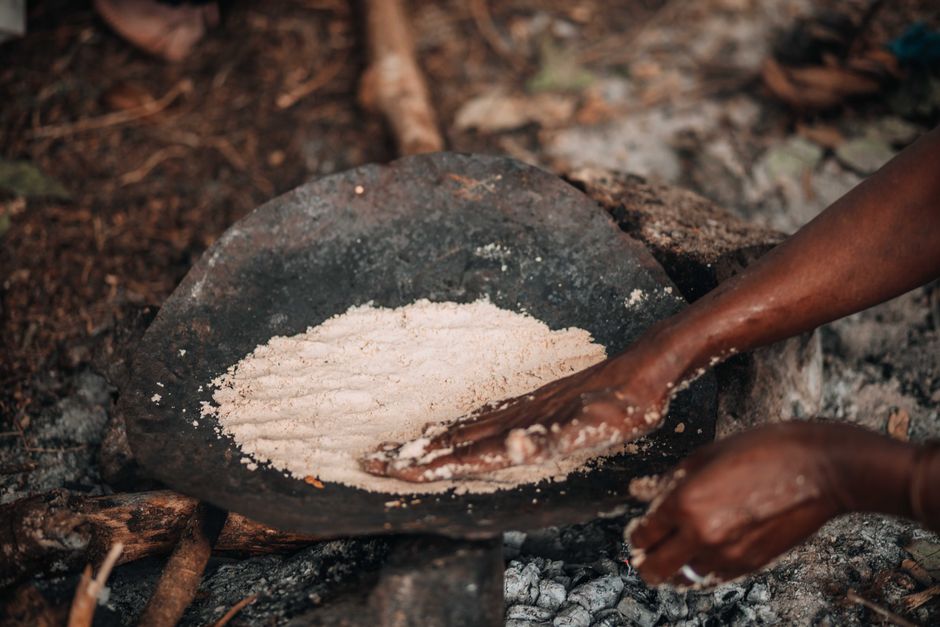
Stone ground flour is flour made by grinding whole grains between millstones, a slow process that keeps the entire kernel — bran, germ, and endosperm — in the final product. That single fact explains most of what follows: the flavor is fuller and more perishable, the nutrition is closer to the whole grain, and the baking behaves differently from standard white flour. Stone grinding is a method, not a guarantee of quality, and it does not automatically make a flour organic, sprouted, or better for you than any other whole grain flour.
What Is Stone Ground Flour?
Stone ground flour is produced by passing grain between two rotating millstones. The stones crush the kernel rather than slicing it with steel rollers, and the whole grain goes in. Nothing is sifted out afterward unless the miller chooses to do so.
That distinction matters because of how modern flour is normally made. Commercial roller mills separate the bran and germ from the starchy endosperm, then grind the endosperm into fine white flour. The bran and germ are often sold off separately. Stone grinding skips that separation. The result is a whole grain flour by default.
One clarification worth making: “stone ground” describes the milling method. “Whole wheat” describes what is in the bag. You can find stone ground flour that has been sifted to remove some bran, and you can find whole wheat flour made on steel rollers. The two terms are related but not interchangeable.
Stone mills run slowly, and the friction generates less heat than high-speed industrial rollers. Millers often mention this. Whether the lower temperature preserves meaningfully more nutrients is debated — the difference is real in principle but the practical impact on your diet is probably small.
What Does Stone Ground Flour Taste Like?
Stone ground whole wheat flour tastes nutty, slightly sweet, and distinctly wheaty, with a faint bitterness from the bran. It is not a subtle difference from white flour. It is a different food.
The flavor comes from three places. The bran carries earthy, slightly bitter compounds. The germ contains oils that contribute richness and aroma. And because the whole kernel is present, the flour retains more of the grain’s natural sugars and minerals, which affects how it tastes both raw and baked.
Freshness matters enormously here. The oils in the germ begin to oxidize once the grain is ground. Flour that is weeks or months old tastes flat or, worse, rancid — a stale, crayon-like flavor that no recipe can hide. Freshly milled stone ground flour smells sweet and grassy. That aroma fades within weeks, not months.
Different grains taste different. Stone ground rye is tangy and dense. Stone ground spelt is milder and slightly sweeter than wheat. Stone ground corn, used for grits and cornmeal, is sweeter and more corny than degerminated versions. The milling method amplifies whatever the grain already is.
Is Stone Ground Flour More Nutritious?
Stone ground whole grain flour retains the bran and germ, and those are where most of the fiber, B vitamins, vitamin E, and minerals sit in a grain kernel. White flour has had them removed. So compared with white flour, stone ground whole wheat flour is more nutritious by a wide margin.
Compared with other whole wheat flours, the picture is less dramatic. If both flours contain the whole kernel, they contain roughly the same nutrients. The milling method does not create vitamins. A steel-rolled whole wheat flour and a stone ground whole wheat flour are nutritionally close.
Here is where a lot of marketing overreaches. Claims that stone ground flour is “more digestible,” “alkaline-forming,” or “easier on blood sugar” are not supported by good evidence. Whole grain flour has a lower glycemic impact than refined white flour, and that is well established. But stone ground versus roller-milled whole wheat? The evidence does not show a meaningful difference.
What the whole grain does deliver is real. Diets rich in whole grains are consistently associated with lower risk of heart disease, type 2 diabetes, and some cancers in large observational studies. That is a statement about whole grains as a category, not about stone grinding specifically.
Stone Ground vs. Regular Whole Wheat: A Quick Look
| Feature | Stone Ground Whole Wheat | Standard Whole Wheat |
|---|---|---|
| Kernel parts present | Bran, germ, endosperm | Bran, germ, endosperm |
| Milling method | Millstones, slower speed | Steel rollers |
| Texture | Coarser, more variable | More uniform |
| Shelf life | Shorter | Shorter than white, similar to stone ground |
| Flavor | Fuller, nuttier, more variable | Nutty, more consistent |
The honest takeaway from that table: the differences are mostly about texture, freshness, and flavor — not nutrition.





Why Does Stone Ground Flour Bake Differently?
Stone ground whole wheat flour absorbs more water, produces denser loaves, and develops gluten differently than white flour. Bakers who swap it in one-for-one often end up with a brick.
Three things are happening. First, the bran particles are sharp and physically interrupt gluten strands as they form, so the dough never develops the same elastic network. Second, bran absorbs water slowly, so a dough that looks right at mixing can turn stiff an hour later. Third, the germ’s oils can interfere with gluten development and shorten the flour’s usable life.
Practical adjustments that experienced bakers commonly use:
- Add more water than the recipe calls for, often noticeably more, and let the dough rest so the bran hydrates.
- Mix stone ground whole wheat with bread flour rather than using it alone, especially for sandwich bread.
- Expect a denser crumb and a shorter rise. Do not judge the dough by white-flour standards.
- Use it fresh. Old whole wheat flour bakes poorly and tastes worse.
For quick breads, muffins, pancakes, and cookies, stone ground whole wheat is far more forgiving. The gluten structure matters less, and the flavor improvement is immediate. If you are new to it, start there.
How Should You Store Stone Ground Flour?
Stone ground whole grain flour goes rancid faster than white flour because the germ oils are exposed. Store it in an airtight container in a cool, dark place, and refrigerate or freeze it if you will not use it within a few weeks.
Freezing is the most reliable option for long storage. Let the flour come to room temperature before baking so it does not chill your dough. A sealed bag or jar prevents it from picking up freezer odors.
Smell it before you use it. Fresh whole grain flour smells sweet and bready. If it smells like crayons, paint, or cardboard, it has turned. Baking with rancid flour will not make you sick in any dramatic way, but the flavor will be unpleasant and the results disappointing.
Buying in small amounts and using them quickly beats buying a large bag on sale. This is one case where the frugal choice and the good choice point in the same direction.
Is Stone Ground Flour Always the Better Choice?
No. Stone ground is a milling method, and it says nothing about how the grain was grown, how fresh the flour is, or whether it was stored well.
A stale stone ground flour is worse than a fresh roller-milled whole wheat flour. An organic stone ground flour and a conventional stone ground flour are nutritionally similar; the organic label is about farming practices, not milling.
What stone grinding does offer is a whole grain flour with character — more texture, more flavor, and a connection to how flour was made for most of human history. For bakers who care about those things, it is worth seeking out. For someone who simply wants more whole grains in their diet, any whole grain flour will do the job.
The best flour is the one you will actually use, while it is still fresh.
Frequently Asked Questions
Is stone ground flour the same as whole wheat flour?
Not exactly. Stone ground describes how the grain was milled, while whole wheat describes what is in the flour. Most stone ground flour is whole wheat, but some is sifted, and whole wheat flour can also be made on steel rollers.
Does stone ground flour need to be refrigerated?
It does not have to be, but refrigeration or freezing will keep it fresh much longer because the germ oils go rancid over time. If you store it at room temperature, use it within a few weeks.
Can I substitute stone ground flour for white flour in recipes?
You can, but not one-for-one without adjustments. Stone ground whole wheat absorbs more water and produces denser results, so most bakers mix it with bread flour or add extra liquid.
Is stone ground flour healthier than regular flour?
Compared with white flour, yes — it keeps the bran and germ, which carry most of the fiber, vitamins, and minerals. Compared with other whole wheat flours, the nutrition is very similar.
