
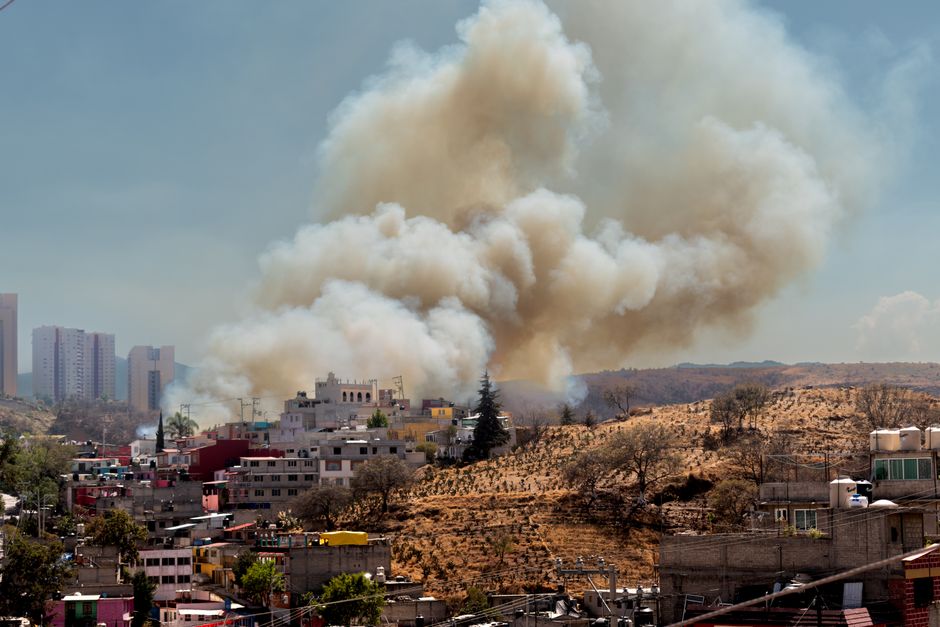
Pollution is happening because of how we produce energy, move goods and people, grow food, and manufacture the things we buy. Burning fossil fuels for electricity, heat, and transportation releases most of the harmful air pollution worldwide. Industrial processes, agriculture, and waste disposal add the rest. The problem is not one single cause. It is a system of causes that reinforce each other.
Understanding those causes matters because it changes what solutions actually work. If pollution were only about careless behavior, education alone might fix it. It is not. It is built into the way modern economies run. Here is what is really driving it.
Why Is Pollution Happening The Real Causes Explained
The main driver is combustion. When coal, oil, gasoline, diesel, and natural gas are burned, they release a mix of pollutants into the air. These include fine particulate matter (PM2.5), nitrogen oxides, sulfur dioxide, carbon monoxide, and volatile organic compounds. Carbon dioxide, the main greenhouse gas, comes from the same process.
This is not a fringe observation. It is the central finding of decades of atmospheric science. The World Health Organization identifies ambient and household air pollution as major environmental health risks, and fossil fuel combustion is the dominant source of both.
But combustion is only the largest cause. Three other forces matter just as much for explaining why pollution keeps happening even as regulations tighten.
Scale of production
Global output has grown enormously since the mid-twentieth century. More steel, more cement, more plastic, more food, more shipping. Each unit of production creates some pollution. Even when pollution per unit falls, total pollution can rise if total production grows faster. This is the core reason emissions have not dropped as quickly as technology has improved.
Energy infrastructure is long-lived
A coal plant built today can run for forty years or more. A highway, an airport, a gas pipeline — these lock in pollution for decades. Decisions made in one era constrain the next. That is why switching to cleaner energy is slow even when the technology exists.
Economic incentives
Pollution is often the cheapest option in the short term. Dumping waste into a river costs less than treating it. Burning cheap fuel costs less than switching to cleaner alternatives. When the cost of pollution falls on the public rather than the producer, the market tends to produce more of it. Economists call this an externality. It is one of the most studied causes of environmental damage.
What Are the Main Sources of Air Pollution?
Air pollution comes from a surprisingly small number of source categories. Knowing them helps make sense of why some cities and regions are far worse than others.
- Electricity generation — coal and gas plants release sulfur dioxide, nitrogen oxides, and particulate matter.
- Road transport — cars, trucks, and buses emit nitrogen oxides, carbon monoxide, and fine particles, especially from diesel engines.
- Industry — cement, steel, chemicals, and refining release a wide range of pollutants.
- Agriculture — livestock, fertilizer, and crop burning release ammonia and methane.
- Residential heating and cooking — wood, coal, and kerosene burned indoors create high household exposure, especially in low-income regions.
- Waste burning — open burning of trash releases dioxins and fine particles.
In many cities, transport and industry dominate. In rural areas, agriculture and household fuel often matter more. The mix varies, but the underlying pattern is consistent: burning things and moving materials releases pollution.
Why Is Water Pollution Still a Problem?
Water pollution has different causes than air pollution, but the same logic applies. The biggest sources are agriculture, untreated sewage, industrial discharge, and stormwater runoff.
Agriculture is the largest single contributor in many regions. Fertilizers and manure wash into rivers and lakes, feeding algal blooms that strip oxygen from the water. This process, called eutrophication, creates dead zones where fish and other aquatic life cannot survive. The Gulf of Mexico dead zone is a well-documented example tied largely to farm runoff from the Mississippi River basin.
Sewage is the second major cause. Billions of people worldwide still lack safely managed sanitation, according to the World Health Organization. Where sewage is not treated, it carries pathogens, nitrogen, and phosphorus directly into waterways.
Industrial discharge adds heavy metals, solvents, and chemicals. Many are toxic at very low concentrations. Regulation has reduced some of this in high-income countries, but enforcement is uneven, and illegal dumping continues.
Stormwater is the quiet contributor. Rain washing over roads, parking lots, and roofs picks up oil, tire particles, and pesticides, then flows into streams without treatment. This is why urban waterways often test worse than expected, even when no obvious source is visible.




How Does Plastic Pollution Happen?
Plastic pollution happens because we produce far more plastic than we can manage. Global plastic production has grown from roughly two million metric tons per year in 1950 to over 400 million metric tons today, according to OECD data. Most of it is designed for short use.
The problem is not just litter. Most plastic waste is not recycled. A large share is landfilled, burned, or leaked into the environment. Once in the ocean, plastic breaks into microplastics — fragments smaller than five millimeters — which are now found in water, soil, air, and even human blood.
The health consequences of microplastic exposure are an active area of research. Some studies have detected microplastics in human tissue, but the clinical significance remains unclear. No large human trials have confirmed specific health outcomes from typical environmental exposure. That is the honest state of the evidence.
The cause of plastic pollution, then, is a mismatch between production and waste management. Recycling rates are low, and even where recycling works, it cannot keep pace with new production.
What Role Does Agriculture Play in Pollution?
Agriculture is one of the most underappreciated sources of pollution. It affects air, water, and soil at the same time.
Livestock produces methane, a potent greenhouse gas. Fertilizer use releases nitrous oxide, another greenhouse gas, and nitrogen runoff that contaminates waterways. Burning crop residue releases particulate matter. Pesticides and herbicides can persist in soil and water for years.
None of this means agriculture is uniquely harmful. Food production is necessary. The point is that modern farming at scale creates pollution that earlier, smaller systems did not. Intensive fertilizer use, concentrated livestock operations, and large-scale monocropping all increase the load.
Some farming practices reduce pollution. Cover cropping, reduced tillage, and precision fertilizer application can cut runoff and emissions. These are documented in agricultural research. But adoption varies widely, and the economics often favor the status quo.
Why Do Some Places Have Worse Pollution Than Others?
Geography, income, regulation, and history all shape how much pollution a place experiences.
Geography matters because pollution disperses differently depending on wind, terrain, and temperature. Valleys trap air. Coastal cities ventilate better. Temperature inversions can hold pollution near the ground for days.
Income matters because wealthy countries can afford cleaner technology and stricter enforcement. Low- and middle-income countries often cannot, and they frequently host the industries that wealthier nations have moved offshore. This is sometimes called pollution havens — a documented pattern in global trade.
Regulation matters because pollution is largely a policy outcome. Where rules are strict and enforced, air and water quality improve. Where they are weak, pollution persists. The Clean Air Act in the United States is a well-documented example of regulation producing measurable declines in air pollution.
History matters because past pollution lingers. Contaminated soil, lead in old paint and pipes, and legacy industrial sites continue to affect communities decades after the original source stopped.
Is Pollution Getting Better or Worse?
Both, depending on where you look and what you measure.
In many high-income countries, air pollution has fallen substantially since the 1970s. Lead in gasoline was phased out. Sulfur dioxide emissions dropped sharply. These are real improvements with measurable public health benefits.
Globally, the picture is more mixed. Carbon dioxide emissions continue to rise. Plastic production is increasing. Water pollution remains severe in many regions. Air quality is improving in some countries and worsening in others as economies industrialize.
The honest summary is this: pollution is not a single trend. It is many trends, some improving and some not. Progress in one area does not guarantee progress in another.
Frequently Asked Questions
What is the single biggest cause of pollution?
Burning fossil fuels is the largest single cause of air pollution and greenhouse gas emissions worldwide. It affects electricity, transportation, heating, and industry at the same time.
Why is pollution still a problem if we have cleaner technology?
Because total production has grown faster than per-unit pollution has fallen. Long-lived infrastructure and economic incentives also slow the transition to cleaner systems.
Is plastic pollution mainly a recycling problem?
No. It is mainly a production problem. Most plastic is not recycled, and recycling rates have not kept pace with rising production.
Can pollution be reversed?
Yes, in specific cases. Air quality in many high-income countries improved substantially after regulation. Reversing pollution generally requires policy, enforcement, and economic incentives working together, not technology alone.
