
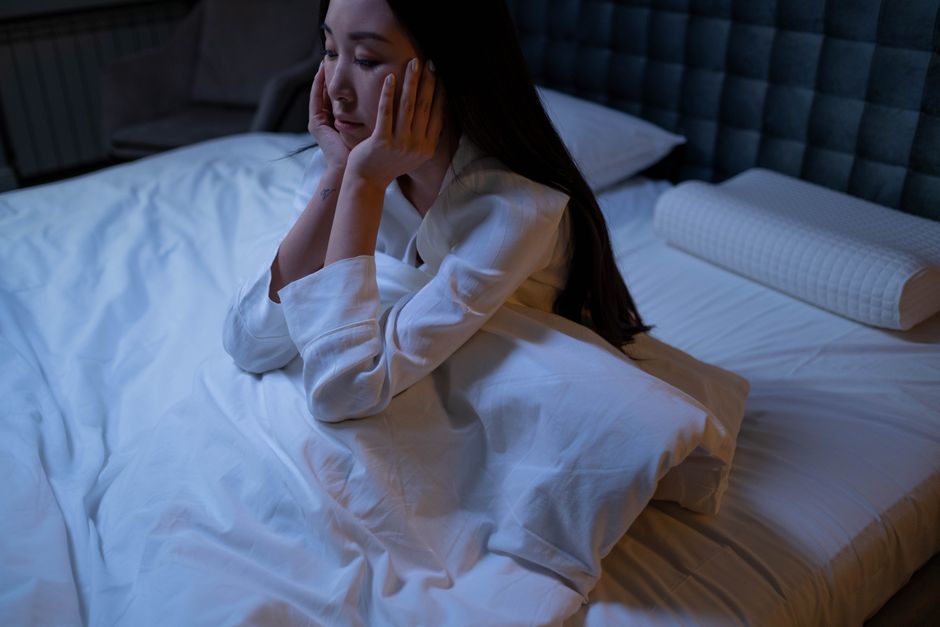
You climb into bed exhausted, but the moment your head hits the pillow your mind switches on. The harder you try to fall asleep, the more awake you feel. That frustrating loop has a name. Sleep anxiety is the worry and physical tension that builds around going to bed or falling asleep, and it can turn a place meant for rest into a source of stress. It is not a formal diagnosis on its own. Instead, it describes a pattern of anxious thoughts and body responses that interfere with sleep, and it often overlaps with insomnia and general anxiety.
What Is Sleep Anxiety?
Sleep anxiety is the anxiety you feel specifically about sleep itself. The worry can show up before bed, during the night when you wake up, or even during the day when you start thinking about whether you will sleep well that night.
What separates it from ordinary tiredness is the fear attached to not sleeping. A person with sleep anxiety may dread bedtime. They may watch the clock, calculate how many hours are left, or feel their heart race as the lights go off.
Clinically, sleep anxiety is closely tied to insomnia. The two feed each other. Poor sleep raises anxiety, and anxiety makes sleep harder. Many researchers treat this as a cycle rather than two separate problems. The worry about sleep becomes its own trigger, keeping the brain alert at exactly the moment it should be winding down.
It is worth noting that sleep anxiety is not a recognized standalone disorder in the main diagnostic manuals. It is better understood as a symptom pattern that appears alongside insomnia, generalized anxiety, or both.
What Causes Sleep Anxiety?
Sleep anxiety usually develops from a mix of triggers rather than a single cause. The brain learns to associate the bedroom with worry, and that association strengthens over time.
Common starting points include:
- A stressful life event, such as a job loss, illness, or relationship problem
- A stretch of genuinely bad sleep that creates fear of it happening again
- An anxiety disorder that already makes the mind overactive at night
- Shift work or travel that disrupts the body clock
- Caffeine, alcohol, or screen use close to bedtime
The mechanism behind it is well understood. When you perceive a threat, your body releases stress hormones like cortisol and adrenaline. These hormones raise heart rate, sharpen attention, and prepare you to react. That response is useful in real danger. At bedtime it works against you, because sleep requires the opposite state: a slow heart rate, relaxed muscles, and a quiet mind.
Over time, the bed itself can become a cue for this alert response. This is called conditioned arousal. The body has learned that lying down means worry, so it produces the alert state automatically, even on nights when nothing is actually wrong.
What Are the Symptoms of Sleep Anxiety?
The symptoms fall into two groups: what you feel in your mind and what you feel in your body. Most people notice both.
Mental symptoms include racing thoughts, replaying the day, worrying about tomorrow, and a strong sense of dread as bedtime approaches. Some people fixate on the clock or count the hours they have left.
Physical symptoms are the same stress responses the body uses in any anxious moment:
- Racing or pounding heart
- Tight chest or shallow breathing
- Muscle tension, especially in the jaw, neck, and shoulders
- Sweating or feeling hot
- Stomach upset or butterflies
- Restlessness and an inability to settle
A key sign is that these feelings are worst in the bedroom or at night. If someone feels calm during the day but tense the moment they lie down, that pattern points toward sleep anxiety rather than a general anxiety problem alone.





How Does Sleep Anxiety Affect Sleep Quality?
Sleep anxiety mainly delays sleep and breaks it up. It tends to cause trouble falling asleep at the start of the night, and it can also cause waking in the early hours with a jolt of alertness.
The body’s sleep drive works on two systems. One is a buildup of pressure to sleep that grows the longer you are awake. The other is the internal clock that sets the timing of sleep and wake. Anxiety interferes with both. High alertness can mask the pressure to sleep, and worry about the clock can push the timing off.
The result is often lighter, more broken sleep. People report lying awake for long stretches, waking multiple times, and feeling unrefreshed even after a full night in bed.
One detail that surprises many people: time spent lying awake in bed is not the same as sleep, and the brain counts it differently. Lying still and worrying does not restore the body the way sleep does. This is part of why sleep anxiety can leave someone exhausted even when they believe they were in bed long enough.
Is Sleep Anxiety the Same as Insomnia?
No, but they overlap heavily. Insomnia is a sleep disorder defined by trouble falling asleep, staying asleep, or waking too early, along with daytime problems from poor sleep. Sleep anxiety is the anxious piece that often drives or worsens that insomnia.
You can have insomnia without much anxiety, and you can have sleep anxiety that has not yet developed into a full insomnia pattern. In practice, the two frequently appear together, and clinicians often treat them as connected.
This overlap matters for treatment. Addressing only the sleep problem without the anxiety, or only the anxiety without the sleep habits, tends to work less well than treating both.
How Is Sleep Anxiety Treated?
The most strongly supported approach for the sleep side is cognitive behavioral therapy for insomnia, often called CBT-I. It is a structured program that targets the thoughts and behaviors that keep insomnia going. Research consistently shows it helps many people with chronic insomnia, and it is widely recommended as a first-line treatment before sleep medications.
CBT-I typically includes several parts:
- Changing unhelpful beliefs about sleep, such as “I will fall apart if I do not sleep”
- Keeping a consistent wake time, even after a bad night
- Limiting time in bed to actual sleep time, then building it back up
- Getting out of bed when awake for a while, so the bed stays linked to sleep
- Relaxation training for the body’s alert response
For the anxiety side, approaches like cognitive behavioral therapy and relaxation techniques can help calm the worry that fuels the cycle. Some clinicians also recommend mindfulness-based practices, though the evidence for these specifically in sleep anxiety is more limited than for CBT-I.
Medications exist for both anxiety and insomnia, and some are used short term. They are generally not a long-term fix on their own, and some sleep medications can carry dependence risks. Decisions about medication should be made with a doctor or psychiatrist, not self-directed.
If sleep anxiety is affecting your daily life, mood, or ability to function, it is worth talking to a healthcare professional. This is a common and treatable pattern, and support is available.
What Can You Do About Sleep Anxiety Tonight?
Small changes to how you approach bedtime can reduce the alert response over time. These are habits, not quick fixes, and they work best when used consistently.
- Keep a fixed wake time every day, including weekends. This anchors your body clock.
- Use the bed only for sleep and intimacy. If you are awake and worrying for what feels like a long stretch, get up and do something calm in dim light until you feel sleepy.
- Give yourself a wind-down period before bed. Dim the lights and step away from screens and stressful tasks.
- Write down tomorrow’s worries earlier in the evening, so your mind has a place to put them.
- Limit caffeine in the afternoon and evening, and be aware that alcohol can fragment sleep even when it seems to help you drift off.
- Try slow breathing, such as making your exhale longer than your inhale, to nudge the body toward calm.
Be patient with these steps. The goal is to retrain the brain’s link between bed and rest, and that link does not change in a single night. If worry about sleep is intense or ongoing, professional support can make a real difference.
Frequently Asked Questions
Is sleep anxiety a real condition?
Sleep anxiety is not a formal diagnosis in the main diagnostic manuals, but it is a widely recognized pattern of anxiety tied to sleep. It most often appears alongside insomnia or an anxiety disorder.
What is the difference between sleep anxiety and insomnia?
Insomnia is a sleep disorder defined by trouble falling or staying asleep with daytime effects, while sleep anxiety is the worry that often drives or worsens it. The two frequently occur together and are usually treated as connected.
Can sleep anxiety go away on its own?
Mild sleep anxiety sometimes improves when the underlying stress eases or sleep habits change. If it lasts for weeks, affects your mood or daily functioning, or keeps getting worse, it is worth seeking help from a healthcare professional.
Does CBT-I help with sleep anxiety?
CBT-I is the most strongly supported treatment for chronic insomnia and targets the thoughts and behaviors that keep the problem going, including sleep-related worry. Research consistently shows it helps many people, and it is widely recommended as a first-line approach.
