
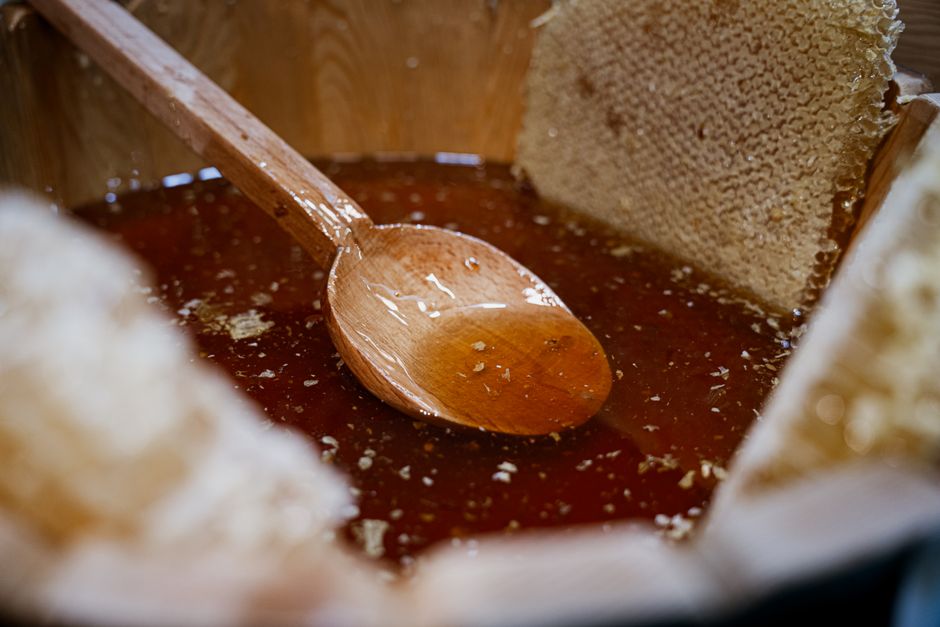
Shilajit is a sticky, tar-like substance that oozes from cracks in rocks in high mountain ranges like the Himalayas, Altai, and Caucasus. It is not a single compound but a complex mixture of organic plant matter that has decomposed over centuries under layers of rock and soil. The primary active component is fulvic acid, which makes up 15 to 20 percent of the substance, along with humic acid, minerals, and trace elements.
Where Does Shilajit Come From?
Shilajit forms from the slow decomposition of plant material, mostly mosses and other vegetation, trapped between layers of rock. Over hundreds to thousands of years, pressure and microbial activity break this plant matter down into a dense, nutrient-rich resin. The process is similar to how coal forms but happens on a smaller, more mineral-rich scale.
The specific geology matters. Shilajit from the Himalayan region is considered the highest quality because of the unique combination of altitude, pressure, and plant species. The resin seeps out during warmer months when the rocks heat up, which is why traditional harvesters collect it in summer. The color ranges from dark brown to black, and the consistency can vary from soft tar to a harder, brittle form depending on moisture content.
What Is Shilajit Made Of Chemically?
The chemical composition is not fixed. It varies by geographic source and age. But the core components are consistent. Fulvic acid is the most studied and biologically active part. It is a group of organic acids that form when plants decompose. Fulvic acid can bind to minerals and help transport them into cells, which is why shilajit is often marketed as a mineral supplement.
Humic acid is another major fraction. It is larger than fulvic acid and less soluble in water. Together, these two make up the bulk of the organic material. The mineral content includes over 80 trace minerals, but the amounts are small. You will find calcium, magnesium, potassium, iron, zinc, and copper. There is also selenium, cobalt, and molybdenum in trace amounts. None of these are present in therapeutic doses on their own. The value comes from the combination with fulvic acid.
Dibenzo-alpha-pyrones (DBPs) are a less talked about but important group of compounds found in shilajit. These molecules appear to have antioxidant and energy-supporting properties. Research published in the Journal of Ethnopharmacology has identified DBPs as key contributors to shilajit’s biological effects, particularly its ability to support mitochondrial function.
Does What Is Shilajit Made Of Actually Work?
This is where the honest answer gets complicated. The chemical profile is impressive on paper, but the human research is limited. A 2012 study in the Journal of Ethnopharmacology found that healthy volunteers who took 500 milligrams of purified shilajit daily for 45 days had better mitochondrial function. Another study from 2016 in the Journal of Andrology reported that men taking shilajit had increased testosterone levels after 90 days. Both studies were small — under 60 participants each.
The evidence for cognitive benefits is weaker. Some animal studies show that fulvic acid from shilajit can reduce tau protein tangles in the brain, which are linked to Alzheimer’s. But no large human trials have confirmed this. The antioxidant claims are real in a test tube. Whether they translate to real-world benefits in a healthy person eating a balanced diet is less clear.
What is well established is that fulvic acid can increase mineral absorption. If you are deficient in certain minerals, shilajit may help. But if you already get enough from food, the extra benefit is marginal. The CDC reports that iron deficiency affects about 10 percent of US women, so for some people this could matter. For most, it is an expensive way to get what a multivitamin already provides.
| Claim | Evidence Level | Study Size | Key Finding |
|---|---|---|---|
| Increases testosterone | Moderate | 60 men | Significant increase after 90 days |
| Boosts energy (mitochondria) | Moderate | 45 volunteers | Improved mitochondrial function markers |
| Improves memory | Weak | Animal studies only | Reduced tau tangles in mice |
| Increases mineral absorption | Strong | Multiple small trials | Fulvic acid binds and transports minerals |
| Anti-aging | None | No clinical human data | No evidence in humans |




What Are the Side Effects of Shilajit?
Purified shilajit is generally safe when taken at recommended doses. Typical doses range from 300 to 500 milligrams per day. Side effects are rare but include stomach upset, dizziness, and headaches in some people. The bigger concern is contamination. Raw, unprocessed shilajit can contain heavy metals, mold, and other impurities because it is harvested directly from rocks.
A 2018 analysis of commercial shilajit products found that some contained lead, arsenic, and mercury above safe limits. The source matters. Products that are “fulvic acid only” or “purified” are safer because they remove the heavy metal fraction. The FDA does not regulate supplements strictly, so third-party testing from organizations like USP or NSF is the only reliable indicator of purity.
People with hemochromatosis or iron overload should avoid shilajit because it can increase iron absorption. The same applies to anyone with a history of kidney stones, since the mineral content could contribute to stone formation. Pregnant or breastfeeding women should not take it because no safety studies exist for that population.
What to Avoid When Buying Shilajit
The market is full of products labeled “shilajit” that are not what they claim. Many are just fulvic acid supplements with a mountain picture on the bottle. Real shilajit is a specific substance from specific regions. If the label does not say where it was harvested, be skeptical. Himalayan or Altai origin is the standard.
- Avoid raw, unprocessed resin. It may contain heavy metals and pathogens.
- Look for “purified” or “standardized to fulvic acid content” on the label.
- Check for third-party testing seals from USP, NSF, or ConsumerLab.
- Do not buy based on color alone. Darker is not necessarily better.
- Be wary of “100 percent pure” claims. Pure shilajit is a mixture, not a single compound.
Powder and capsule forms are easier to dose than resin. Resin can be messy and hard to measure accurately. If you buy resin, it should dissolve completely in warm water. Grit or sediment means it contains rock particles or impurities. Some people report that the taste is bitter and smoky, which is normal, but if it tastes metallic or chemical, that is a red flag.
How Is Shilajit Traditionally Used?
Shilajit has been used in Ayurvedic medicine for thousands of years. Traditional texts describe it as a “rasayana,” meaning a rejuvenating substance that supports longevity and vitality. It was typically taken in small amounts mixed with warm milk or water. The dose was about the size of a pea, which is roughly 300 to 500 milligrams.
Ayurvedic practitioners used it for energy, digestion, and as a general tonic. There is no traditional evidence that it treats specific diseases. The modern marketing has stretched these old uses into claims about curing everything from fatigue to infertility. That is not supported by the traditional texts or by modern research. The original use was as a mild, long-term supplement, not a high-dose treatment.
One non-obvious point: traditional preparation often involved boiling shilajit in water with herbs like guggul or triphala. This was not just for taste. The heat and combination may have improved absorption or reduced toxicity. Modern products skip this step, which means you are getting a different product than what was used historically. Whether that matters is unknown, but it is worth knowing.
Frequently Asked Questions
Is shilajit safe to take every day?
Purified shilajit at 300 to 500 milligrams per day is considered safe for most adults. Long-term safety beyond six months has not been studied.
Can shilajit help with low testosterone?
One small study found increased testosterone levels in men taking 500 milligrams daily for 90 days. More research is needed before this can be considered a reliable treatment.
Does shilajit contain heavy metals?
Raw, unprocessed shilajit can contain lead, arsenic, and mercury. Purified products that are third-party tested are the safest option.
What does shilajit taste like?
It has a strong, bitter, smoky taste that some people find unpleasant. Mixing it with warm milk or honey can help mask the flavor.
