
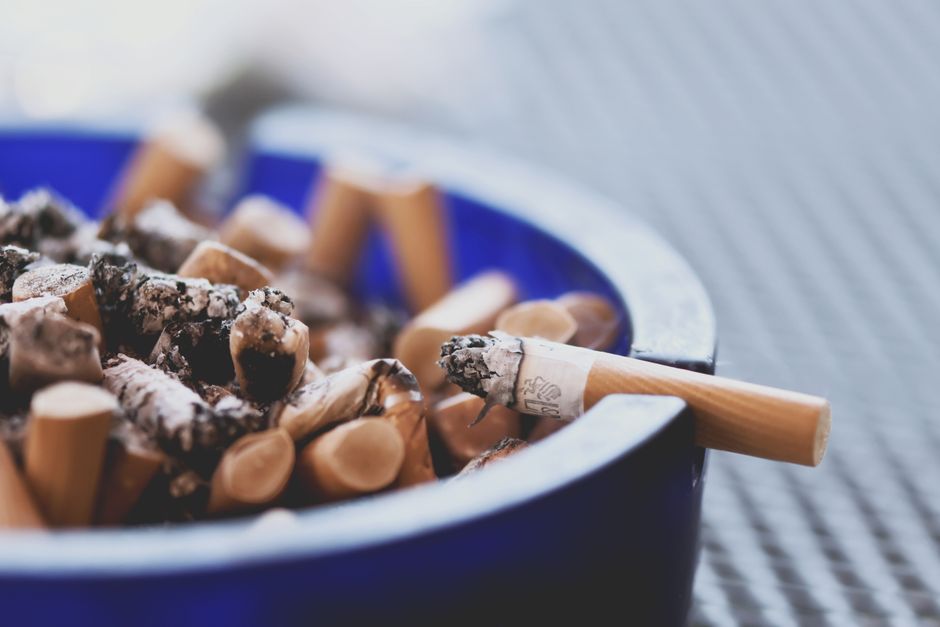
Secondhand smoke is the combination of smoke exhaled by a person who smokes and the smoke that drifts from the burning end of a cigarette, cigar, or pipe. It is also called environmental tobacco smoke. When you breathe it in, you are inhaling thousands of chemicals, many of which are known to cause cancer. There is no safe level of exposure, meaning even brief contact can have immediate harmful effects on the body.
What Is Secondhand Smoke Made Of?
Secondhand smoke contains over 7,000 chemicals. At least 70 of those chemicals are known to cause cancer in humans or animals. Some of the most dangerous include formaldehyde, benzene, arsenic, and vinyl chloride.
The smoke you breathe secondhand is not the same as the smoke the smoker inhales. Sidestream smoke, which comes from the burning tip of the cigarette, is actually more toxic than mainstream smoke. It has higher concentrations of some carcinogens because it burns at a lower temperature and is not filtered through the cigarette or the smoker’s lungs.
These chemicals do not just hang in the air. They settle on surfaces like furniture, carpets, walls, and clothing. This residue is called thirdhand smoke, and it can remain for months after the smoking stops.
How Does Secondhand Smoke Affect Adults?
The health effects on adults are well documented and serious. In non-smoking adults, secondhand smoke exposure can cause heart disease and lung cancer. Studies have shown that living with a smoker increases a non-smoker’s risk of heart disease by about 25 to 30 percent.
Exposure also irritates the respiratory system. Adults may experience coughing, wheezing, and increased phlegm. For those with asthma or chronic obstructive pulmonary disease (COPD), secondhand smoke can trigger attacks and make symptoms significantly worse.
There is also evidence linking secondhand smoke to stroke. The chemicals in the smoke damage blood vessels, increase blood clotting, and reduce the blood’s ability to carry oxygen. Over time, this raises cardiovascular risk even in people who have never smoked themselves.
What Are the Risks for Children?
Children are especially vulnerable to secondhand smoke because their bodies are still developing, and they breathe at a faster rate than adults. This means they take in more smoke relative to their body size.
Infants and children exposed to secondhand smoke have higher rates of sudden infant death syndrome (SIDS). They also suffer from more frequent and severe respiratory infections, including bronchitis and pneumonia.
Ear infections are another common problem. Fluid builds up in the middle ear more often in children exposed to smoke, which can lead to repeated infections and, in some cases, hearing loss. Children with asthma are particularly affected—secondhand smoke triggers more frequent and more severe asthma attacks.
There is no established safe distance. A child in another room or in a car with the window down is still exposed. The particles are small enough to travel through doorways and vents.




Does Secondhand Smoke Affect Pregnancy?
Yes. Pregnant women who are exposed to secondhand smoke put both themselves and the fetus at risk. The chemicals in the smoke cross the placenta and reach the developing baby.
Exposure during pregnancy is linked to low birth weight. Babies born to mothers exposed to secondhand smoke are more likely to be born prematurely. Low birth weight and prematurity are leading causes of infant health problems and developmental delays.
There is also evidence that secondhand smoke exposure during pregnancy increases the risk of miscarriage and stillbirth. The exact risk is difficult to quantify because exposure levels vary, but the direction of the evidence is consistent: more exposure means higher risk.
No clinical guidelines exist for a “safe” amount of secondhand smoke during pregnancy. The only established recommendation is complete avoidance.
How Long Does Secondhand Smoke Stay in a Room?
Secondhand smoke does not disappear when the cigarette is put out. The particles and gases can remain in the air for hours. Even with a window open, the smoke lingers far longer than most people expect.
Opening a window or using a fan helps dilute the smoke but does not eliminate it. Air purifiers with HEPA filters can remove some particles but do not remove all gases. The only reliable way to protect non-smokers is to smoke outside, away from doors and windows, or to quit entirely.
Ventilation systems in buildings do not fully protect people either. Smoke travels through shared ventilation in apartments and hotels. This is why many cities have banned smoking in multi-unit housing and public buildings.
What Is the Difference Between Secondhand and Thirdhand Smoke?
Secondhand smoke is what you breathe in while smoking is happening or shortly after. Thirdhand smoke is what remains after the smoke clears. It is the residue that sticks to surfaces, dust, and clothing.
Thirdhand smoke contains many of the same toxic chemicals as secondhand smoke. These chemicals can react with other compounds in the air to form new harmful substances. For example, nicotine can react with nitrous acid in indoor air to form tobacco-specific nitrosamines, which are potent carcinogens.
Children are at the greatest risk from thirdhand smoke because they crawl on floors, touch surfaces, and put their hands in their mouths. Vacuuming and wiping surfaces do not fully remove the residue. Deep cleaning or replacing carpets and painted walls may be necessary in homes where people smoked for years.
The evidence on thirdhand smoke is newer than the evidence on secondhand smoke. The health risks are not as precisely quantified, but the presence of carcinogens in the residue is confirmed. It is reasonable to treat thirdhand smoke as a health concern, especially for young children.
Can You Get Rid of Secondhand Smoke Exposure?
The only effective way to prevent secondhand smoke exposure is to eliminate smoking from indoor spaces. This is not a matter of opinion; it is what the evidence shows. Smoke moves through air ducts, under doors, and through shared walls.
If you live with a smoker, the most protective approach is to require all smoking to happen outdoors, away from entrances and open windows. If that is not possible, dedicated smoking areas with separate ventilation are a partial measure, but they do not fully protect others in the home.
For people who smoke, quitting is the single most effective step to protect everyone around them. Nicotine replacement therapy, prescription medications, and counseling all increase the chances of quitting successfully. Many of these options are covered by health insurance.
For non-smokers, avoiding places where smoking is allowed is the best personal protection. Choosing smoke-free housing, smoke-free restaurants, and smoke-free workplaces reduces exposure substantially. If you visit a home where someone smokes indoors, the exposure you receive is real, even if you cannot see or smell it.
Frequently Asked Questions
Is secondhand smoke worse than smoking a cigarette?
No, smoking a cigarette directly is more harmful to the smoker than secondhand smoke is to a bystander. However, secondhand smoke is still dangerous and carries no safe exposure level.
How long does secondhand smoke stay in your body?
Cotinine, a breakdown product of nicotine, can be detected in blood or urine for several days after exposure. The physical health effects, such as inflammation or DNA damage, can last much longer.
Can opening a window eliminate secondhand smoke?
No. Opening a window reduces the concentration of smoke but does not eliminate it, and it does nothing to remove residue that settles on surfaces.
Does secondhand smoke cause cancer in non-smokers?
Yes. Lung cancer is a well-established consequence of long-term secondhand smoke exposure in non-smokers, and the evidence also links it to other cancers.
