
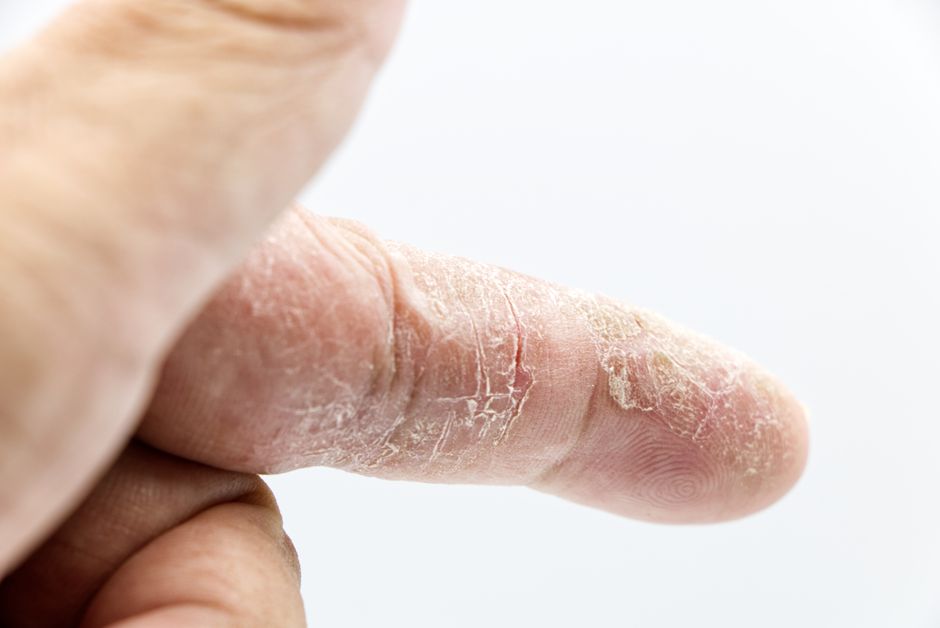
Scabies is a skin condition caused by a tiny mite called Sarcoptes scabiei var. hominis. This microscopic parasite burrows into the upper layer of the skin, where it lives, lays eggs, and triggers an intensely itchy rash. The itching is not from the mite itself but from an allergic reaction your body mounts against the mite, its eggs, and its waste.
What Is Scabies Caused By?
Scabies is caused exclusively by the human itch mite. These mites are extremely small — about the size of a pinhead — and cannot be seen with the naked eye. A female mite burrows into the outermost layer of the skin, called the stratum corneum, creating a winding tunnel. She lays two to three eggs per day, and the eggs hatch within three to four days.
The mites prefer warm, folded areas of skin. Common locations include the webbing between fingers, wrists, elbows, armpits, waistline, buttocks, and genitals. In infants and young children, the mites often appear on the scalp, face, palms, and soles of the feet — areas less commonly affected in older children and adults.
Only the human variety of this mite causes scabies in people. Animal mites from dogs, cats, or livestock can bite humans, but they cannot complete their life cycle on human skin. These animal-mite bites cause temporary itching but do not lead to a full scabies infestation.
How Does Scabies Spread From Person to Person?
Scabies spreads through prolonged skin-to-skin contact. The mites crawl from one person to another during this contact, which is why scabies is frequently transmitted between sexual partners, household members, and people living in close quarters.
Brief contact, like a handshake or a hug, is rarely enough to transmit the mite. However, the Centers for Disease Control and Prevention notes that a person with a heavy infestation — often someone with crusted scabies — can spread the mites through shorter contact.
Indirect transmission is possible but uncommon. Mites can survive away from human skin for 24 to 36 hours at room temperature. Sharing bedding, clothing, or towels with an infected person carries a small risk, but this route is far less common than direct skin contact.
Scabies is not spread through swimming pools, gym equipment, or toilet seats. The mite cannot jump or fly, and it does not survive long enough in these environments to establish a new infestation.
What Are the First Signs of a Scabies Infestation?
The first symptom is usually intense itching, often worse at night. This itching begins three to six weeks after the initial infestation in someone who has never had scabies before. The delay happens because the body needs time to develop an allergic reaction to the mites.
In someone who has had scabies previously, symptoms appear much faster — typically within one to four days. The immune system already recognizes the mite and responds more quickly.
The rash itself appears as small red bumps, blisters, or scales. You may also see thin, wavy, grayish-white lines on the skin. These lines are the burrows where the female mite has tunneled. They are most visible in the webbing between fingers, on the wrists, and on the elbows.
It is important to note that the rash can appear in areas where no burrows are visible. The allergic reaction causes widespread itching and bumps beyond the mites’ actual location. Scratching often leads to secondary bacterial infections, which can make the rash look worse and require separate treatment.





How Is Scabies Diagnosed?
A doctor can often diagnose scabies based on the appearance of the rash and the pattern of itching. If the diagnosis is unclear, the doctor may perform a skin scraping. This involves gently scraping a small area of affected skin with a scalpel blade and examining the sample under a microscope to look for mites, eggs, or mite feces.
In some cases, a diagnosis is made based on response to treatment. If the itching and rash improve after treatment with a scabicide — a medication that kills mites — the diagnosis is confirmed. This approach is common when skin scrapings come back negative but the clinical picture strongly suggests scabies.
Dermoscopy is another diagnostic tool. A dermatologist uses a handheld magnifying device to look for the characteristic “delta wing” pattern of the mite at the end of a burrow. This method is quick and non-invasive, but it requires training and experience to use correctly.
What Treatments Are Available for Scabies?
Scabies requires prescription treatment. Over-the-counter products do not kill the mites effectively. The two most commonly prescribed treatments are permethrin cream and oral ivermectin.
Permethrin 5% cream is the first-line treatment in most cases. It is applied to the entire body from the neck down and left on for 8 to 14 hours before washing off. For infants and young children, the cream is also applied to the scalp and face, avoiding the area around the eyes and mouth. A single application is often sufficient, but many doctors recommend a second application one week later to catch any newly hatched mites.
Oral ivermectin is an alternative treatment. It is taken as a pill, usually in two doses taken one to two weeks apart. Ivermectin is particularly useful for people who cannot tolerate topical treatments or when scabies affects a large group of people, such as in nursing homes or prisons. It is not approved for use in children under 15 kilograms (about 33 pounds) or in pregnant women, though some doctors use it off-label in specific situations.
Treatment must be repeated for anyone who had close contact with the infected person, even if they have no symptoms. Treating the entire household or sexual partners simultaneously prevents reinfestation. If only the symptomatic person is treated, the mites will likely return from untreated contacts.
Why Does the Itching Continue After Treatment?
It is common for itching to persist for two to four weeks after successful treatment. This is not a sign that the treatment failed. The mites are dead, but the allergic reaction in the skin takes time to resolve. The dead mites, eggs, and feces remain in the skin until the body sheds the outer layer of skin.
During this period, the itching may be managed with antihistamines, cool compresses, or over-the-counter hydrocortisone cream. If the itching continues beyond four weeks, or if new burrows appear, the treatment may have failed or reinfestation may have occurred. In these cases, a doctor should be consulted for repeat treatment.
It is also important to wash all clothing, bedding, and towels used in the 48 hours before treatment in hot water and dry them on high heat. Items that cannot be washed can be sealed in a plastic bag for at least 72 hours. Since mites cannot survive more than a few days away from human skin, this is sufficient to eliminate them from the environment.
What Is Crusted Scabies?
Crusted scabies, also called Norwegian scabies, is a severe form of the infestation. It occurs when the mite population grows to hundreds of thousands or even millions, compared to the 10 to 15 mites typical of a regular infestation.
This form produces thick crusts of skin that contain large numbers of mites. The crusts are highly contagious, and even brief contact with them can spread the infestation. Crusted scabies is most common in people with weakened immune systems, including those with HIV, organ transplant recipients, and people taking immunosuppressive medications. It also occurs in elderly people and those with neurological conditions that reduce sensation, such as spinal cord injury.
Treatment for crusted scabies is more intensive. It typically involves both topical permethrin and oral ivermectin, often with repeated applications. Hospitalization may be necessary in severe cases. Anyone who has close contact with a person with crusted scabies should be treated promptly, even without symptoms.
How Can Scabies Be Prevented?
Prevention focuses on avoiding prolonged skin contact with infected individuals. In households, this means treating all close contacts at the same time, even if they show no symptoms. The asymptomatic period can last several weeks, and untreated contacts will spread the mites back to the treated person.
In institutional settings like nursing homes, prisons, and childcare centers, scabies outbreaks require coordinated treatment of all residents, staff, and visitors who had contact with affected individuals. Untreated individuals act as reservoirs, allowing the infestation to continue circulating.
Sexual partners of an infected person should always be treated. Scabies is considered a sexually transmitted infection because of the prolonged skin contact involved, though it can also be acquired through non-sexual contact.
For the general public, the risk of acquiring scabies outside of close-contact settings is very low. The mite does not survive well in the environment and requires direct skin contact to spread. Simple hygiene measures like regular handwashing do not prevent scabies because the mite burrows into the skin and is not removed by washing.
Frequently Asked Questions
Can you get scabies from a dog or cat?
Animal mites can bite humans and cause temporary itching, but they cannot complete their life cycle on human skin. These bites resolve on their own without treatment, and the animal should be treated by a veterinarian.
How long can scabies mites live on bedding and furniture?
Scabies mites can survive away from human skin for 24 to 36 hours at room temperature. Washing bedding in hot water and drying on high heat, or sealing items in plastic bags for 72 hours, eliminates them.
Can scabies go away without treatment?
No. Scabies will not resolve on its own because the mites continue to reproduce on the skin. Treatment with a prescription medication is required to eliminate the infestation.
Is the scabies rash contagious before symptoms appear?
Yes. A person can spread scabies before they develop symptoms because the mites are present and reproducing during the three to six week incubation period. This is why all close contacts are treated simultaneously.
