
Rubella is a contagious viral infection best known for the fine red rash it causes. It is usually mild in children and adults, but it can cause serious harm to a developing baby if a pregnant woman becomes infected. A safe and effective vaccine has made rubella rare in the United States, though it still circulates in parts of the world where vaccination rates are low.
What Is Rubella Virus and How Does It Spread?
Rubella is caused by the rubella virus, a member of the togavirus family. It spreads mainly through tiny droplets released when an infected person coughs or sneezes. You can also get it by touching a surface contaminated with those droplets and then touching your mouth or nose.
The virus is contagious in a way that catches people off guard. A person can spread rubella starting about one week before the rash appears and for up to a week after. That means someone who feels completely fine can pass the virus to others without knowing it.
Once the virus enters the body, it multiplies in the upper respiratory tract and then spreads through the bloodstream. The time from exposure to the first symptoms — called the incubation period — is typically 14 to 21 days. The rash usually shows up 14 to 17 days after exposure.
Rubella is sometimes called “German measles,” but it is not caused by the measles virus. The two are different infections, though both cause a rash. This naming confusion leads some people to assume that measles immunity or measles vaccination protects against rubella. It does not. Protection against rubella comes from the rubella vaccine specifically, which is given as part of the MMR (measles, mumps, rubella) combination vaccine.
What Are the Symptoms of Rubella?
The hallmark symptom is a red or pink rash that starts on the face and spreads downward to the trunk, arms, and legs. It typically lasts about three days, which is why rubella is sometimes called “three-day measles.”
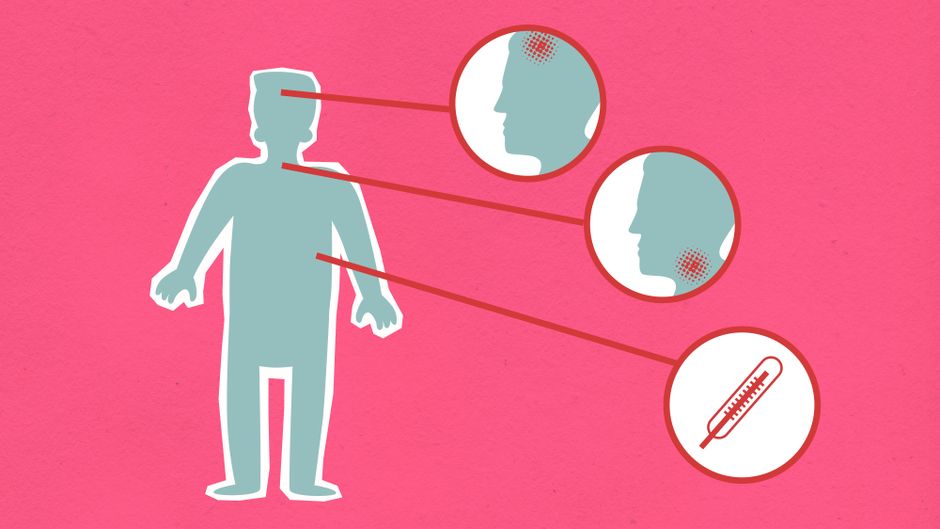
Before the rash appears, many people develop mild symptoms that can be easy to dismiss:
- Low-grade fever
- Swollen, tender lymph nodes, especially behind the ears and at the back of the neck
- Runny nose
- Red or irritated eyes
- Headache
- Joint pain, more common in adults and more common in women
The swollen lymph nodes behind the ears and neck are a distinctive clue. They often appear before the rash and can be tender to the touch.
Up to half of people infected with rubella have no symptoms at all, or symptoms so mild they go unnoticed. This is one reason the virus can spread quietly through a community before anyone realizes an outbreak is underway.
In children, the illness is usually brief and mild. In adults, symptoms tend to be more noticeable. Joint pain and swelling are more common in adults, particularly women, and can last for a few days to a couple of weeks. Serious complications like brain inflammation (encephalitis) are rare but have been reported.
Why Is Rubella Dangerous During Pregnancy?
Rubella is most dangerous when a woman becomes infected during pregnancy, especially in the first trimester. The virus can cross the placenta and infect the developing fetus. This can lead to a group of serious birth defects known as congenital rubella syndrome (CRS).
The risk to the fetus is highest during the first 12 weeks of pregnancy. During this early window, infection can cause:
- Hearing loss, which is the most common consequence
- Eye problems, including cataracts
- Heart defects
- Developmental delays and intellectual disability
- Liver and spleen enlargement
- Growth problems
The timing matters a great deal. Infection very early in pregnancy carries the highest risk of severe outcomes. As pregnancy progresses, the risk of congenital defects drops, though it does not disappear entirely. Some babies born with CRS appear healthy at birth but develop problems such as hearing loss months or years later.
Because of this, preventing rubella infection before pregnancy is the central goal of public health efforts. This is why the rubella vaccine is so important — not just to protect the person vaccinated, but to protect future pregnancies.




How Is Rubella Diagnosed?
Doctors diagnose rubella primarily through blood tests that detect antibodies against the virus. A blood test can check for IgM antibodies, which suggest a recent infection, or IgG antibodies, which indicate immunity from past infection or vaccination.
Because many illnesses cause a rash and fever, rubella is not always the first thing a doctor suspects. In countries where rubella is rare, a doctor might not consider it unless there is a known exposure or travel history to an area where the virus circulates.
If rubella is suspected during pregnancy, testing is urgent. A pregnant woman who has been exposed or develops symptoms should contact her healthcare provider right away. A blood test can confirm whether she is immune or infected. If infection is confirmed, the provider can discuss what the findings mean for the pregnancy.
There is no treatment that cures rubella. Care focuses on managing symptoms — rest, fluids, and fever reducers as needed. For pregnant women with confirmed infection, management involves close monitoring and counseling about the potential effects on the baby.
How Is Rubella Prevented?
Vaccination is the single most effective way to prevent rubella. The rubella vaccine is given as part of the MMR vaccine, which protects against measles, mumps, and rubella in one shot.
The Centers for Disease Control and Prevention recommends two doses of MMR vaccine for children: the first at 12 through 15 months of age and the second at 4 through 6 years of age. Adults who do not have evidence of immunity should also be vaccinated. Evidence of immunity includes documented vaccination, a blood test showing antibodies, or being born before 1957, when the virus was widespread.
Two doses of MMR vaccine are about 97 percent effective at preventing rubella. One dose is about 93 percent effective. These are among the most effective vaccines in use.
There is an important safety consideration. The rubella vaccine contains a live but weakened virus, so it is not given during pregnancy. Women should avoid becoming pregnant for at least 28 days after receiving the MMR vaccine. This is a standard precaution, and women who are already pregnant should wait until after delivery to be vaccinated.
Other prevention steps follow the same logic as preventing any respiratory infection:
- Wash hands often with soap and water
- Avoid close contact with people who are sick
- Cover coughs and sneezes
- Stay home when you are ill to avoid spreading infection
For people traveling internationally, checking vaccination status before the trip is wise. Rubella remains common in many countries, and travelers can bring the virus home. A single dose of MMR is generally recommended for adults who are not already immune and who plan to travel abroad.
Is Rubella Still a Concern Today?
Rubella has been eliminated in the United States, meaning the virus no longer spreads continuously within the country. The last major U.S. outbreak occurred in the mid-1960s, before the vaccine was available. That outbreak infected millions and led to tens of thousands of birth defects and deaths.
Elimination does not mean the virus is gone everywhere. Cases still appear in the U.S. when unvaccinated people travel to countries where rubella circulates and bring it back. If vaccination rates drop, the virus could regain a foothold.
Globally, rubella remains a concern. The World Health Organization estimates that more than 100,000 babies are born with congenital rubella syndrome each year, mostly in regions with limited vaccine access. Efforts to expand vaccination worldwide have reduced this number, but the virus has not been eliminated globally.
The takeaway is simple. Rubella is rare in the U.S. because of vaccination, not because the virus has disappeared. As long as the virus exists somewhere, unvaccinated people remain at risk — and so do the pregnancies they may one day carry.
Frequently Asked Questions
Is rubella the same as measles?
No, rubella and measles are caused by different viruses, though both produce a rash and fever. Rubella is generally milder, but it poses a serious risk to a developing fetus, which measles does not.
Can you get rubella if you have been vaccinated?
It is very unlikely. Two doses of the MMR vaccine are about 97 percent effective at preventing rubella. No vaccine is 100 percent effective, but breakthrough cases are rare.
How long does rubella last?
The rash usually lasts about three days, and the illness typically resolves within a week. Joint pain in adults can sometimes linger for a couple of weeks.
What should I do if I was exposed to rubella while pregnant?
Contact your healthcare provider right away for testing. If you are already immune from vaccination or past infection, the risk is very low, but a blood test can confirm your status and guide next steps.
