
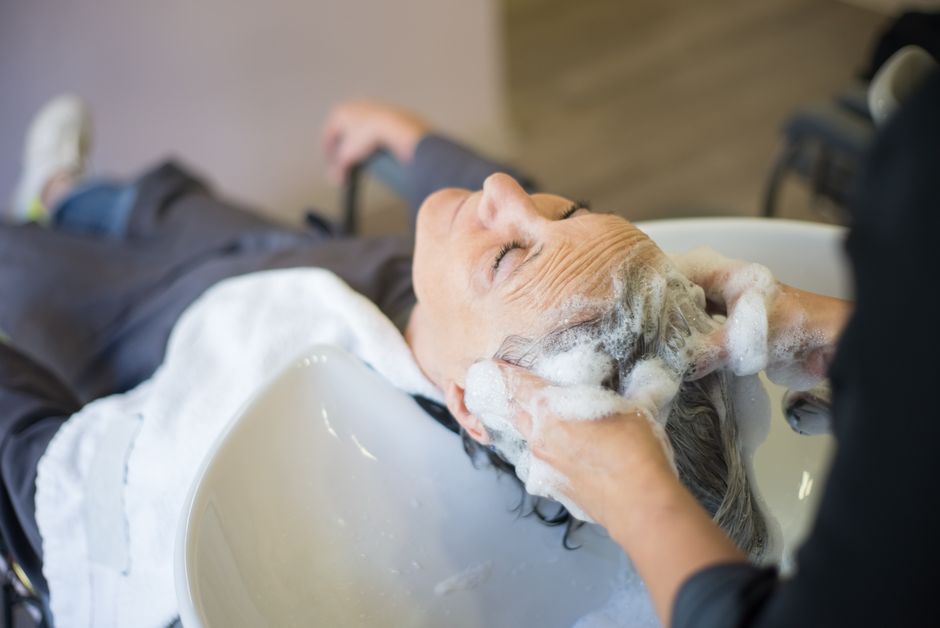
Purple shampoo is a toning product designed to neutralize yellow, brassy, or orange tones in blonde, silver, gray, and lightened hair. It works by depositing a small amount of violet pigment onto the hair shaft, which cancels out unwanted warm shades through basic color theory. This is not a regular shampoo for daily cleansing — it is a specialized product used once or twice a week to keep cool-toned hair looking fresh and bright.
How Does Purple Shampoo Work on Hair?
Purple shampoo works because of something called the color wheel. Violet sits directly across from yellow on the color wheel. When you put violet pigment on yellow hair, the two colors cancel each other out. The result is a more neutral, cool-toned appearance.
The pigment in purple shampoo is temporary. It coats the outside of the hair shaft. It does not penetrate the cuticle like permanent hair color. For this reason, the effect washes out over time. You need to keep using it to maintain the look.
Research from cosmetic chemists shows that the concentration of violet dye in these shampoos is very low. Most formulas use a combination of Direct Violet 2 and Acid Violet 43. These are safe for topical use but can stain porous hair if left on too long. The American Academy of Dermatology notes that toning shampoos are generally safe for most hair types when used as directed.
What Is Purple Shampoo Used For Specifically?
Purple shampoo has three main uses. The first is for natural blondes whose hair has darkened or yellowed with age. The second is for people with gray or silver hair who want to keep it looking bright and silver rather than dull or yellowish. The third is for anyone who has chemically lightened their hair — including highlights, balayage, or full bleach — and wants to keep the color cool.
It is not meant for dark hair that has not been lightened. If your hair is naturally brown or black, purple shampoo will do nothing visible. The pigment cannot show up against a dark background. Some people with brassy dark blonde hair may see a subtle difference, but the effect is usually minimal.
Many people also use purple shampoo to extend the time between salon visits. A 2020 survey by the Professional Beauty Association found that 68% of colorists recommend purple shampoo to clients to help maintain toner results at home. This is a practical way to save money and reduce chemical processing on your hair.
Does Purple Shampoo Actually Work for All Hair Types?
Purple shampoo works best on hair that is level 7 or lighter on the hair color scale. Level 7 is a dark blonde. Level 8 is medium blonde. Level 9 is light blonde. Level 10 is the lightest platinum. If your hair is darker than level 7, you will likely see little to no effect.
For gray and white hair, purple shampoo is very effective. Gray hair tends to pick up yellow tones from environmental factors like hard water minerals, sun exposure, and product buildup. The CDC reports that hard water affects more than 85% of US households. The minerals in hard water can cause hair to look dull and yellow over time. Purple shampoo counteracts this.
For silver and platinum hair, the results are often dramatic. These hair colors are already very light, so the violet pigment has a clear surface to work on. One wash can turn a dull yellow-blonde into a bright silver. But the effect is temporary. You need to use it consistently.
For natural blondes who have never dyed their hair, results vary. Some natural blondes have cool undertones and do not need toning. Others have warm golden undertones that purple shampoo can tone down slightly. It will not turn a warm golden blonde into an icy platinum. It will just remove the most obvious yellow.




What Are the Side Effects of Using Purple Shampoo?
The most common side effect is over-toning. If you leave purple shampoo on too long or use it too often, your hair can take on a violet or purple tint. This is not permanent. It fades after a few washes with regular shampoo. But it can be alarming if you are not expecting it.
Purple shampoo can also be drying. The ingredients that deposit pigment are not moisturizing. Many formulas contain sulfates to help the pigment adhere. Sulfates strip natural oils from the hair. If you have dry or damaged hair, this can make things worse.
Some people report scalp irritation. This is rare but possible. The dyes used in purple shampoo are generally considered safe by the FDA for external use. But everyone’s skin is different. If you feel burning or itching, stop using it immediately.
Another issue is staining. Purple shampoo can stain your hands, nails, shower tiles, and towels. The pigment is strong. Wear gloves when applying it. Use a dark towel. Rinse your shower walls after use. The American Cleaning Institute recommends wiping down surfaces immediately after use to prevent permanent staining.
| Hair Type | Effectiveness | Risk of Over-Toning |
|---|---|---|
| Platinum blonde (level 10) | High | High |
| Light blonde (level 9) | High | Moderate |
| Medium blonde (level 8) | Moderate | Low |
| Dark blonde (level 7) | Low to moderate | Low |
| Gray or silver | High | Moderate |
| Natural brown or black | None | None |
How Should You Use Purple Shampoo Correctly?
Using purple shampoo is different from using regular shampoo. The goal is not to cleanse thoroughly. The goal is to deposit pigment. Start by wetting your hair completely. Squeeze out excess water so the shampoo can stick to the hair rather than running off.
Apply a small amount to your palms and work it through your hair. Focus on the areas that are most yellow. For most people, this is the top of the head and the front sections. Avoid the roots if your hair is oily — the pigment can make roots look dull.
Leave it on for 2 to 5 minutes for your first use. Check the color by rinsing a small section. If it looks good, rinse thoroughly. If it is still yellow, you can leave it on longer next time. The key is to start short and increase time gradually. Over-toning is much harder to fix than under-toning.
- Wear gloves during application to avoid stained hands
- Use once a week for maintenance, not daily
- Follow with a conditioner to restore moisture
- Rinse until water runs clear to avoid residue buildup
- Store away from direct sunlight to preserve pigment
Some people report that purple shampoo works better when mixed with regular shampoo. This is a valid technique. It dilutes the pigment and reduces the risk of over-toning. A 1:1 ratio is a good starting point for people with sensitive hair or first-time users.
Common Misconceptions About Purple Shampoo
One common myth is that purple shampoo lightens hair. It does not. It only neutralizes yellow tones. If your hair is darker than you want it, purple shampoo will not help. You need a lightener or bleach for that. Purple shampoo is a toner, not a lightener.
Another misconception is that purple shampoo replaces professional toner. It does not. Professional toners used in salons are stronger and last longer. They are applied with developer and penetrate the hair shaft. Purple shampoo is a temporary surface treatment. It can help maintain toner results but cannot replace them.
Some people believe that more expensive purple shampoo works better. This is not supported by evidence. A 2022 analysis by the cosmetic testing lab Chemists Corner found no consistent relationship between price and pigment concentration. Some drugstore brands had higher pigment levels than luxury brands. The difference is often in fragrance, packaging, and marketing.
There is also a belief that purple shampoo works instantly. It does not. You need multiple uses to see consistent results. One wash can make a difference if your hair is very yellow and very light. But for most people, it takes 2 to 4 washes to reach the desired tone. Patience matters more than product choice.
Frequently Asked Questions
Can I use purple shampoo on unbleached hair?
Yes, but only if your natural hair is light enough to show the pigment, typically level 7 or lighter. On dark hair, it will have no visible effect.
How often should I use purple shampoo?
Most people should use it once a week. If your hair is very yellow, you can use it twice a week until the tone improves, then reduce to once a week.
Can purple shampoo damage my hair?
It can be drying because of the sulfates and pigment ingredients, but it does not cause structural damage like bleach. Use a conditioner afterward to prevent dryness.
Does purple shampoo work on orange hair?
No, purple cancels yellow, not orange. For orange tones, you need blue shampoo. Blue is opposite orange on the color wheel.
