
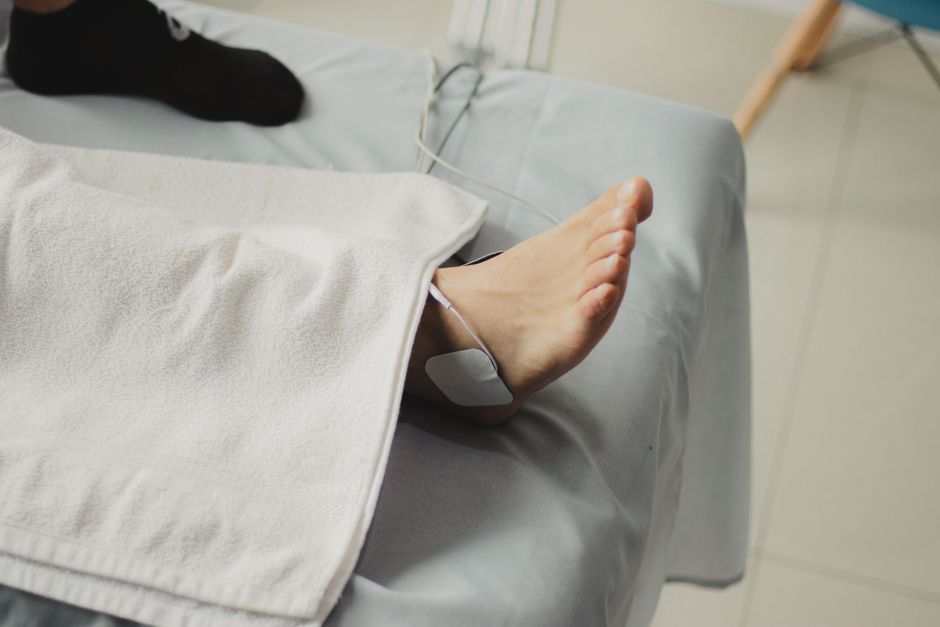
PTNS stands for percutaneous tibial nerve stimulation. It is a treatment for overactive bladder that sends mild electrical pulses through a thin needle placed near the ankle. The goal is to calm the nerve signals that cause sudden, hard-to-control urges to urinate. It is a non-surgical option, usually considered after lifestyle changes and bladder training have not done enough.
What Is PTNS Treatment for Overactive Bladder?
PTNS is a neuromodulation therapy. It uses a small, thin needle inserted just above the inside of the ankle, near the tibial nerve. That nerve carries signals that trace back to the same nerve network controlling the bladder and pelvic floor.
The idea is simple to describe, even if the exact biology is not fully mapped. Stimulating the tibial nerve appears to influence the sacral nerve plexus, a cluster of nerves that helps regulate bladder activity. The pulses are mild. Most people feel a tapping or tingling sensation in the foot or toes, not pain.
The device used is a small stimulator connected to the needle by a wire. A typical session lasts about 30 minutes. Sessions are usually done once a week for 12 weeks as an initial course. That schedule comes from the way PTNS was studied in clinical trials, not from a fixed biological rule.
It is important to separate PTNS from two things it is often confused with. It is not the same as sacral neuromodulation, which uses an implanted device. And it is not the same as transcutaneous electrical nerve stimulation, or TENS, which uses surface electrodes instead of a needle. PTNS uses a needle and is done in a clinic.
How Does PTNS Actually Work?
The tibial nerve is a branch of the sciatic nerve, which connects to nerve roots in the lower spine. Those roots share a pathway with the nerves that control the bladder and the muscles around it. This shared pathway is the reason a signal at the ankle can influence bladder function at all.
Overactive bladder symptoms come from bladder muscle contractions that happen before the bladder is full, or from nerve signals that create a strong urge even when the bladder is not full. How PTNS changes those signals is not completely understood. Research suggests it may help modulate nerve activity in the sacral region, but the precise mechanism is still an area of study.
What is clear is that the effect is not instant for most people. Some notice improvement early. Many need several sessions before any change. This is worth knowing up front, because a person who expects relief after one visit may quit before the treatment has had a chance to work.
Who Is PTNS Meant For?
PTNS is generally considered for adults with overactive bladder who have not gotten enough relief from first-line approaches. Those approaches include bladder training, timed voiding, fluid and caffeine adjustments, and pelvic floor muscle training. For many people, these steps help but do not fully control symptoms.
It is also often considered when medications have not worked well or caused bothersome side effects. Drugs for overactive bladder, such as antimuscarinics and beta-3 agonists, can cause dry mouth, constipation, or other issues that lead some people to stop taking them.
PTNS is not for everyone. It is generally not used in people who have certain implanted electrical devices, such as a pacemaker or defibrillator, because of possible interference. It is also not appropriate during pregnancy, and it is not recommended for people with active infections or certain bleeding disorders. Anyone considering it should have a full discussion with their clinician about their specific situation.





What Does a PTNS Session Involve?
A session is done in a clinic and usually takes about 30 minutes. You sit or recline. The clinician cleans the skin near the ankle and places a thin needle just above the bony bump on the inside of the ankle. A small electrode may also be placed on the foot or calf.
The needle connects to a stimulator. The clinician adjusts the current until you feel a tingling or tapping in the foot or toes. That sensation is the sign the nerve is being stimulated. If it feels sharp or painful, the setting is adjusted.
During the session you can read, rest, or talk. When it ends, the needle is removed. There is usually no recovery time. Most people drive themselves home and return to their day.
Side effects are generally mild and temporary. Some people report minor bleeding or bruising where the needle went in, or brief discomfort in the foot or ankle. Serious complications appear to be uncommon, though as with any treatment that breaks the skin, infection is a possibility.
How Effective Is PTNS?
Research suggests PTNS can reduce symptoms for some people with overactive bladder. Studies have looked at measures like urinary frequency, urgency episodes, and leakage. Results vary from person to person.
An important point is that PTNS is often compared with medication and with sacral neuromodulation in studies, and the findings have not consistently shown one approach is clearly better than another for every person. Some people respond well. Others do not respond at all. There is no reliable way to predict in advance who will benefit.
There is also a practical issue. The benefit tends to fade if treatment stops. Many people who respond need ongoing maintenance sessions, often less frequent than the initial weekly course. This is one of the main drawbacks of PTNS compared with treatments that do not require regular clinic visits.
The evidence base is real but modest. PTNS has been studied in randomized trials, which is a strength. But trials have often been small, and long-term data are limited. That is why PTNS is usually framed as a reasonable option rather than a first choice.
How Does PTNS Compare With Other Options?
Overactive bladder treatment usually moves from simpler steps to more involved ones. PTNS sits in the middle of that ladder. Understanding where it fits helps put its pros and cons in context.
| Option | How it works | Main considerations |
|---|---|---|
| Lifestyle and bladder training | Behavioral changes, timed voiding, pelvic floor training | Low risk, no procedure, but may not control symptoms alone |
| Medication | Antimuscarinics or beta-3 agonists | Can be effective; side effects lead some to stop |
| PTNS | Needle near ankle, weekly clinic sessions | No surgery, but requires ongoing visits; response varies |
| Sacral neuromodulation | Implanted device near the sacral nerves | More invasive; may reduce need for frequent visits |
| Botulinum toxin injections | Injections into bladder muscle | Can be effective; may require repeat procedures; risk of urinary retention |
Each option has trade-offs. PTNS avoids surgery and avoids the systemic side effects of drugs. But it requires repeated clinic visits and its benefit often depends on continuing treatment. That is a real burden for people who live far from a clinic or have limited time.
Some clinicians offer a trial of PTNS to see whether a person responds before committing to a longer course. This is common practice, though the exact way trials are structured varies.
What Should You Ask Your Doctor?
If you are considering PTNS, a few questions can help you decide whether it fits your life and your symptoms.
- Have I already tried the first-line options, and how well did they work?
- How many sessions would I need, and how often?
- What happens if it does not work for me?
- Would I need ongoing maintenance sessions, and how frequent would they be?
- Are there any reasons PTNS might not be safe for me?
It also helps to set realistic expectations. PTNS is not a cure. It is a way to reduce symptoms for some people. If your symptoms are mild, behavioral steps may be enough. If they are severe, a more involved option might be a better fit. The right choice depends on your symptoms, your health, and what you are able to commit to.
Is PTNS Worth Trying?
PTNS is a legitimate, studied option for overactive bladder. It is not experimental. It is also not a guaranteed fix. The honest position is that it helps some people and not others, and the only way to know which group you fall into is often to try it.
The main downsides are the time commitment and the need for ongoing sessions. The main upside is that it avoids surgery and avoids the side effects that come with many bladder medications. For the right person, that trade-off can be worthwhile.
If you are weighing PTNS against other treatments, the most useful step is a frank conversation with a clinician who knows your history. Bring your questions. Ask about the evidence. Ask what happens if it does not work. A clear picture of the realistic outcomes is more valuable than a promise of relief.
Frequently Asked Questions
Is PTNS painful?
Most people feel a mild tingling or tapping in the foot or toes rather than pain. If a session feels sharp or uncomfortable, the stimulation setting can be adjusted.
How long does it take to work?
Some people notice improvement within a few sessions, while others need the full initial course of about 12 weekly sessions. Response varies, and there is no reliable way to predict who will benefit.
Does PTNS cure overactive bladder?
No, PTNS does not cure overactive bladder. It can reduce symptoms for some people, but the benefit often fades if treatment stops, so ongoing maintenance sessions are common.
Can I drive myself home after PTNS?
Yes, most people can drive themselves home and return to normal activities right after a session. There is usually no recovery time needed.
