
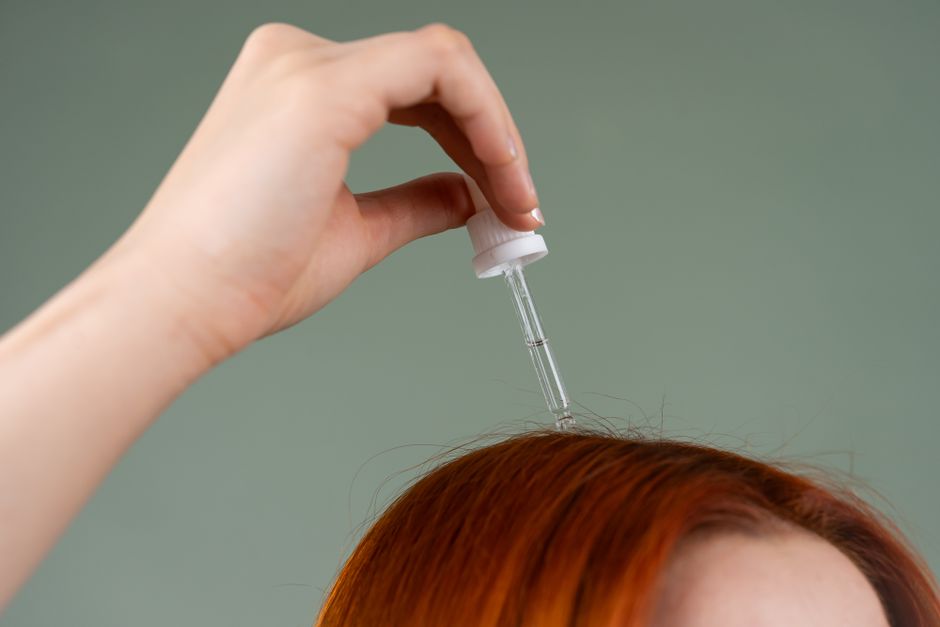
Porous hair is hair that absorbs and loses moisture too quickly because its outer cuticle layer is damaged or lifted. Healthy hair has flat, overlapping cuticles that lock moisture in. When those cuticles are raised, gaps appear. Think of it like roof shingles that have blown loose. Water gets in easily, but it also escapes just as fast. This leaves hair dry, brittle, and prone to breakage.
What Causes Porous Hair?
Hair porosity is largely determined by genetics, but damage is what pushes hair from normal to high porosity. The American Academy of Dermatology notes that chemical treatments are one of the most common causes. Hair dye, bleach, relaxers, and perms all break down the protein bonds in the hair shaft. Over time, this erodes the cuticle layer.
Heat styling is another major factor. Flat irons, curling wands, and blow dryers set to high temperatures can blister and lift the cuticle. The damage is cumulative. Each pass of the iron strips away a little more protection. Environmental factors like sun exposure and chlorine from swimming pools also contribute. Even rough brushing or tight hairstyles can cause mechanical damage that raises the cuticle over years.
There is also a condition called low porosity hair, where cuticles lie so flat that moisture cannot enter. That is the opposite problem. Most people who search for “what is porous hair” actually have high porosity hair from damage, not a genetic trait.
How Can You Tell If You Have Porous Hair?
The most reliable way to check porosity is the float test, though it has limitations. Take a clean strand of hair and drop it into a glass of room-temperature water. Let it sit for two to four minutes. If it sinks, the cuticle is raised enough that water entered the shaft quickly. That indicates high porosity. If it floats on top, the cuticle is sealed and water cannot penetrate easily.
This test is not perfect. Hair that is coated with product buildup or silicone can float even if the cuticle is damaged. Oily hair will also behave differently than clean hair. For a more practical assessment, run your fingers up a single strand from tip to root. If it feels rough or bumpy, the cuticle is raised. Smooth hair that slides easily between your fingers suggests the cuticle is intact.
A third sign is how fast your hair dries. High porosity hair air-dries much faster than normal hair because water escapes through the gaps. If your hair feels dry again within minutes after wetting it, that is a strong indicator. The CDC does not track hair porosity statistics, but dermatologists consistently report that chemical damage is the leading cause of acquired high porosity.
What Does Research on Porous Hair Show?
Research published in the Journal of Cosmetic Science has confirmed that hair porosity directly affects how products penetrate the hair shaft. In one study, researchers used scanning electron microscopy to examine cuticle layers after repeated bleaching. They found that even a single bleach treatment caused measurable lifting of the cuticle. After three treatments, the cuticle was severely eroded in most samples.
Studies have also examined how porosity affects protein treatments. A 2019 study in International Journal of Trichology found that hydrolyzed proteins of different molecular weights behave differently on porous hair. Smaller proteins penetrate the shaft but wash out quickly. Larger proteins coat the surface and provide more lasting protection. This matters because many products claim to repair porous hair, but the repair is temporary at best.
There is no clinical cure for high porosity hair. The hair shaft is dead tissue. Once the cuticle is damaged, it cannot grow back. What products can do is fill the gaps temporarily with proteins, oils, or silicone-based polymers. The effect lasts until the next wash. The American Academy of Dermatology emphasizes that prevention is the only real strategy. Avoiding bleach, reducing heat, and using gentle shampoos preserve the cuticle you still have.




What Products Actually Help Porous Hair?
Products that work on porous hair fall into three categories: protein fillers, humectants, and sealants. Protein treatments contain hydrolyzed keratin, wheat protein, or collagen. These molecules are small enough to enter the gaps in the cuticle and temporarily patch them. A 2020 review in Journal of Cosmetic Dermatology noted that protein treatments improve tensile strength in damaged hair by about 15 to 20 percent after a single use. The effect fades after two to three washes.
Humectants like glycerin, honey, and aloe vera pull moisture into the hair shaft. They work well on porous hair because the open cuticle allows water in easily. The problem is that humectants also pull moisture out if the air is dry. In low humidity, glycerin can actually dehydrate porous hair further. This is why people in dry climates sometimes report that humectant-heavy products make their hair worse.
Sealants lock moisture in. Oils like jojoba, argan, and coconut oil sit on the surface and slow evaporation. Silicone-based products like dimethicone create a plastic-like coating that is very effective at reducing moisture loss. Many stylists recommend avoiding silicones because they build up, but for porous hair, the trade-off is often worth it. A silicone serum applied to damp hair can reduce breakage significantly.
Here is a quick comparison of common product types for porous hair:
| Product Type | How It Works | How Long It Lasts |
|---|---|---|
| Protein treatment | Fills gaps in cuticle | 2-3 washes |
| Humectant leave-in | Attracts moisture into shaft | Until next wash or dry air exposure |
| Silicone serum | Creates barrier on surface | 1-2 washes |
| Oil sealant | Coats hair to slow evaporation | Until next shampoo |
What Should You Avoid If You Have Porous Hair?
The most important thing to avoid is anything that raises the cuticle further. Sulfate shampoos are a major culprit. Sodium lauryl sulfate and sodium laureth sulfate are strong detergents that strip oils and lift the cuticle. The American Academy of Dermatology recommends sulfate-free shampoos for anyone with chemically treated or damaged hair. That includes most high porosity hair.
Heat styling above 350 degrees Fahrenheit is another risk. At this temperature, the hair’s protein structure begins to denature. That is a fancy way of saying the hair cooks. If you must use heat, keep the temperature below 300 degrees and always use a thermal protectant. Even then, the damage is cumulative. No spray can fully protect hair from high heat.
Bleach and lightener are the most damaging products you can use on hair. They work by opening the cuticle and dissolving melanin. Each session permanently degrades the cuticle structure. Some people report that bond repair products like those containing bis-aminopropyl diglycol dimaleate help reduce damage during bleaching. The evidence is mixed. A 2021 study in International Journal of Cosmetic Science found that these products reduced protein loss by about 30 percent during bleaching, but they did not prevent cuticle lifting entirely.
Avoid tight hairstyles that put tension on the hair shaft. Ponytails, braids, and buns that pull the hair tight can cause mechanical damage over time. The cuticle is weakest when it is already raised. Tight styles can cause the cuticle to peel back further, especially at the ends where damage is most concentrated.
Can You Reverse Porous Hair?
No, you cannot reverse porous hair in the medical sense. The cuticle is made of dead cells. Once they are lifted or eroded, they do not grow back. Any product that claims to permanently repair porous hair is overpromising. What products can do is fill the gaps temporarily, which improves the hair’s appearance and feel until the next wash.
This distinction matters because the beauty industry markets “repair” products as if they permanently fix damage. They do not. A protein treatment fills the cuticle gaps temporarily. A silicone coating smooths the surface temporarily. Both effects wash out. The only permanent solution is to let the damaged hair grow out and be trimmed off. For most people, that takes six months to a year depending on hair growth rate.
Some people report that bond repair products used consistently over months improve their hair’s texture noticeably. This is plausible because repeated application of protein and polymers can build up a layer that persists longer than a single treatment. But this is buildup, not biological repair. The underlying hair shaft remains damaged. The distinction is semantic to most people who just want their hair to look and feel better, but it matters for understanding what is realistic.
Frequently Asked Questions
What is porous hair definition?
Porous hair has raised or damaged cuticles that let moisture in and out too quickly, leaving hair dry, brittle, and prone to breakage.
How do I test if my hair is porous?
Drop a clean strand in water and see if it sinks within a few minutes. You can also run your fingers up the strand to feel for roughness.
Can porous hair be fixed permanently?
No, because the hair shaft is dead tissue. Products can temporarily fill the gaps, but only trimming the damaged hair and letting new hair grow in is permanent.
Is high porosity hair the same as damaged hair?
Not always, but most cases of high porosity in adults are caused by chemical or heat damage. Some people are born with naturally high porosity hair.
