
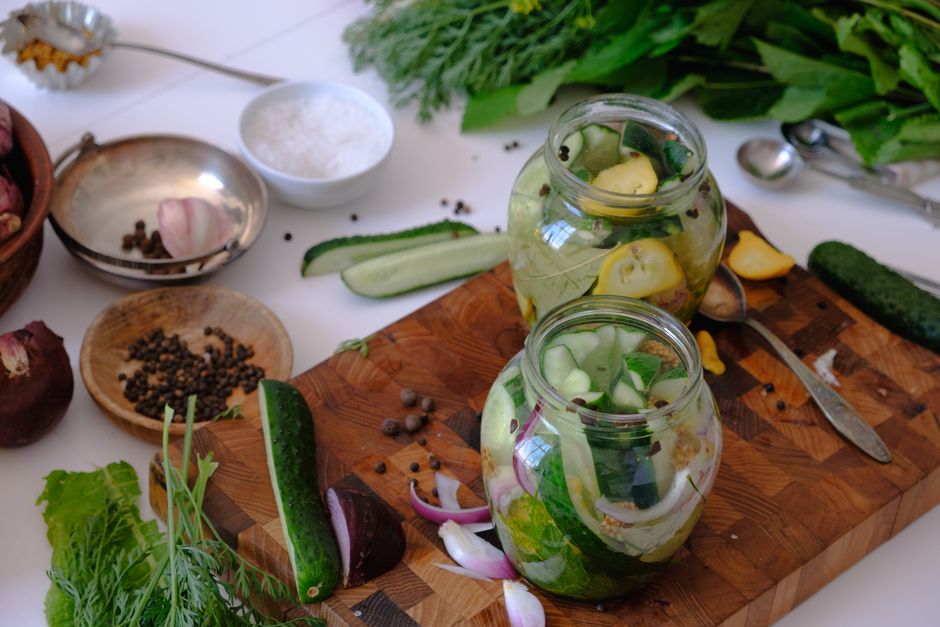
Pickled foods are preserved in an acidic solution, usually vinegar or brine, that stops spoilage bacteria from growing. The main types are vinegar pickling, fermentation, and salt-cured or brined pickling. Nutrition varies widely by type: vinegar pickles add acid but few nutrients, while fermented pickles can contain live cultures and some B vitamins and vitamin K.
Pickling is one of the oldest food preservation methods still in daily use. It shows up in nearly every food culture — Korean kimchi, German sauerkraut, Indian achaar, Japanese tsukemono, and the cucumber pickle on a deli sandwich. The word covers several different processes that produce very different products, and that difference matters for what ends up on your plate.
What Is Pickled Food Process Types And Nutrition?
Pickling means preserving food in an acidic environment or creating that acidity through microbial action. The acid is what does the preserving. Most spoilage organisms and pathogens cannot survive in a low-pH environment, so the food keeps far longer than it would fresh.
There are three main routes to a pickled product. They are not interchangeable, even though all three end up with something sour and shelf-stable.
- Vinegar pickling. Food is packed in a solution of vinegar, water, salt, and often sugar and spices. The acid comes from the vinegar directly. This is fast — often ready in hours to days.
- Fermentation (lactic acid pickling). Food sits in a salt brine, and naturally present lactic acid bacteria convert sugars into lactic acid. No vinegar is added. The acid is produced by the bacteria themselves. This takes days to weeks.
- Salt curing or brining. Food is preserved primarily with a high-salt solution, sometimes with little or no acid. This is closer to curing than true pickling, but the terms overlap in everyday use.
A quick clarification that trips people up: a jar of cucumbers in vinegar is pickled but not fermented. A jar of sauerkraut is both fermented and pickled. The two words describe overlapping but distinct processes, and the nutrition follows the process, not the label.
How Does Vinegar Pickling Differ From Fermentation?
Vinegar pickling and fermentation produce different foods with different nutrition, and the gap is bigger than most people assume.
In vinegar pickling, you add acid from the outside. The food absorbs vinegar, salt, and whatever seasonings are in the jar. Because the acid is already there, there is no waiting for bacteria. Refrigerator pickles can be ready overnight. Canned vinegar pickles are heated and sealed, which makes them shelf-stable but kills any live organisms.
In fermentation, the acid is made inside the jar. Lactic acid bacteria — the same broad group used to make yogurt and sourdough — consume sugars and produce lactic acid. This is why fermented pickles taste different from vinegar pickles. The acidity is more complex, and the texture is usually softer.
The key nutritional difference is what survives. Fermented pickles that are not heat-treated can contain live lactic acid bacteria. Vinegar pickles contain none, because there was nothing alive to begin with, and canning would kill it anyway. Whether those live cultures meaningfully change human health is a separate question — one where the evidence is still developing and does not yet support strong claims.
What Nutrients Are Actually in Pickled Foods?
Pickled foods are not nutritional powerhouses, and treating them as such is a mistake. What they contribute depends heavily on the starting vegetable and the process.
Fresh vegetables lose some water-soluble vitamins — particularly vitamin C and some B vitamins — during pickling and storage. Vitamin C is sensitive to heat, light, and time, so canned vinegar pickles have very little left. Fermented vegetables tend to retain somewhat more because they are not heated, though levels still decline over time.
What fermented pickles can contribute:
- Live lactic acid bacteria, if the product is unpasteurized and refrigerated
- Small amounts of B vitamins, some of which are produced by the bacteria themselves
- Vitamin K, which is relatively stable through fermentation
- Dietary fiber from the vegetable, largely intact
What all pickles contribute, and this is the part that matters most for most people:
- Sodium. Often a lot of it. Salt is central to both brining and safe fermentation.
- Acid. Vinegar or lactic acid, which is the whole point.
- Flavor with few calories. Pickles add tang and crunch to meals without adding much energy.
The honest summary: pickles are a condiment and a flavor tool. They are not a meaningful source of most vitamins, and the live-culture benefits are plausible but not firmly established in human trials.

Are Fermented Pickles a Probiotic?
Not automatically. This is one of the most common misunderstandings about pickled food.
For a fermented food to act as a probiotic in the technical sense, it needs to contain live microorganisms in sufficient numbers that survive digestion and reach the gut alive. Many fermented pickles sold in stores are pasteurized or heat-treated after fermentation, which kills the bacteria. A pasteurized jar of sauerkraut is not a probiotic food, no matter what the fermentation process was.
Even unpasteurized fermented foods raise an open question. The bacteria on cabbage or cucumbers are not the same strains studied in most probiotic research, which tends to focus on specific Lactobacillus and Bifidobacterium strains in controlled doses. Whether the mixed, variable cultures in a jar of fermented vegetables produce comparable effects is not well established.
What the evidence does support is more modest. Some studies suggest that regular consumption of fermented foods is associated with changes in gut bacteria and markers of immune function. The research is early, results vary, and no one has shown that eating fermented pickles prevents or treats any specific disease. If you want live cultures, check the label for “unpasteurized,” “raw,” or “contains live cultures,” and keep it refrigerated.
Is Pickled Food Bad for You?
For most people, pickled food is fine in normal amounts. The main concern is sodium, not the pickling itself.
Salt is essential to safe fermentation and to the flavor of vinegar pickles. A single large dill pickle can carry a substantial share of a day’s recommended sodium. If you are watching blood pressure or have been told to limit salt, pickles are worth reading labels on. Some brands offer reduced-sodium versions, though lower salt can affect both taste and, in fermented products, safety.
There is also a well-documented association between high intake of salt-preserved foods and stomach cancer risk, seen most clearly in populations with traditionally salt-heavy diets. This is an association from population studies, not proof that a pickle a day causes cancer. It does support keeping heavily salted preserved foods as an occasional part of the diet rather than a staple.
Two safety points worth stating plainly. First, home fermentation is a real food-safety process, and getting the salt concentration and conditions wrong can allow harmful bacteria to grow. Follow tested recipes and do not improvise ratios. Second, if you are pregnant, immunocompromised, or caring for an infant, the guidance on unpasteurized fermented foods differs from general advice, and it is worth checking with a clinician rather than assuming.
Does Pickling Change the Vegetable Itself?
Yes, in ways beyond nutrition.
Pickling softens texture. The acid and salt break down pectin in the cell walls, which is why fermented pickles are softer than vinegar pickles and why a good crunch usually comes from a firm starting vegetable or an added crispening agent.
Fermentation also changes flavor compounds. Lactic acid bacteria produce not just lactic acid but a range of aromatic molecules, which is why fermented vegetables taste more complex than vinegar-pickled ones. Some of the vegetable’s natural sugars are consumed in the process, so fermented pickles are often slightly lower in sugar than the fresh vegetable.
One thing pickling does not do: it does not make a nutrient-poor food nutrient-rich. A pickled cucumber is still mostly water and salt. The process preserves, it does not enrich.
How Should You Choose and Store Pickled Foods?
What you get depends on what you buy and how you keep it.
- For live cultures: choose unpasteurized, refrigerated fermented products and check the label. Once opened, they stay live only while kept cold.
- For shelf stability: canned vinegar pickles last a long time unopened. Once opened, refrigerate them.
- For lower sodium: compare labels. Sodium content varies enormously between brands and styles.
- For flavor without much salt: quick refrigerator pickles made with vinegar let you control the salt yourself.
If you are fermenting at home, use tested recipes from a reliable source and follow the salt ratios exactly. Do not reduce salt to make it healthier — in fermentation, salt is a safety control, not just seasoning.
Frequently Asked Questions
Are pickles a probiotic?
Only if they are unpasteurized fermented pickles that still contain live cultures and are kept refrigerated. Most jarred pickles on shelves are pasteurized and contain no live bacteria.
Is pickled food healthy?
Pickled vegetables are fine in normal amounts for most people, but they are high in sodium and not a major source of vitamins. They work best as a condiment rather than a health food.
What is the difference between pickling and fermenting?
Pickling adds acid from vinegar, while fermenting lets bacteria create the acid naturally. Both preserve food, but only fermentation can leave live cultures behind.
Does pickling destroy nutrients?
It reduces some water-soluble vitamins like vitamin C, especially in heat-processed pickles. Fiber and vitamin K are largely retained, and fermented pickles may keep somewhat more of the sensitive vitamins.
