

What Is PDO Thread Lift? Explained
A PDO thread lift is a non-surgical cosmetic procedure designed to counteract mild to moderate facial sagging. PDO stands for polydioxanone, a synthetic material that has been used safely in medical sutures for over 30 years. When placed under the skin, these threads physically lift drooping tissue and stimulate collagen production for a firmer, smoother appearance.
The treatment is most commonly performed on the lower face, jawline, and neck, though it can also be used on the cheeks, brows, and even the body in some cases. Unlike a traditional facelift, which requires general anesthesia and significant recovery time, a thread lift is done with local numbing and typically takes under an hour. You can usually return to normal activities within a day or two.
The results are intentionally subtle. A PDO thread lift will not dramatically change your appearance, but it can reduce the look of jowls, sharpen the jawline, and improve skin texture. The procedure is best suited for people in their 30s to 50s who have early signs of sagging but do not yet need a full surgical facelift.
How Do PDO Threads Actually Work?
PDO threads work through two distinct mechanisms, and understanding both helps set realistic expectations.
The first mechanism is physical. The threads are inserted into the skin with a thin needle or cannula and then pulled tight to lift the tissue. Tiny barbs along the thread grip the skin and hold it in the elevated position. This gives you an immediate lift the moment the procedure is done.
The second mechanism is biological. The presence of the thread triggers a foreign body response, which is a normal immune reaction. Your body sends cells to the area to break down the thread over time, and in the process, those cells stimulate fibroblasts. Fibroblasts are the cells responsible for producing collagen and elastin, the proteins that keep skin firm and elastic.
Over the next few months, new collagen forms around the threads. As the threads dissolve completely, usually within six to eight months, a scaffold of new collagen remains. This is why results often look better at three months than they do at week one. The initial lift softens slightly, but the collagen response continues to improve skin quality.
What Are the Different Types of PDO Threads?
There are three main categories of PDO threads, and your practitioner may use one or a combination of them depending on your goals.
Barbed threads have small hooks or cones that grab the tissue. These are the threads that provide the actual lift. They are typically used for the mid-face, jawline, and brows where tissue needs to be repositioned upward.
Monofilament threads are smooth and do not have barbs. They provide no lift but stimulate collagen production in a specific area. These are often used for skin quality improvement, such as reducing fine lines around the eyes or improving texture on the cheeks.
Screw threads are twisted like a corkscrew. They also do not lift but create more collagen stimulation than monofilament threads. They are commonly used in areas where skin is thin, such as around the eyes or mouth.
The choice of thread depends on the area being treated and the desired outcome. A skilled practitioner will select the appropriate type and number of threads based on your anatomy and skin laxity.



Who Is a Good Candidate for a PDO Thread Lift?
Good candidates are people with mild to moderate skin laxity. If you have significant sagging or excess skin, a thread lift will not provide the result you want. Surgical options like a facelift or neck lift are more appropriate for advanced aging.
The ideal candidate is typically between 35 and 55 years old. Skin elasticity declines with age, and younger skin responds better to the collagen stimulation. However, individual skin quality matters more than chronological age. A 60-year-old with good skin tone may be a better candidate than a 40-year-old with sun-damaged, lax skin.
You should be in good overall health with no active skin infections or inflammatory conditions in the treatment area. Certain medical conditions and medications may make you ineligible, including bleeding disorders, autoimmune diseases, or a history of poor wound healing.
The procedure is not recommended during pregnancy or while breastfeeding. No clinical guidelines exist for the safety of PDO threads in these populations, so it is best to wait.
What Happens During the Procedure?
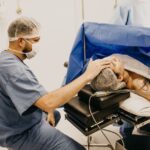
The procedure is performed in a clinic or medical spa setting. You will be awake, but the treatment area is numbed with a local anesthetic. Some practitioners also use a mild sedative for anxious patients.
The practitioner marks the skin to map out the insertion points. Then, using a thin needle or cannula, the threads are inserted into the subcutaneous layer of skin. For barbed threads, the practitioner positions the thread and then gently pulls it to lift the tissue. The excess thread is trimmed, and the insertion point is left to heal.
The number of threads used varies widely. A minimal treatment might use four to six threads on one side of the face, while a more extensive treatment could use twenty or more. The procedure typically takes 30 to 60 minutes.
Most people report mild discomfort during the procedure, but not severe pain. You may feel a pulling or tugging sensation as the threads are placed and tightened.
What Is the Recovery Like?
Recovery is relatively quick, but it is not zero. Expect some swelling, bruising, and tenderness in the treated area for the first few days. The swelling usually peaks at 48 to 72 hours and then subsides over the following week.
Most people can return to work and normal activities within one to two days. However, you should avoid strenuous exercise, heavy lifting, and excessive facial movement for at least one to two weeks. These activities can put stress on the threads and reduce the lift.
You should also avoid sleeping on your face for the first week. Sleeping on your back with your head elevated helps reduce swelling and protects the threads.
Bruising can last longer than swelling, sometimes up to two weeks. Some people notice small dimples or puckering where the threads are placed. This is usually temporary but can occasionally persist for several weeks.
What Are the Risks and Side Effects?
PDO thread lifts are generally safe when performed by a qualified practitioner, but they are not without risks. The most common side effects are bruising, swelling, and temporary asymmetry. These typically resolve on their own.
More serious complications are rare but possible. Infection, thread migration, and nerve injury have been reported. Threads can occasionally become visible or palpable under the skin, especially in people with thin skin. Skin dimpling or puckering can occur if the threads are placed too superficially.
A rare but serious complication is thread extrusion, where the thread breaks through the skin. This requires removal of the thread and proper wound care.
The skill of the practitioner is the single most important factor in reducing risk. Choose someone who is a board-certified dermatologist, plastic surgeon, or a trained medical professional with substantial experience in thread lifts. Ask how many procedures they have performed and ask to see before-and-after photos of their own patients.
How Long Do Results Last?
Results vary by individual, but most people see the effects last between six months and two years. The immediate lift from the threads fades as the threads dissolve, usually within six to eight months. The collagen produced during that time continues to provide some support after the threads are gone.
Factors that affect longevity include the type of thread used, the area treated, your age, and your skin quality. Barbed threads generally provide a longer-lasting lift than smooth threads. Younger skin with good elasticity tends to hold the results longer.
Some practitioners offer touch-up treatments to maintain results. These are typically done every 12 to 18 months.
How Does a Thread Lift Compare to Other Options?
A PDO thread lift sits between nonsurgical treatments like dermal fillers and surgical procedures like a facelift.
Dermal fillers add volume but do not lift tissue. They are useful for restoring lost volume in the cheeks or lips but will not address sagging skin. A thread lift physically repositions tissue, which is a different effect.
A surgical facelift is the gold standard for significant lifting. It removes excess skin, tightens underlying muscles, and provides dramatic, long-lasting results that can last a decade or more. However, it requires general anesthesia, significant downtime, and a higher cost.
A thread lift offers a middle ground. It provides a modest lift with minimal downtime and a lower cost than surgery. But the results are temporary and far less dramatic than a facelift.
Some people combine thread lifts with other treatments. For example, dermal fillers can be used to restore volume while threads provide lift. Botox can soften dynamic wrinkles in the same session. These combinations can enhance the overall result, but they also increase the total cost and complexity of treatment.
How Much Does a PDO Thread Lift Cost?
Cost varies significantly by geographic location, practitioner experience, and the number of threads used. A single session typically ranges from a few hundred to several thousand dollars. It is considered a cosmetic procedure, so insurance does not cover it.
The cost is often lower than a surgical facelift, which can cost several times more. However, because thread lift results are temporary, you will need repeat treatments to maintain the effect. Over several years, the cumulative cost can approach that of surgery.
Be cautious of extremely low prices. A thread lift performed by an inexperienced practitioner at a discount rate carries higher risks of complications and poor results. The skill of the practitioner matters more than the price.
Frequently Asked Questions
Is a PDO thread lift painful?
Most people feel mild discomfort during the procedure, but not severe pain. Local anesthesia is used, and you may feel a pulling sensation as the threads are placed.
How long does a PDO thread lift last?
Results typically last between six months and two years. The threads dissolve within six to eight months, but the collagen they stimulate continues to provide support afterward.
Can a PDO thread lift replace a facelift?
No. A thread lift provides a subtle lift for mild to moderate sagging, while a surgical facelift is required for significant skin laxity. The two procedures address different levels of aging.
What is the downtime after a PDO thread lift?
Most people return to normal activities within one to two days. Swelling and bruising can last one to two weeks, and strenuous exercise should be avoided for a similar period.
